In brief
- First prize went to Everyday House by Shengnan Gao, Telmen Bayasgalan and Penghui (henry) Zhang.
- One Frame, Two Homes took second place, while Common Ground placed third.
- The 2027 edition seeks suburban housing prototypes of up to 1,500 ft² (approximately 140 m²).
- Early registration closes on 13 January 2027; the project submission deadline is 12 July 2027.
On 25 November 2026, Buildner announced the results of The Next House: USA ideas competition and opened a new call for entries for the 2027 edition. The international competition aims to rethink the American suburban home in response to changing household needs, housing affordability and environmental concerns. The first edition’s brief called for a housing prototype that could be replicated in different locations and designed for a household of two adults and one child.
What ideas did the winning projects put forward?
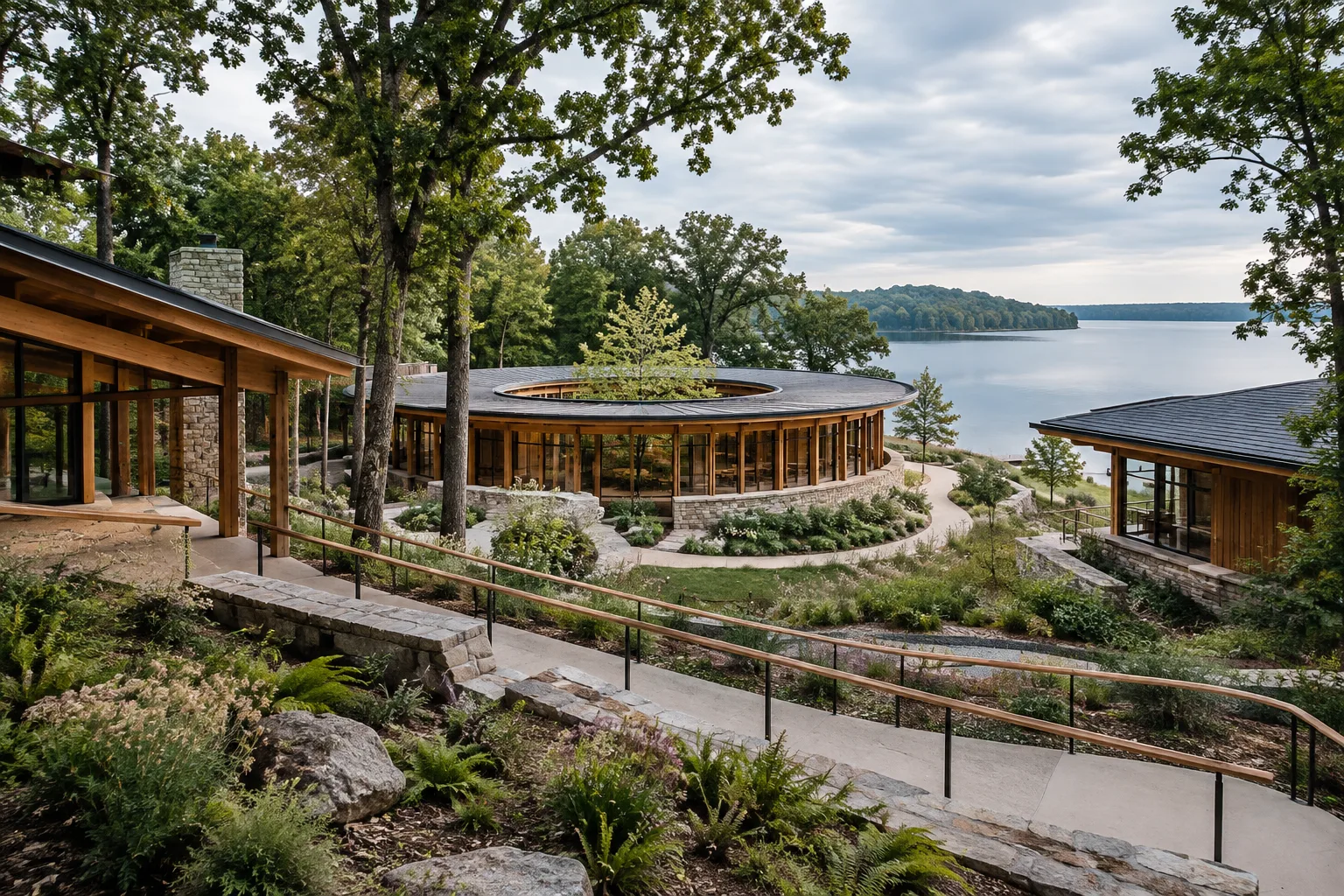
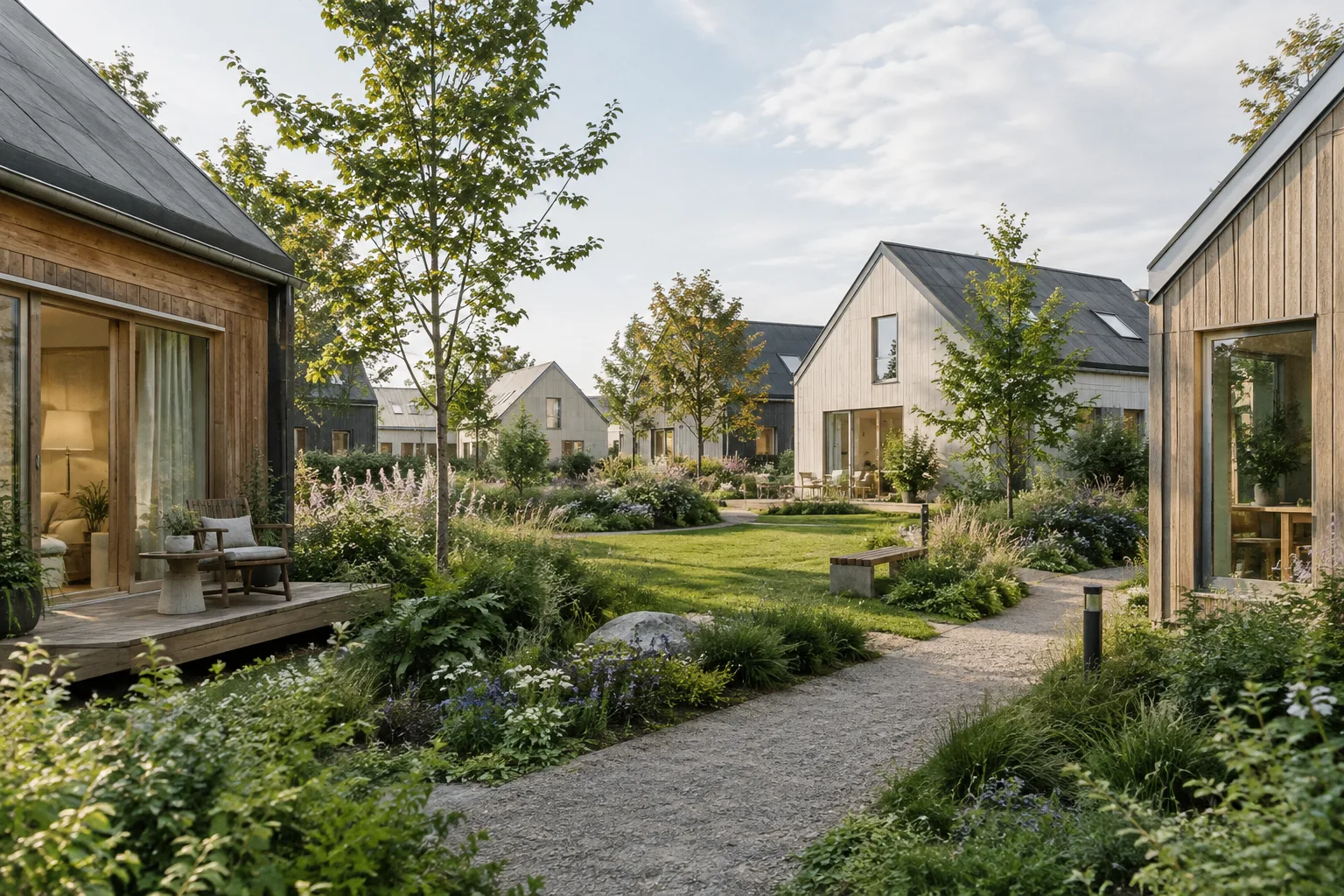
First prize went to Everyday House by Shengnan Gao, Telmen Bayasgalan and Penghui (henry) Zhang. The project reinterprets the familiar pitched-roof house with a smaller, more flexible layout, combining living areas with workspaces. Prefabricated components are considered for the construction system, while rainwater collection, solar energy and passive environmental strategies are also incorporated into the design. Rather than placing homes only on separate lots, the proposal brings them together with gardens, growing areas and shared meeting points for neighbors.
Diego Rodriguez’s One Frame, Two Homes took second place. The design separates the main structural frame from the interior partitions and exterior cladding, aiming to make it possible to change the interior layout while retaining the home’s basic framework. Its outer layer, reminiscent of a large greenhouse covering, creates an intermediate zone suited to planting, daylight and seasonal use.
Common Ground by Chung Wei Lee, Yu Hsiang Lin and Buzz Wei placed third. Instead of private gardens, this housing layout arranges homes around shared open spaces for growing, play and everyday gatherings. A regular structural grid allows for different interior layouts, while options ranging from one to four bedrooms aim to accommodate different household needs. The student award went to Closer to the Moon by Tanqing Cheng and Wenjia Shen, while the sustainability award went to MANY House by Scott Andrew Dergance, Coleman Ernest Walsh and Alexander Dean Archer.
The shortlisted projects also present alternative approaches that extend from individual home design to the neighborhood scale. Post-Lots proposes repurposing underused suburban parking areas for housing. Multi-Scale Adaptive Housing System focuses on generating different housing plans and neighborhood layouts using modular design rules. These projects show that the competition addresses not only the form of the home, but also how homes relate to their surroundings and to one another.
Scope and schedule of the 2027 edition
The new call is open to architects, students and designers worldwide. Participants are expected to develop a compact, adaptable suburban housing prototype of up to 1,500 ft² (approximately 140 m²), capable of being replicated in different American contexts. The winning teams will be invited to compete for the €50,000 Buildner Medal.
Early registration closes on 13 January 2027. The final registration deadline is 10 June 2027, and project submissions must be made by 12 July 2027.
What it means for architecture, interior design and visualization teams
The selected projects address flexible interior planning, prefabrication, modular construction and shared landscapes at both the housing and neighborhood scales. Architects and interior designers can draw on the design approaches in these projects when exploring different household scenarios or the relationship between private and shared spaces. For visualization teams, it is also important to show not only an individual home, but how a housing prototype relates to its surroundings when repeated.
The announcement outlines the submission brief and schedule, but does not specify technical requirements for software, hardware or file compatibility. Teams preparing an entry should check these conditions in the full competition rules. This helps confirm that the submission format, as well as the design decisions, aligns with the call.
Sources
1 sourceSource texts are not republished; short quotes are marked, everything else is our own summary and commentary.
The value of The Next House selection is that it discusses housing prototypes not just in terms of plans and façades, but also in relation to construction systems, changing household needs and shared spaces. For offices and students in Turkey, this approach offers a useful framework for exploring how an individual housing concept can become a replicable system.
Teams considering participation should not confuse the invitation to compete for the €50,000 prize with the cost of entry; they should review the full submission requirements as well as the schedule. Since the announcement does not include technical compatibility details, these requirements should be checked separately in the competition rules.
Frequently asked questions
When is the submission deadline for The Next House: USA 2027?
The final deadline for project submissions is 12 July 2027. The final registration deadline is 10 June 2027.
What is the prize for The Next House: USA 2027?
The winning teams will be invited to compete for the €50,000 Buildner Medal.
Who can enter The Next House: USA 2027?
Buildner invites architects, students and designers from around the world to enter.