In brief
- Canva Craft was announced as the company’s first image-generation model, developed by its research team.
- According to Canva, the model can generate images at resolutions up to 2K and in 30 different aspect ratios.
- The model is available from the Dream Lab tab on the Canva platform, and the company also plans to offer it through the Canva API.
- Two lower-cost versions, called Craftfast and Craft-ultrafast, are in development.
On 22 October 2026, Canva introduced Canva Craft, its first image-generation model. Developed by the company’s research team, the model is available from the Dream Lab tab on the Canva platform. According to Canva, Craft can generate images at resolutions up to 2K and in 30 different aspect ratios. Access through the Canva API and third-party chatbots is among the company’s future plans.
Image generation takes place in two stages
Canva describes Craft as a two-stage process. First, the model interprets the user’s prompt and creates a plan that includes the spatial relationships between elements in the image, their relative scale, and the visual hierarchy. Information for text generation is also prepared in this first stage. In the next stage, the model generates the image based on the plan.
According to the company, this approach supports more accurate rendering of object details and the generation of legible text within images. Canva also says users can edit one area while preserving the rest of the image. The announcement did not include independent test results that measure these claims comparatively.
Design templates feature prominently in the training data
Canva says it trained Craft on human-designed examples from its own library rather than on photographs. Examples provided by the company include posters, social media posts, presentations, infographics, menus, and typography-focused layouts.
Images generated by the model can be brought into a design using Canva’s Magic tool, which converts images into layered designs. However, the announcement does not explain how this conversion will work for every image or which elements can be edited as separate layers. Canva also says it is developing two model versions, Craftfast and Craft-ultrafast, aimed at cost efficiency, and plans to release them soon.
This announcement about Canva’s own model should be considered separately from the company’s earlier image-generation work. In an announcement dated 23 April 2025, OpenAI said Canva was working to expand its design-generation and editing capabilities by integrating OpenAI’s gpt-image-1 model into Canva AI and Magic Studio. Canva Craft, by contrast, was announced as an image-generation model developed by the company’s own research team.
Impact on architecture and visualization workflows
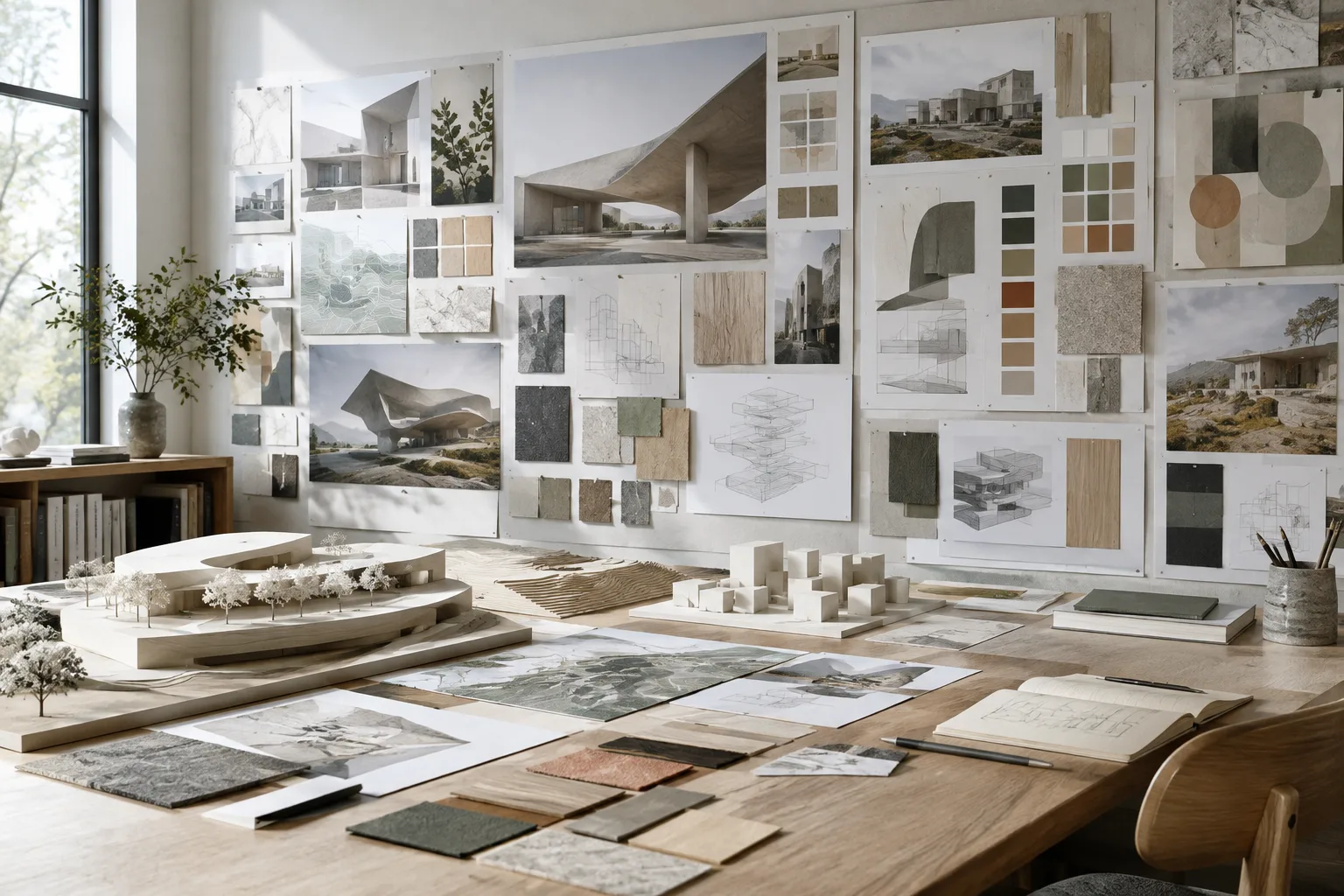
For architecture and interior design teams, Canva Craft may be useful for project presentations and communication materials rather than 3D modeling or rendering. The fact that its training included examples of presentations, posters, and infographics points to a use case close to this kind of design work. However, the announcement does not describe any specific capabilities for architectural accuracy, technical drawing generation, or 3D scene creation.
The model is currently available through Dream Lab on the Canva platform. Support for Canva API access and image generation in third-party chatbots through Canva MCP is planned, but no dates were given for these options. The announcement also did not provide details on pricing, usage licenses, or technical compatibility. Teams considering workflow integration may therefore need to assess current access conditions and output requirements, and may wish to postpone integration decisions until API, licensing, and cost information is available.
Sources
1 sourceSource texts are not republished; short quotes are marked, everything else is our own summary and commentary.
For architecture firms, Canva Craft stands out less as a new modeling or rendering solution and more as a tool to try for preparing presentations and visual communications. Its training on templates is relevant to this kind of work, but the announcement does not mention capabilities specifically for architectural accuracy or technical production.
For teams in Turkey, it is important to wait for pricing, licensing, and API terms before making a decision. The 2K ceiling should also be compared with delivery requirements. Since third-party integrations are still at the planning stage, a more cautious approach would be to start with a limited trial through Dream Lab.
Frequently asked questions
Where can Canva Craft be used?
Canva Craft is available from the Dream Lab tab on the Canva platform. Access through the Canva API and third-party chatbots is planned.
What resolution and aspect ratios does Canva Craft support?
According to Canva, the model can generate images at resolutions up to 2K and supports 30 different aspect ratios.
Was Canva Craft developed specifically for architectural visualization?
The announcement does not say that the model is specifically for architectural visualization. No specific capability for modeling or rendering was announced either.