In brief
- Earth Craft is being prepared as the US contribution to the 20th International Architecture Exhibition.
- The exhibition will be on view at the Giardini in Venice from 8 May to 21 November 2027.
- Germane Barnes is the lead curator; curator and architectural historian Vyta Pivo is also part of the team.
- The program includes an earthen materials library, hands-on workshops and a forthcoming catalog.
The University of Miami School of Architecture team is preparing the Earth Craft exhibition for the US pavilion at the 2027 Venice Architecture Biennale. The project was announced as the US contribution to the 20th International Architecture Exhibition. The exhibition will be open to visitors at the US Pavilion in Venice’s Giardini from 8 May to 21 November 2027. Earth Craft aims to tell the history of architecture not only through the design of celebrated buildings, but also through the materials and labor that made them possible.
How will earth and the labor of building be explored?
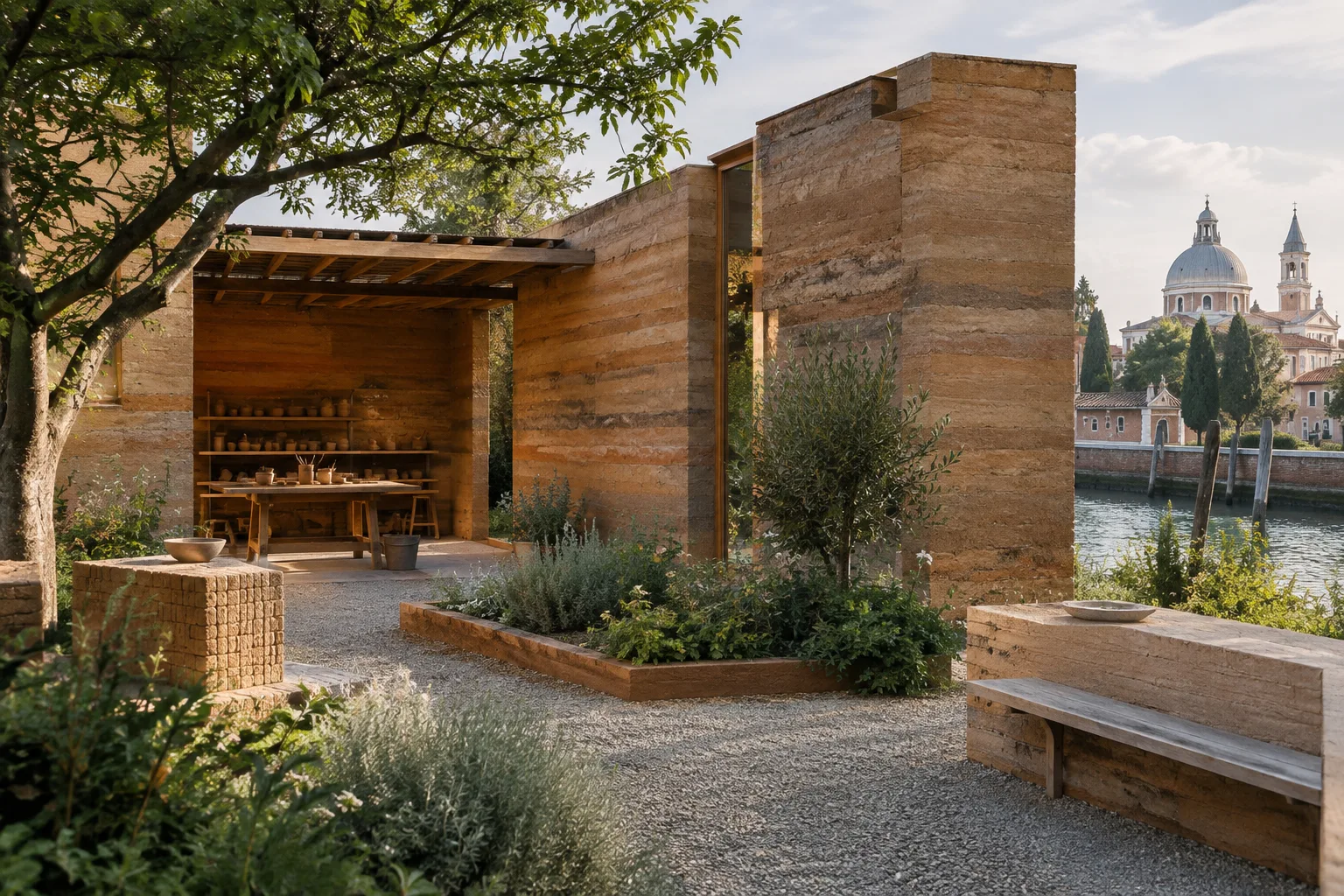
The exhibition’s narrative follows earth as it is transformed into different building materials and, ultimately, shelter. Brick, rammed earth, adobe and concrete masonry will be examined alongside the building traditions of different regions. The project also aims to make brickmakers, masons and communities working with earth visible as part of architectural history.
Examples from across the United States will be presented in their geographic and historical diversity. Alongside adobe communities in the Southwest and Indigenous building traditions rooted in the use of earth, the exhibition will include Monticello, military brickmaking in border regions, plantation kilns and brick production in industrial cities. The source cites Haverstraw, St. Louis, Tuskegee and Denison as examples of these cities. In this approach, a building’s materials serve as a record of where and how it was made.
Curators and visitor program
Lead curator Germane Barnes is described as a professor and founding director of Studio Barnes. Architectural historian Vyta Pivo is also among the exhibition’s curators, as well as an assistant professor at the University of Miami. Pivo’s approach connects accumulated knowledge of earth, water and heat with computational design; handcraft and robotic production are treated not as mutually exclusive, but as methods that can be considered together.
Earth Craft’s program will extend beyond the exhibition objects. A library devoted to earthen materials and hands-on workshops are planned for visitors, and the project will also be published as a catalog. These offerings aim to share material knowledge, building practices and the experiences of different communities.
Implications for architecture, interior design and archviz workflows
For architecture and interior design teams working with local materials, as well as researchers and students exploring building cultures, the exhibition offers an example of how to examine materials and the labor of making together. Its focus on how earth varies from region to region draws attention in design research to where materials come from and the knowledge of the people who work with them.
The announcement does not introduce new software, digital modeling tools or technical integrations for archviz. It also provides no information about hardware requirements, software compatibility or licensing. For that reason, it is not possible to say that the exhibition will directly change visualization workflows. The tangible resources teams can follow up on will be the materials library and workshops offered when the exhibition opens, as well as the forthcoming catalog.
Sources
1 sourceSource texts are not republished; short quotes are marked, everything else is our own summary and commentary.
Earth Craft’s strength lies in the fact that it does not approach architectural history solely through finished buildings and the names of designers. By bringing materials, geography and the labor of making into the same frame, it offers a valuable approach for firms and students looking to incorporate local building knowledge into design research.
For architecture and visualization teams in Turkey, there is currently no development that would entail new software, hardware or licensing costs. The practical value will depend on the scope of the material knowledge and workshops the exhibition shares. Once details of the catalog and visitor program are available, their contribution to education and research can be assessed more clearly.
Frequently asked questions
Where and when will the Earth Craft exhibition take place?
The exhibition will be held at the US Pavilion in the Giardini in Venice from 8 May to 21 November 2027.
Who are the curators of Earth Craft?
Germane Barnes is the lead curator. Vyta Pivo is also part of the team as a curator and architectural historian.
Which materials and events will Earth Craft feature?
The exhibition will explore materials such as brick, rammed earth, adobe and concrete masonry. The program will also include a materials library, hands-on workshops and a catalog.