In brief
- The kit consists of a Raspberry Pi 5 computer and BrainChip’s AKD1500 M.2 card.
- The AKD1500 uses an architecture focused on processing meaningful events rather than all incoming data.
- On-chip learning allows new classes to be taught to the device without retraining in the cloud.
- The kit is available through BrainChip Shop; no price was disclosed in the announcement.
BrainChip announced the AKD1500 Raspberry Pi 5 Development Kit on 30 October 2026, bringing together a Raspberry Pi 5 and the AKD1500 M.2 card. According to the company, the kit is designed for developing low-power, always-on AI applications and carrying the same chip into a production design. The product was available through BrainChip Shop at the time of the announcement; no price was disclosed.
What hardware and software does the kit include?
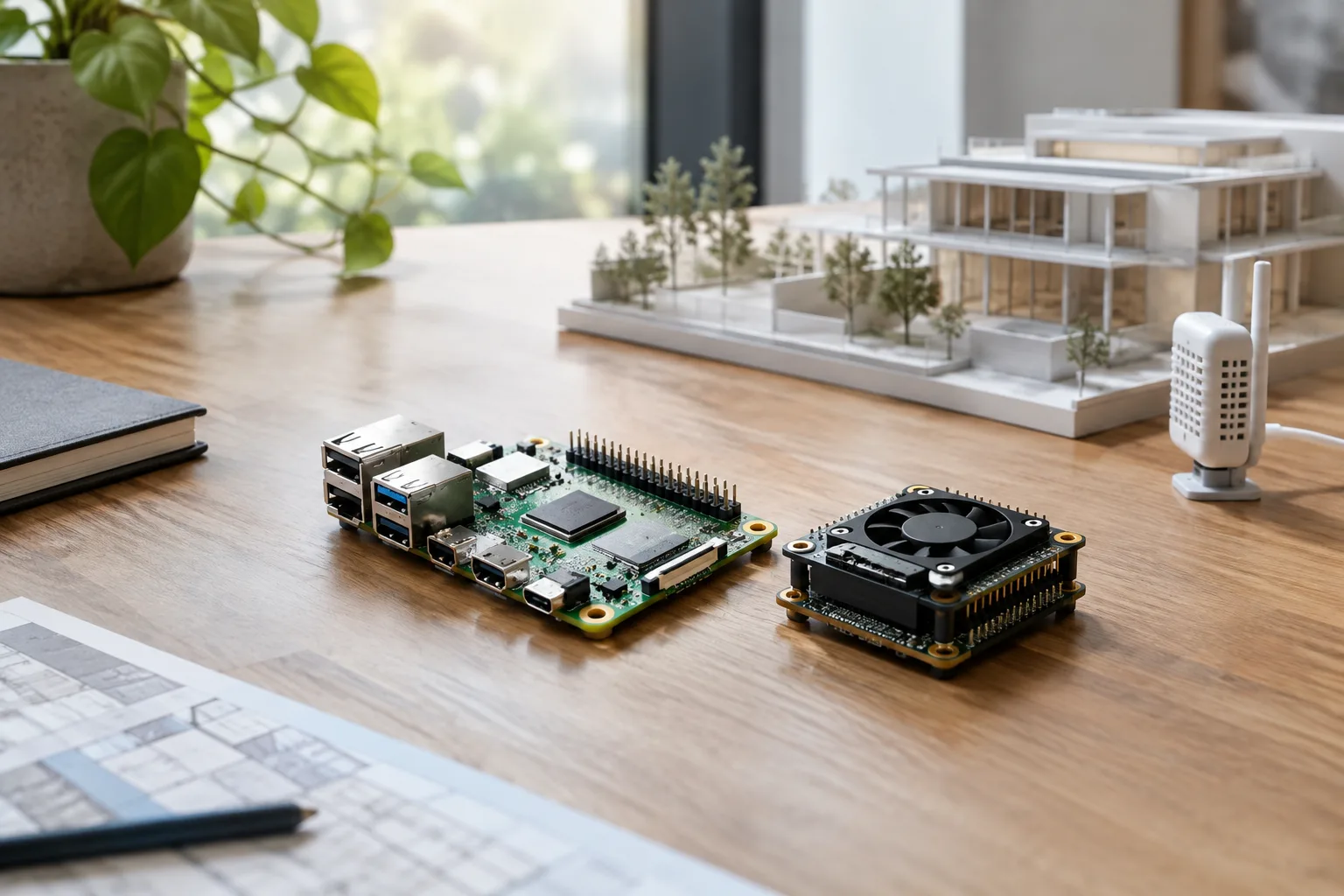
The development platform consists of a Raspberry Pi 5 computer and BrainChip’s AKD1500 M.2 card. BrainChip aims to let developers test applications on familiar hardware before moving to production with the same AKD1500 chip. According to the company, the chip can use either a PCIe or SPI interface in a production design, depending on system requirements.
Software support will include Docker images intended to facilitate benchmarking and demos. BrainChip says these images can also serve as examples for custom neuromorphic application containers. MetaTF software tools and models are available free of charge through the Developer Hub. Developers who already have a Raspberry Pi 5 and an M.2 HAT can also add the production-oriented AKD1500 M.2 card and use the same software.
How does the AKD1500 work?
BrainChip’s stated architecture processes meaningful events rather than every element of a continuous stream of input. The company says this approach is intended for always-on edge-device tasks such as sensing, tracking and detection. Processing data on-device can allow an application to run without sending data to the cloud. BrainChip says the approach aims to reduce latency, bandwidth costs and privacy risks associated with cloud use.
The AKD1500 also supports on-chip learning. According to examples in the announcement, new keywords, movements or objects can be taught directly to an application on the device, without cloud retraining, while data remains on-device. These are capabilities described by the manufacturer. The announcement did not provide specific power consumption figures or performance benchmarks.
What does this mean for architecture and visualization workflows?
The kit is not being presented as a direct accelerator for 3D modeling or visualization software, and no integration details for architectural design tools were shared. As a result, there is no basis in the available information to conclude that it will improve rendering performance. From an editorial perspective, architecture teams working on a space or product prototype that uses sensor data could explore its on-device processing and learning approach for research purposes. This is not an architectural use case described in the announcement, but a possible area for experimentation suggested by the kit’s broader edge-device goals.
The first step in a workflow is to check the hardware requirements and compatibility with an existing setup. The kit includes a Raspberry Pi 5 and an AKD1500 M.2 card; those adding the card to an existing Raspberry Pi 5 should account for the M.2 HAT requirement. Docker images could provide a starting point for testing an application with streaming data. However, the announcement offers no details on compatibility with architectural software, performance or the kit’s price, so offices will need to wait for more information before deciding how it fits their visualization workflows.
Aiming to use the same chip from prototype to production
The transition BrainChip highlights is using the AKD1500 chip in production designs after prototyping with it. The company says PCIe or SPI connectivity can be selected according to the system design. The kit joins a family of development platforms that also includes the AKD1500 PCIe card and the AKD1500 M.2 card. Connectivity options and system requirements should be evaluated separately when moving to production; the announcement does not provide detailed technical requirements on these points.
Sources
1 sourceSource texts are not republished; short quotes are marked, everything else is our own summary and commentary.
For architecture and interior design offices, this kit offers a way to explore sensor-based application ideas running on-device rather than an upgrade for rendering. Teams working on a prototype that continuously receives data can evaluate the on-device learning approach at small scale without relying on the cloud, though the kit is not presented as a direct integration with architectural software.
For offices in Turkey, the undisclosed price, M.2 HAT requirement and compatibility with existing hardware are key considerations in a purchasing decision. Until performance data and compatibility with design software are clarified, it would be more prudent to test the kit with a specific sensor or edge-device prototype rather than assume it will add value to a visualization workflow.
Frequently asked questions
What does the BrainChip AKD1500 Raspberry Pi 5 kit include?
The kit consists of a Raspberry Pi 5 computer and an AKD1500 M.2 card. BrainChip also says it will provide Docker images for benchmarking and demos.
Does the AKD1500 support on-device learning?
Yes. According to BrainChip’s announcement, new classes can be learned on-device without retraining in the cloud.
Has the price of the AKD1500 Raspberry Pi 5 kit been announced?
No. The announcement did not provide pricing. The kit was available through BrainChip Shop at the time of the announcement.