In brief
- The report claims that all planned production at Samsung’s second factory in Taylor, Texas, has been reserved.
- The facility is reportedly set to produce HBM base dies for AMD and NVIDIA on a 2 nm process.
- According to the claim, AMD’s order volume could strain the factory’s capacity.
- Samsung said it could not confirm details about its customers.
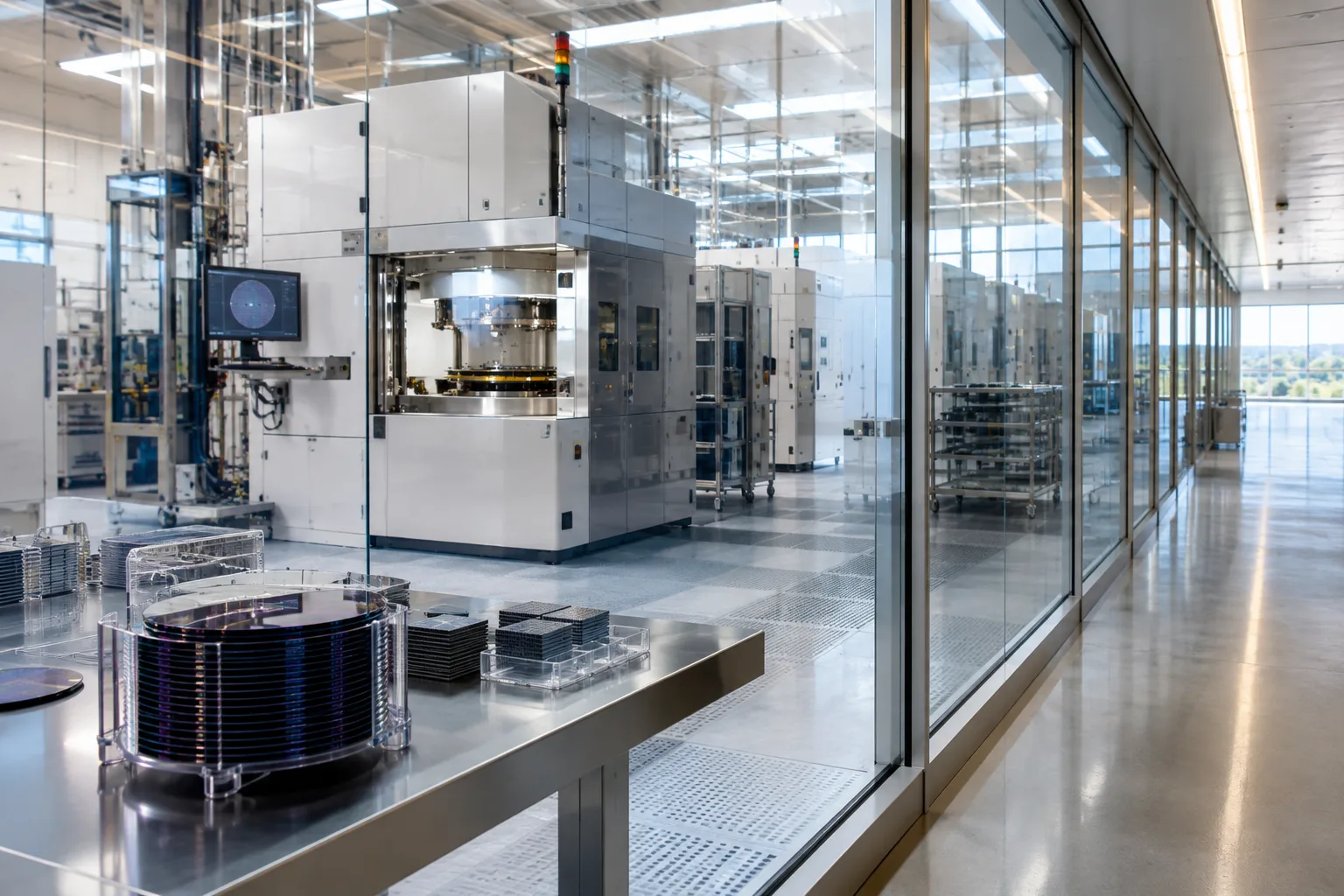
Samsung’s second factory in Taylor, Texas, has reportedly had all of its planned production reserved, with most orders said to be from AMD. A report published by TechPowerUp on 4 November 2026 attributes the claim to an exclusive story by Maeil Business Newspaper, which cites industry sources. According to the report, the factory will produce HBM base dies for AMD and NVIDIA using a 2 nm process. Samsung said it could not confirm details about customer relationships.
What is being claimed about the factory’s capacity?
A report by Maeil Business Newspaper, citing industry sources, claims that all planned production at the second factory in Taylor has been reserved. Most of the orders are said to come from AMD, with the company’s order volume reportedly large enough to strain the factory’s capacity. NVIDIA is also named as a customer for this production.
These are not order figures disclosed by Samsung; they are industry claims reported by the source. Samsung’s response was that it could not confirm customer information. The reported order distribution and capacity should therefore not be treated as a customer announcement confirmed by the company.
The parts to be produced are HBM base dies
The production claim in the report is not about AMD processors or graphics cards. The parts in question are base dies, described as logic chips at the bottom of an HBM memory stack. According to the claim, these dies will be manufactured for AMD and NVIDIA at Samsung’s second factory in Taylor using a 2 nm process.
This distinction matters for interpreting the scope of the report correctly: the source does not say that a new CPU or GPU will be produced. It reports a production and capacity claim concerning components used in HBM stacks. The information provided does not support conclusions about a specific processor or graphics card model, product schedule, or performance outcome.
Impact on architecture and visualization workflows
For architecture and interior design firms, as well as archviz teams, this is not an announcement of software or user hardware that would directly change their workflows. The reported production concerns HBM base dies; the report does not introduce a new workstation, CPU, or GPU model. As a result, it does not describe any immediate change needed in modeling, rendering, or project delivery processes.
Teams planning hardware investments can follow the claim as a development related to semiconductor production capacity. However, it would not be appropriate to draw conclusions from this report alone about the availability or price of a particular graphics card, or its compatibility with workstations. Compatibility with the software being used and hardware suited to the existing workload remain important considerations when making purchasing decisions.
How should the claims be interpreted?
The report attributes the claims that planned production capacity has been reserved and that AMD accounts for a large share of orders to industry sources. Samsung’s response that it cannot confirm customer information does not verify these claims. The report’s central point, therefore, is not a confirmed Samsung customer list, but a production and order claim attributed to sources.
Although the claim concerns HBM base dies produced on a 2 nm process, the report does not specify which products from AMD or NVIDIA the parts would be for. This report alone, then, does not point to new consumer hardware or to any short-term hardware needs for architecture firms.
Sources
1 sourceSource texts are not republished; short quotes are marked, everything else is our own summary and commentary.
For architecture firms and visualization teams in Turkey, the practical impact of this report is limited for now. Since it does not announce a new CPU or GPU, the claim alone is not a reason to replace existing workstations. Nor does it describe any change that can be applied directly to day-to-day modeling or rendering decisions.
Teams tracking the hardware supply chain can, however, take note of the claim about HBM production. But Samsung has not confirmed AMD’s reported prominence among the orders, so it should not be treated in purchasing plans as confirmed production or product information.
Frequently asked questions
What is reportedly set to be produced at Samsung’s second factory in Taylor?
According to the report, the factory will produce HBM base dies for AMD and NVIDIA using a 2 nm process.
Did Samsung confirm that AMD placed most of the orders?
No. Samsung said it could not confirm details about its customers. The claim that AMD accounts for most orders is attributed to industry sources.
Does the report discuss production of a new AMD processor or graphics card?
No. The parts mentioned in the report are not processors or graphics cards, but the logic base dies at the bottom of an HBM stack.