In brief
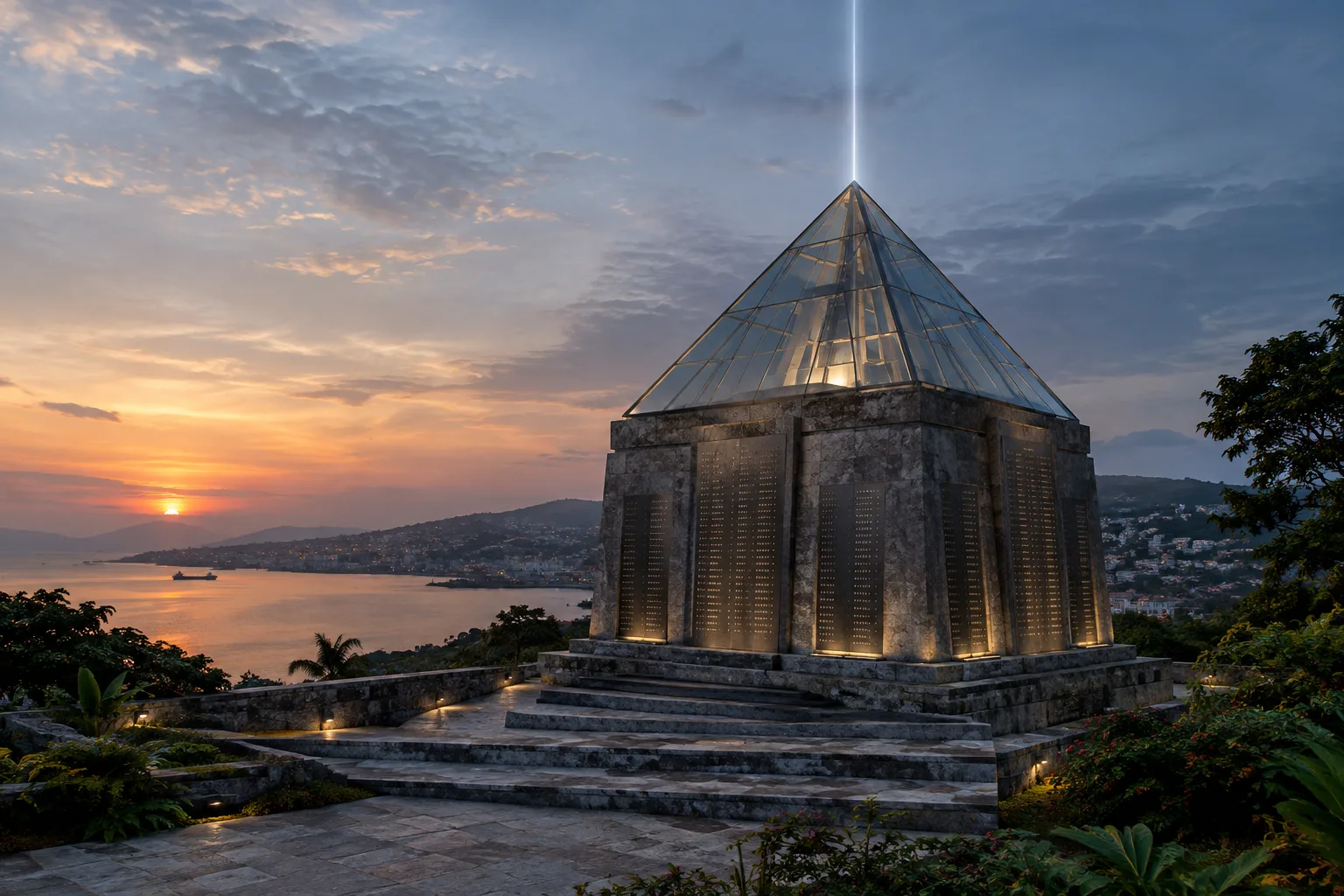
- The glass pyramid was added atop Edwin Lutyens’s 1931 Freetown war memorial.
- The names of 946 Carrier Corps members who died in the First World War are inscribed on the pyramid.
- The existing memorial, which dates to the 1930s, was also restored as part of the project.
- The team says the laser beam will be switched on for major commemorative dates and will be visible from up to five kilometres away.
The Commonwealth War Graves Commission officially opened the memorial in Freetown, Sierra Leone, over the weekend. Designed by Oshinówò Studio, the new addition is a structural glass pyramid placed atop the 1931 war memorial by British architect Edwin Lutyens. The names of Sierra Leone Carrier Corps members who died in the First World War are inscribed on the pyramid.
Who does the new section of the memorial commemorate?
Lutyens’s existing memorial commemorated soldiers who died in the First World War, but it did not include the names of members of the Sierra Leone Carrier Corps, who carried materials and supplies during the war. According to Dezeen, 946 people from the group died in the conflict. The glass pyramid adds their names to the memorial, making visible those who were absent from its original commemorative scheme.
Oshinówò Studio related the new section to the tapering geometry of the existing stone memorial. Following that form, the pyramid rises above the monument, placing the names at a higher level. The design thus creates a new layer of commemoration while establishing a visual connection with the historic structure.
Glass surface and lighting feature
The names are positioned higher than the existing section commemorating the soldiers—a decision described as symbolic. This placement is presented as a gesture that reverses the relationship between the Carrier Corps members and those they served during the war. Beyond carrying the names, the glass pyramid expresses this idea through its form and position.
The memorial also features a laser beam. According to the project team, it will be switched on for major commemorative dates and will be visible from up to five kilometres away. The source does not share technical specifications or operating conditions for the laser system, so the available information is limited to its stated function and visibility.
Restoration of the historic memorial
The work involved more than adding the glass pyramid. The existing memorial, which dates to the 1930s, was restored by stonemasons and bronze specialists from the Commonwealth War Graves Commission. The new commemorative feature was therefore developed alongside repairs to the historic structure.
The source does not explain the restoration methods, the properties of the materials used or how long the work took. The information provided confirms that the existing stone memorial was restored by specialist teams and that the pyramid was added as a new section carrying the names.
What it means for architecture and visualization workflows
For architecture and interior design teams adding to historic structures, the project shows how the commemorative narrative can be part of the design alongside formal coherence. The pyramid’s response to the existing memorial’s tapering geometry, the placement of names on the glass surface and the link between the lighting and specific commemorative dates offer an example of different elements coming together around a single design idea.
Archviz teams could use separate views in presentations to show the silhouette of the existing structure and the new addition, the legibility of the writing on the glass, and the relationship between the light and the memorial. These are visualization topics that can be inferred from the design decisions described, not stated project requirements. Since the source specifies no particular software, hardware, licence or compatibility requirements, technical and material decisions should be verified for each project.
Sources
1 sourceSource texts are not republished; short quotes are marked, everything else is our own summary and commentary.
The strength of the addition in Freetown is that, rather than replacing the historic memorial with a new commemorative structure, it relates to its form while making room for people who had not previously been represented. It reminds offices working with historic structures that an addition is not only a decision about form and material, but also about narrative.
Offices and visualization teams in Turkey can focus on making the relationship between glass, names and light clear in similar projects. However, the source does not provide technical details or costs for the materials or lighting system, so implementation and equipment decisions should be assessed on a project-by-project basis.
Frequently asked questions
Who does the new Freetown memorial commemorate?
The memorial bears the names of 946 members of the Sierra Leone Carrier Corps who died in the First World War.
Who designed the glass pyramid at the Freetown Memorial?
The glass pyramid was designed by Oshinówò Studio and added atop Edwin Lutyens’s 1931 war memorial.
When will the laser beam at the memorial be switched on?
According to the project team, the laser beam will be switched on for major commemorative dates and will be visible from up to five kilometres away.