In brief
- Inky aims to let artists paint directly on 3D objects in Unreal Engine 5, rather than preparing textures in a separate application.
- In the developer’s demonstration, the tool features 16 brushes, including ink, pen, chalk, charcoal, watercolor, and impasto.
- According to the developer, paint strokes are tied to the geometry and stay in place on the surface when the camera or lighting changes.
- The project is in early development, and its developer is open to user feedback.
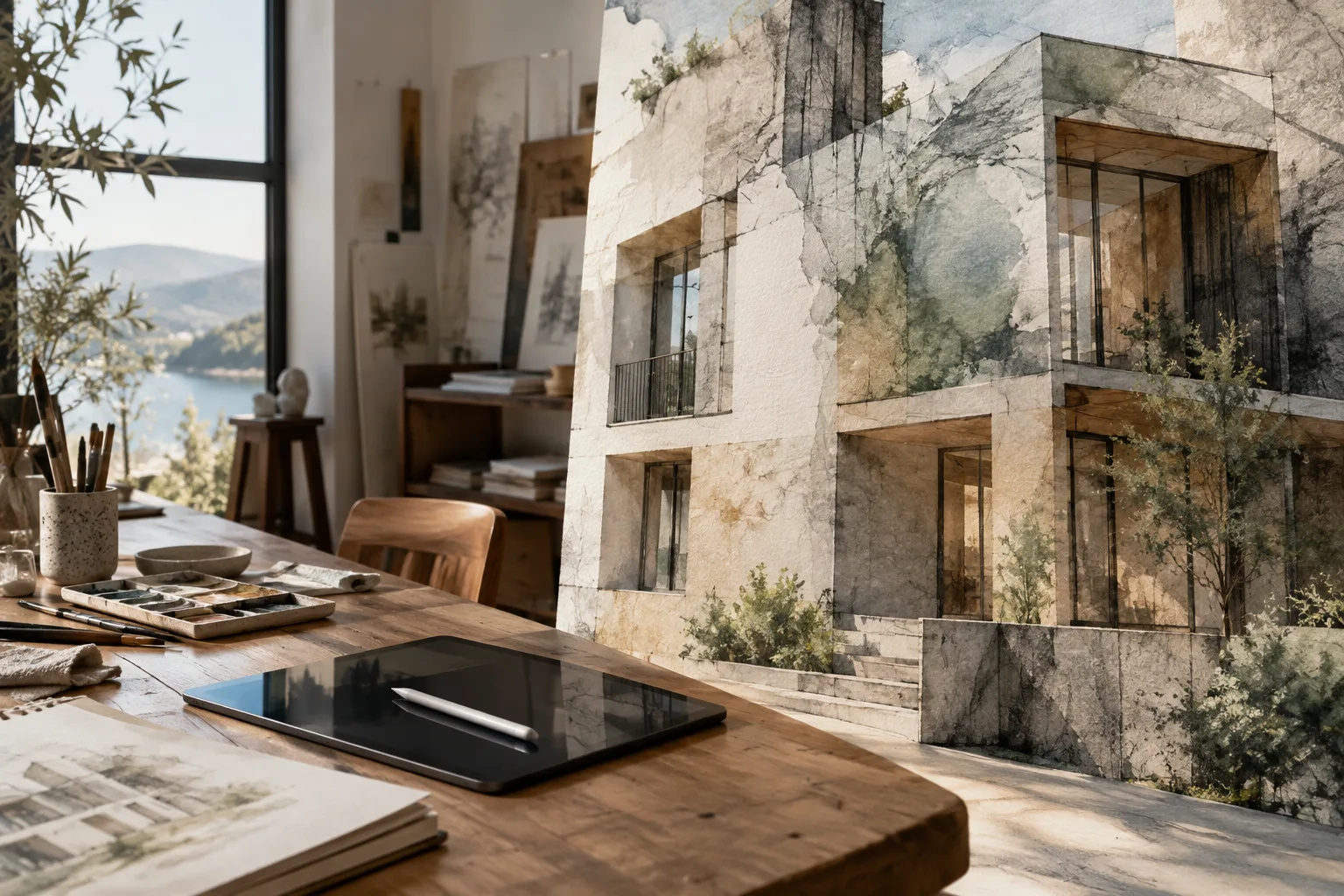
On November 24, technical artist Ahmed Hamed showcased Inky, a tool for painting directly on 3D objects in the Unreal Engine 5 editor. The goal is to let artists apply brush strokes directly to scene geometry, instead of preparing textures in a separate application to paint a model. The demonstration shows a building facade being painted inside the editor.
Brush strokes stay attached to the geometry
According to Hamed, paintings made with Inky stay on the geometry they were applied to. This means strokes retain their position on the surface when the camera is rotated or the lighting in the scene changes. The tool includes 16 brushes designed to emulate traditional art materials, including ink, pen, chalk, charcoal, watercolor, and impasto.
This approach could reduce the need for a separate texturing step for artists who want to quickly explore visual ideas in a scene. However, the demonstration does not show how much time the tool might save in existing workflows or how it performs with different types of models. The source also does not provide details about Inky’s technical requirements or supported Unreal Engine versions.
Watercolor, layers, and tablet support
One of Inky’s standout features is its watercolor system. In the developer’s demonstration, paint can blend while wet and is intended to behave like traditional watercolor once dry. The tool also supports layers and pen tablets.
These features could make it possible to experiment with different paint effects on a surface and use a tablet for drawing input. However, the developer has not explained how layers are managed, what export options are available, whether there is a performance cost, or if paintings can be transferred to other applications. The demonstrated capabilities should therefore be viewed as features of a tool still in development, not as a guarantee of a complete production pipeline.
Potential impact on architecture and visualization workflows
For architects, interior designers, and visualization artists, a potential use for Inky could be quickly exploring color and material treatments on a facade, an interior element, or another surface in a scene. When working in an Unreal Engine 5 scene, painting without leaving the model could allow for direct adjustments during concept presentations. This is a possibility based on the demonstrated use of the tool; the source does not describe a separate use case for architecture firms.
It is important to verify compatibility and licensing terms before using the tool in production. Inky’s price, distribution method, license, and supported Unreal Engine 5 versions have not been announced. There is also no information about hardware requirements or performance in large scenes. Before adding it to existing projects, it would be sensible to test it in a small, backed-up scene and check how painting behaves with geometry, lighting, and layers.
Development is ongoing
Inky is still in early development. Hamed is seeking feedback on the project, so its features may change over time or further details may be shared. The current demonstration presents the idea of painting on surfaces in Unreal Engine 5 and the tool’s core brush options, but no release date or plans for general availability have been announced.
Sources
1 sourceSource texts are not republished; short quotes are marked, everything else is our own summary and commentary.
What makes Inky interesting for architectural visualization is its potential to bring painting and scene editing together in the same Unreal Engine 5 environment. Quick visual adjustments to facade or interior surfaces could make concept-stage experimentation easier, but the demonstration does not prove that it can replace production-quality texture creation.
For offices and visualization teams in Turkey, the best approach for now is to keep an eye on the tool and evaluate it in a small test scene. With no information about price, licensing, version compatibility, or hardware requirements, it is too early to decide whether to buy it or incorporate it into an existing workflow. Performance and export details, especially for large projects, still need to be clarified.
Frequently asked questions
What is Inky?
Inky is a tool showcased by Ahmed Hamed for painting directly on 3D objects in the Unreal Engine 5 editor. The project is in early development.
What brushes and features does Inky offer?
The developer’s demonstration features 16 brushes, including ink, pen, chalk, charcoal, watercolor, and impasto. The tool also includes layers, pen tablet support, and a watercolor system that blends while wet.
When will Inky be released, and which Unreal Engine versions will it support?
No release date, price, or supported Unreal Engine versions have been announced.