In brief
- ARIA will evaluate Lumai Iris servers at the Scaling Inference Lab.
- Tests will use real workloads in a commercial data center environment.
- Lumai claims Iris could deliver at least 16 times greater energy efficiency per inference when used alongside silicon.
- Compatibility with architecture and visualization software, pricing, and hardware requirements have not been disclosed.
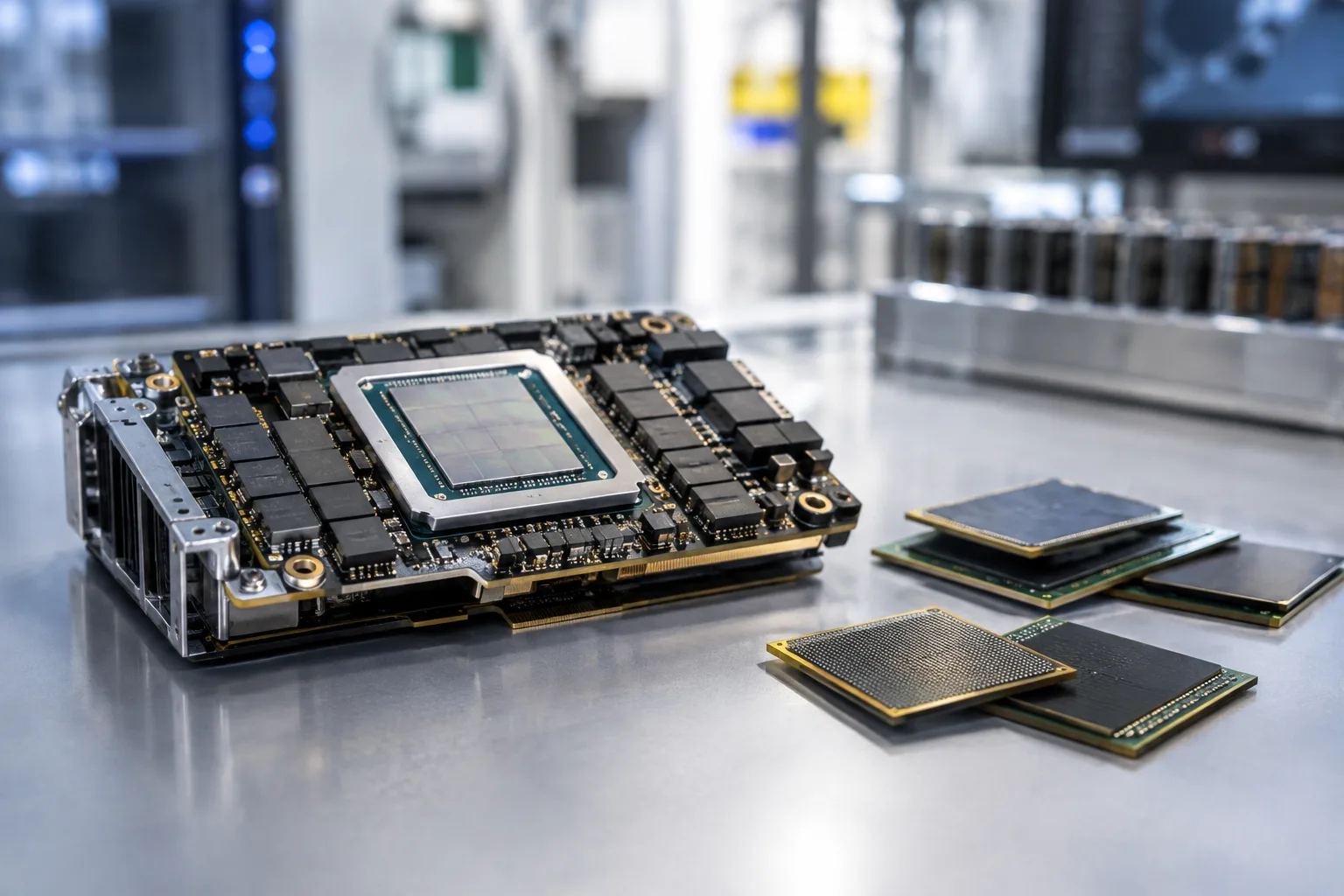
The UK’s Advanced Research and Invention Agency (ARIA) will install Lumai’s Iris optical AI inference servers at the Scaling Inference Lab. Announced on 3 November 2026, the project will be carried out at the lab operated by CommonAI CIC, under commercial data center conditions. Its aim is to evaluate light-based computing with real workloads and at rack scale.
How does Iris use optical computing?
Lumai’s system does not rely solely on transistors in silicon chips for computation. According to the company, numerical data is encoded in the intensity of light, while passive optical components such as lenses are used to perform mathematical operations. Iris targets the compute-intensive “prefill” stage, the first phase of large language model inference.
The second inference stage, “decode,” is more reliant on memory bandwidth. Lumai positions Iris not as a replacement for silicon-based hardware, but as a solution that works alongside it. The company says Iris performs millions of matrix operations in a single optical cycle.
Energy-efficiency claims to be tested
Lumai claims optical computing could cut data center power consumption by up to 90% and reduce total cost of ownership to around one-tenth of that of conventional GPU architectures. The company also claims that, when used alongside silicon hardware, Iris can deliver at least 16 times greater energy efficiency per inference.
These should be understood as Lumai’s goals and claims for the technology, not as results verified by independent testing. ARIA’s lab will allow the system to be tested with real workloads under standard power, cooling, and rack-integration conditions. The announcement did not specify how long the tests will run or when the results will be published.
Lumai Iris Nova was introduced as the company’s first product, made available for evaluation in April 2026. The ARIA installation is an assessment of the optical computing approach as it moves from a research setting into commercial data center conditions. The announcement provided no information about general availability or pricing.
Implications for architecture and visualization workflows
This development does not directly add a new feature to the modeling and rendering software used by architecture firms. Any potential impact is more indirect: it points to efforts to improve the energy efficiency of the data center infrastructure used by teams running image generation, text-based assistants, or other AI services. However, Lumai’s announcement did not specify compatibility with architectural software, client hardware, or any particular visualization workflow.
For teams, the decision today is therefore not to replace existing GPU systems, but to follow the lab test results and any future information about software compatibility. Until licensing, availability, and hardware requirements are disclosed, it is not possible to assess the solution’s contribution to the day-to-day work of firms in Turkey.
Sources
1 sourceSource texts are not republished; short quotes are marked, everything else is our own summary and commentary.
For architecture and visualization teams, Lumai Iris’s value today lies less in being a direct production tool than in offering a new approach to the energy and computing costs behind AI services. That makes ARIA’s test under real data center conditions worth watching, but the company’s efficiency figures are not yet verified results.
For firms in Turkey, independent test results, access and licensing terms, software compatibility, and hardware requirements will be key to any practical assessment. Until those details are disclosed, there is not enough information to justify changing existing GPU investments.
Frequently asked questions
What is Lumai Iris?
Lumai Iris is a set of optical computing servers designed to perform AI inference using light. The company is targeting the compute-intensive prefill stage of inference.
Where will ARIA test Lumai Iris?
The Iris servers will be evaluated under commercial data center conditions at the ARIA Scaling Inference Lab, operated by CommonAI CIC.
Is Lumai Iris compatible with architectural visualization software?
The announcement did not provide information about compatibility with architectural modeling or visualization software.