In brief
- Good Times General Store has opened at the Desa Potato Head resort in Seminyak, Bali.
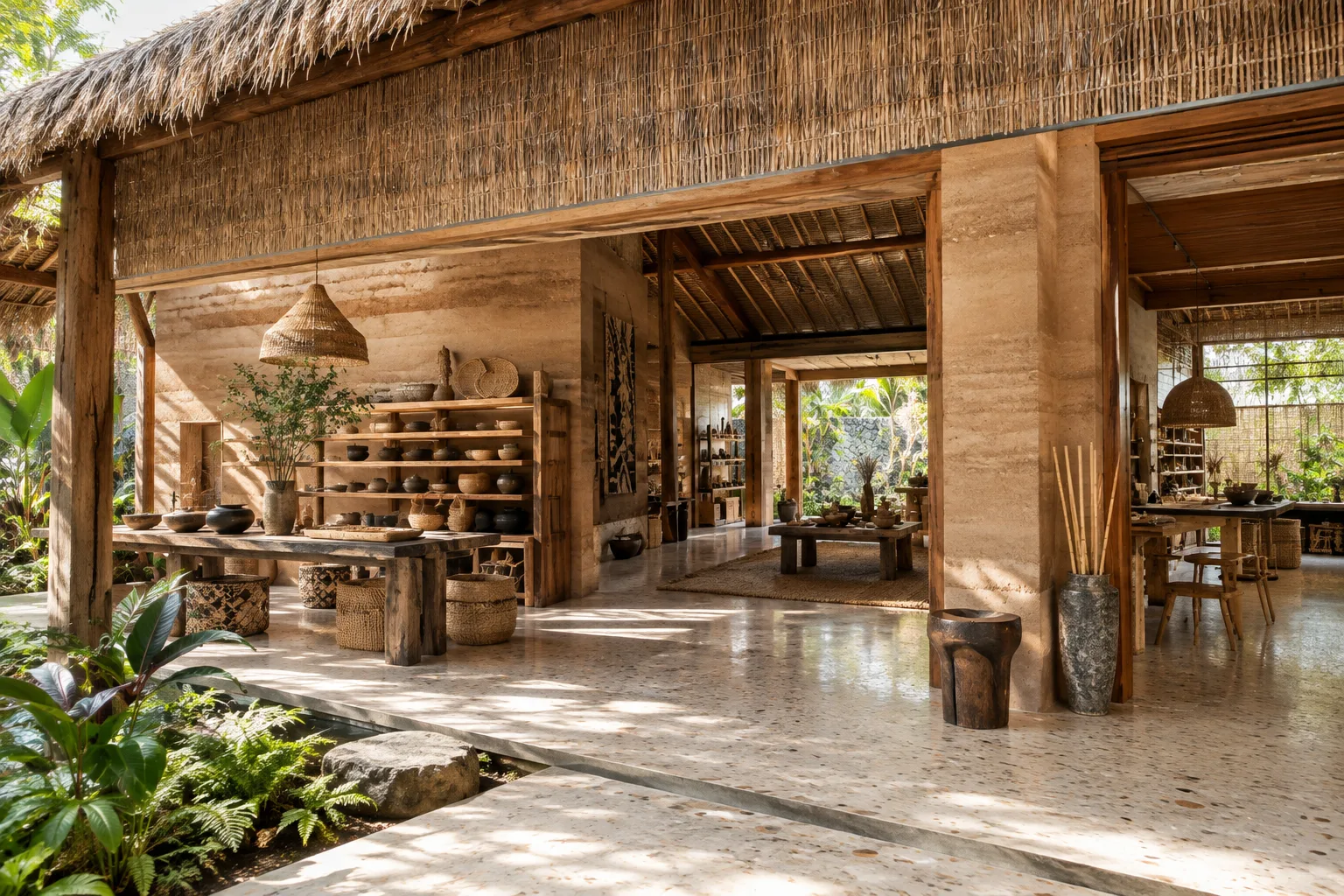
- The building features alang-alang thatch cladding, rammed earth made from local clay, reclaimed wood and terrazzo containing bamboo waste.
- Its five connected sections are dedicated to retail, craft, natural dyes and experiments with plastic as a material.
- Weaving, upcycling and sewing workshops are planned for the program in 2027.
OMA and Potato Head have opened Good Times General Store at the Desa Potato Head resort in Seminyak, Bali. The project, covered in a report published on 23 October 2026, brings shopping together with production, craft and material experimentation. Described as Potato Head’s first permanent store, it combines Indonesian-made products and hands-on activities in one space.
Local materials define the architecture
The building was developed by OMA in collaboration with Ade Herkarisma, Potato Head’s Group Head of Architecture and Development, and draws on local building traditions. The exterior is clad in alang-alang thatch, while the interior features rammed earth walls made from local clay. Terrazzo floors containing reclaimed wood and recycled bamboo offcuts are also part of the material palette.
The interior is organized by fragmented earth blocks, which also create permeable boundaries between different functions. Rather than relegating materials to a decorative backdrop, the design makes them a visible part of the spatial experience. In this way, the building’s material choices and the store’s themes of production and reuse come together in a single approach.
Five sections connect products with production
The five interconnected sections are dedicated to different products and forms of production. The first two areas display gifts, books, records and lifestyle products by independent makers, alongside Potato Head’s Bali-inspired clothing and travel collection. The third section features Max Lamb’s Wasted collection, which transforms discarded plastics and other waste materials into furniture and homeware.
Visitors encounter production processes in the remaining two sections. In the active natural dye studio, pigments are made from plant and food waste collected across Desa Potato Head, and visitors can experiment with dyeing and pattern-making. The adjacent workshop contains shredded HDPE plastic sourced from collectors and upcycling workers in Bali and Java. This space is dedicated to plastic molding and material experimentation.
The store’s program will expand
Good Times General Store also connects with Potato Head’s existing sustainability initiatives. These include the Waste Lab, where discarded materials are examined and repurposed, and the Follow the Waste Tour, which tracks the movement of resources across the resort. According to the report, new workshops for weaving, upcycling and sewing are planned for 2027.
OMA has previously worked with Potato Head on spaces at the Desa resort, including the hotel and Klymax Discotheque. The new store shifts the focus from hospitality and entertainment to everyday consumption, craft and the next life of materials. Potato Head founder Ronald Akili also emphasizes that the project creates space to understand who makes a product, what materials are used and what might happen to it after use.
What it means for architecture and visualization teams
The project offers architecture and interior design teams a tangible example of how material selection can be designed alongside spatial organization: reclaimed wood, bamboo offcuts, local clay and thatch cladding are not merely surface choices, but part of the store’s narrative around production and reuse. The five sections connect retail and workshop functions within a single interior layout.
For visualization teams, the source highlights the textures of different surfaces, how the fragmented earth walls divide the space and the relationship between the workshops and retail areas. However, the source does not provide project drawings, dimensions, material specifications, software used or construction costs. The project should therefore be treated as a reference for the relationship between materials and program, rather than as a ready-to-use set of construction details.
Sources
1 sourceSource texts are not republished; short quotes are marked, everything else is our own summary and commentary.
Good Times General Store’s strength lies in turning sustainability from a matter of material selection alone into a spatial program where visitors encounter production processes. For architecture and interior design offices in Turkey, it is a noteworthy reference for bringing local materials, reuse and functional planning together in a single narrative.
However, the project information does not include costs, technical specifications or material performance data. Offices should therefore assess local sourcing, maintenance and construction conditions rather than directly copying a similar approach. For visualization, it is also important to accurately convey the transitions between different areas, as well as the appearance of the materials.
Frequently asked questions
Where is Good Times General Store located?
The store is at the Desa Potato Head resort in Seminyak, on the Indonesian island of Bali.
What workshops are available at Good Times General Store?
The space includes a studio that makes natural dyes from plant and food waste, as well as a workshop dedicated to plastic molding and material experimentation. Weaving, upcycling and sewing workshops are planned for 2027.
What materials were used at OMA and Potato Head’s store?
The source mentions alang-alang thatch cladding, rammed earth walls made from local clay, and terrazzo floors containing reclaimed wood and recycled bamboo offcuts.