In brief
- Lambda is connecting NVIDIA GB300 NVL72 racks with Photonics co-packaged optics (CPO) switches.
- According to NVIDIA, the cluster contains more than 10,000 GPUs.
- Each switch has 144 ports operating at 800 Gb/s and 18 replaceable external light sources.
- NVIDIA reports up to 5x better power efficiency and up to 15x greater reliability compared with traditional pluggable optics.
In an announcement published on 16 November 2026, NVIDIA said that cloud provider Lambda had deployed an AI cluster using Photonics co-packaged optics (CPO) switches. The system connects NVIDIA GB300 NVL72 racks and contains more than 10,000 GPUs. NVIDIA says the deployment, shared as part of SC26, is an example of optical connectivity being used in a large-scale cluster.
How does the connectivity system work?
In traditional pluggable optics, the components used to convert between optical and electrical signals are located on the switch’s front panel. NVIDIA’s Photonics approach places the optical engines in the same package as the switch chip. This shortens the electrical signal path between the chip and optical components; NVIDIA says the distance drops from inches to millimeters, eliminating the need for retimer chips.
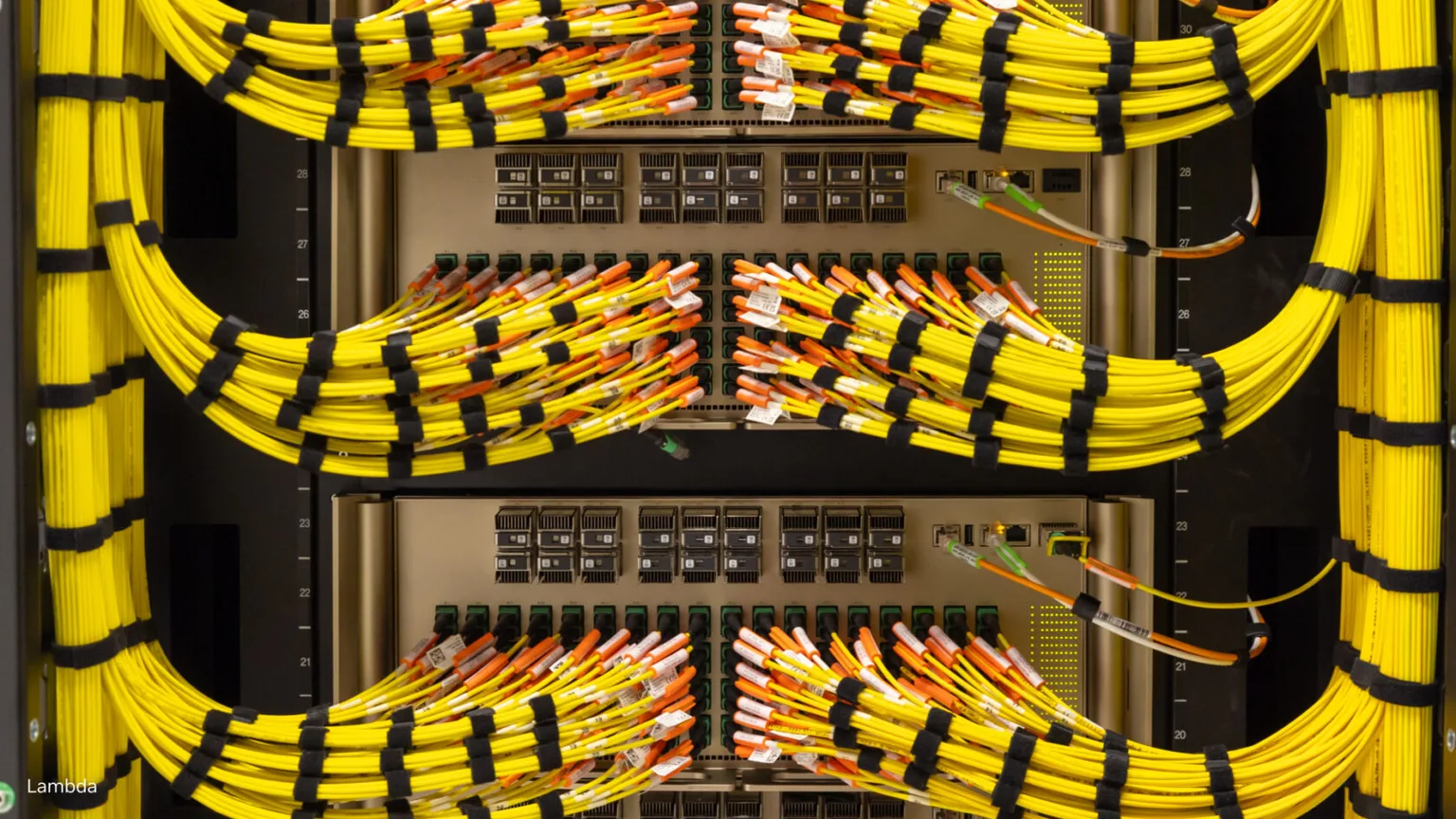
Each switch in Lambda’s deployment has 144 ports operating at 800 Gb/s. The system has 18 external light sources that supply light to the optical engines. These modules can be replaced in the field; according to NVIDIA, a failed light source does not require replacing the entire optical module. Liquid cooling removes heat generated by the switch chip and optical engines.
What results did NVIDIA report in its tests?
In tests comparing the system with traditional pluggable optics, NVIDIA reports latency reductions of around 4% at rack scale and up to around 10% at pod scale. According to the company, data throughput remains at the same level as traditional solutions in rack, scalable-unit and pod configurations.
The other comparisons reported by the manufacturer include up to 5x better power efficiency and up to 15x greater reliability. NVIDIA also says the system uses four times fewer lasers. Measurements reported by Lambda put the median temperature of the optics at 36 °C, compared with 51 °C for traditional pluggable optics. These figures are based on statements from the manufacturer and operator; they do not mean the same results will be achieved in different deployments.
ServeTheHome describes the deployment as one of the first CPO clusters running in production. According to the publication, moving optical components into the switch package could reduce the number of long copper connections. This approach is particularly relevant when assessing the total power consumption of network hardware in large clusters where power and space are limited.
What does this mean for architecture and visualization workflows?
The announcement does not deliver a render software update or a new feature for architectural visualization tools. Its impact is more closely tied to the network infrastructure of large AI clusters. Organizations building high-density systems for AI training or inference may want to keep an eye on solutions like this when assessing how network connections affect downtime and power consumption.
For architecture firms, interior designers and visualization teams, the 144 ports, 800 Gb/s speed and replaceable light sources described here are not direct criteria for buying a desktop workstation. This is cluster-scale infrastructure; the sources do not specify the product’s price, availability or licensing terms. It is therefore more accurate to view the announcement as a development in large-scale computing infrastructure rather than an upgrade that can be applied immediately to existing render hardware.
Sources
1 sourceSource texts are not republished; short quotes are marked, everything else is our own summary and commentary.
For architecture and visualization teams, the value of this announcement lies less in a new rendering feature and more in showing what is changing in the network design of large AI clusters. In particular, GPU-intensive workloads call for downtime, latency and network power consumption to be considered together; still, it is worth remembering that NVIDIA’s reported gains apply to specific tests and deployments.
For firms in Turkey, there is no pricing, availability or licensing information to support an immediate purchasing decision. What’s more, this system is aimed at large-scale clusters rather than individual workstations. For now, the key is to compare manufacturer claims with independent measurements and real project needs, and to avoid investment decisions until hardware and cooling requirements are clear.
Frequently asked questions
Which AI cluster is using NVIDIA Photonics CPO?
Lambda is connecting NVIDIA GB300 NVL72 racks with Photonics CPO switches. According to NVIDIA, the cluster contains more than 10,000 GPUs.
How many ports do Lambda’s CPO switches have?
According to NVIDIA, each switch has 144 ports operating at 800 Gb/s.
Has the price of NVIDIA Photonics CPO been announced?
The sources do not disclose the system’s price or licensing terms.