In brief
- The theme for the 2026–2027 edition is “ACİL – Post-Disaster Living Module.”
- Entry is free. Participants can submit individually or in teams of up to three.
- The student category emphasizes conceptual development, while the professional category focuses on production and implementation.
- The deadline is 24 December 2026; according to the organizer’s schedule, results are set to be announced on 1 February 2027.
The Mikro-Mekân National Design Competition has announced “ACİL – Post-Disaster Living Module” as the theme for its 2026–2027 edition. The competition will evaluate proposals for spatial systems that address the need for shelter after a disaster in student and academic/professional categories. Entry is free, and the deadline is 24 December 2026.
What kinds of design proposals is the competition seeking?
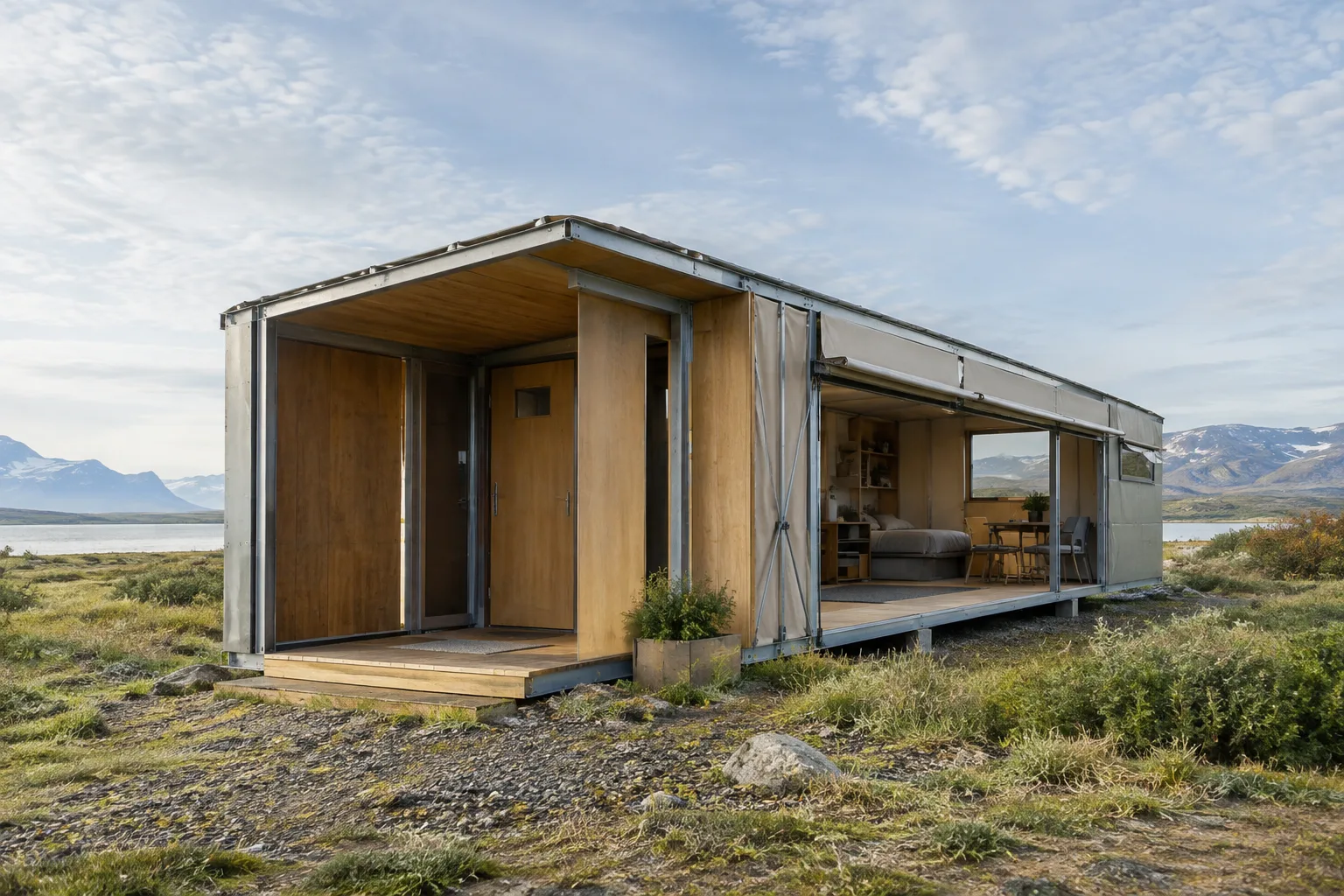
The call focuses on living modules that can be used immediately after a disaster and support everyday life during the transition to permanent housing. Proposals are expected to go beyond a single shelter unit and present a replicable system suited to local production and adaptable to different geographic conditions.
The scope of work differs between the competition’s two categories. In the undergraduate student category, entries will be assessed on how the disaster scenario is translated into space, as well as on spatial organization, flexibility, adaptability and sustainability. Conceptual depth and scenario development take priority in this category; technical details and engineering calculations are not required.
In the academic and professional category, proposals must explain more clearly how they would be produced and implemented. In addition to the system concept, applicants are expected to address materials, local production, logistics, assembly and scalability. An engineering project file suitable for use in the permitting process is not required; however, the proposal should make clear how the design could be taken into production.
Who can enter, and under what conditions?
The undergraduate student category is open to students who are citizens of the Republic of Türkiye or the Turkish Republic of Northern Cyprus and are enrolled in undergraduate programs in architecture, interior architecture, interior architecture and environmental design, or industrial product design. A current student certificate is required.
The academic and professional category is open to professionals and academics who meet the stated citizenship requirement and have graduated from departments of architecture, interior architecture, interior architecture and environmental design, or industrial design. Applicants in this category must provide a current graduation certificate.
Both categories allow individual entries. Teams may consist of up to three people, and the team leader must submit the group application. Each participant or team may enter one project.
Schedule and prizes
The organizer’s competition website lists 11 May 2026 as the opening date for submissions and 24 December 2026 as the deadline. The same schedule sets the preliminary evaluation for 8 January 2027, the final jury for 29 January 2027, and the announcement of results for 1 February 2027. However, the Tasarım Yarışmaları page announcing the competition lists different dates for the final evaluation and announcement of results. For schedule details, applicants should therefore refer to the organizer’s latest announcement and the competition brief.
In the professional category, the first-place prize is 100,000 TL, the second-place prize is 85,000 TL, and the third-place prize is 70,000 TL. In the student category, the prizes are 50,000 TL, 35,000 TL and 25,000 TL, respectively.
What does this mean for architecture and visualization workflows?
The competition offers architecture and interior architecture students an opportunity to translate disaster conditions into spatial scenarios and develop a modular living arrangement. Professional teams, meanwhile, are expected to build their design narrative around production, materials, logistics and assembly decisions. Visualization can help communicate the use scenario and spatial organization, but in the professional category, manufacturability and replicability must also be part of the proposal.
Since submission requirements vary by category, it is important to check the entry conditions and required documents before starting work on a project. Given the discrepancies in the published schedule, submission and evaluation dates should also be verified against the organizer’s announcements.
Sources
2 sourcesSource texts are not republished; short quotes are marked, everything else is our own summary and commentary.
One of the competition’s strengths is that it approaches post-disaster shelter not simply as a shelter drawing, but as an adaptable and replicable system. By making room for conceptual work in the student category, it may enable teams with different levels of experience to develop proposals suited to their scope.
For professional entries, the production and assembly approach will need to be as convincing as the visual quality. Teams would be wise to check the category requirements, required documents and the organizer’s latest schedule before deciding how much work and presentation material to prepare.
Frequently asked questions
When is the deadline for the Mikro-Mekân competition?
The deadline is 24 December 2026. Entry is free.
What is the theme of the 2026–2027 Mikro-Mekân competition?
The theme is “ACİL – Post-Disaster Living Module.” The competition seeks proposals for adaptable living module systems that can be used after a disaster.
Can I enter the competition as part of a team?
Yes. Entries can be submitted individually or in teams of up to three. Each participant or team may submit one project.