In brief
- More than 700 surface-mounted LED fixtures were used at the cathedral.
- Lighting poles secured with custom clamps were installed without drilling into the stonework.
- The share of light from fixtures positioned away from the building fell from 80% to 10%.
- Licht Kunst Licht reported an 80% reduction in total energy consumption with the new system.
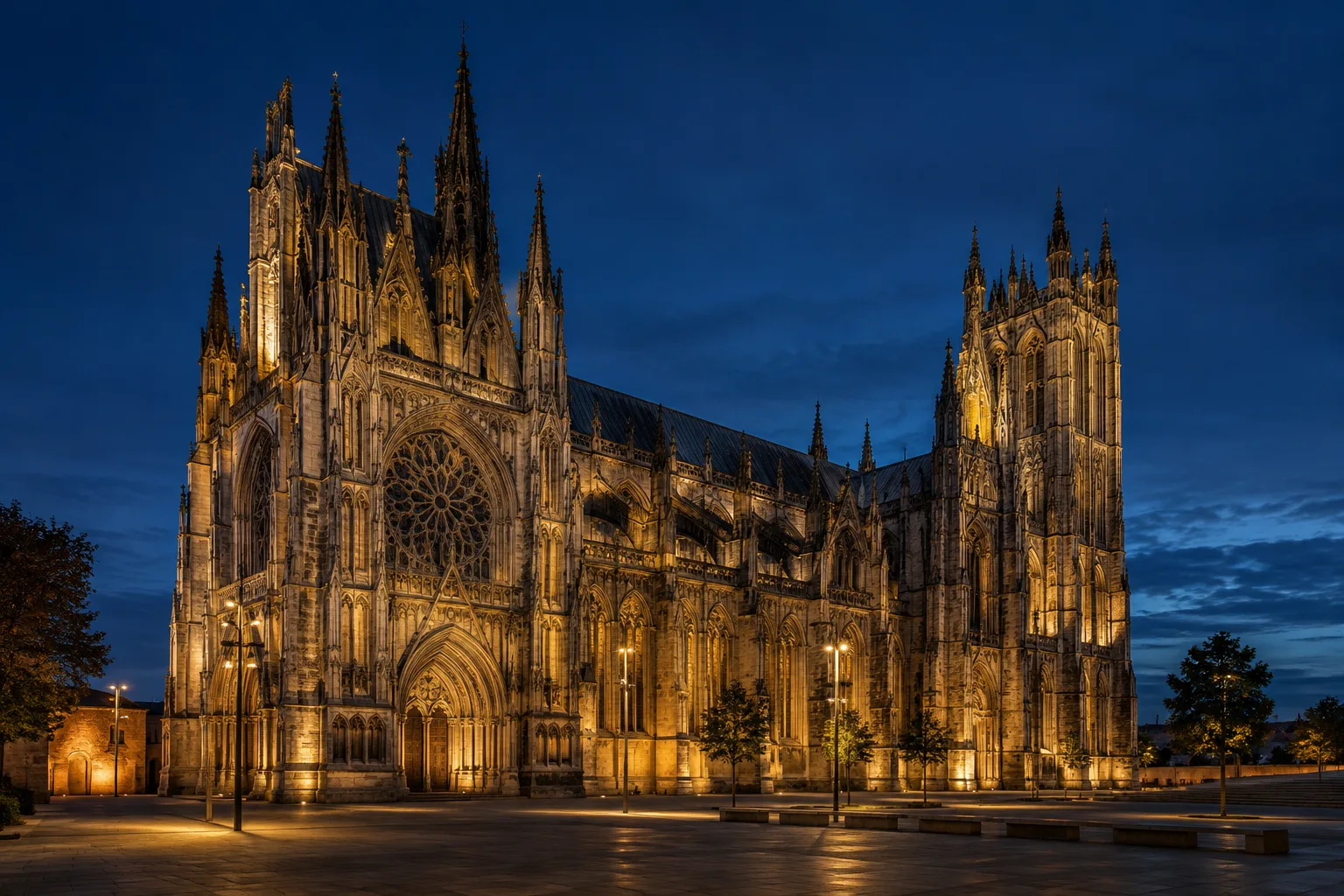
Lighting design studio Licht Kunst Licht (LKL) upgraded the night lighting at Cologne Cathedral in collaboration with RheinEnergie and the Dombauhütte Köln restoration workshop. The project was covered in a Dezeen article published on 12 November 2026. More than 700 surface-mounted LED fixtures were used at the historic building, without drilling into the stonework. According to LKL, the new scheme delivers higher-quality façade lighting while reducing total energy consumption by 80%.
How does the new system protect the stonework?
Previously, the cathedral was illuminated by 1,000-watt metal-halide lamps installed on nearby buildings. LKL says these floodlights consumed a lot of energy and bathed the structure in neutral white light from a wide area. The new design instead uses warm-spectrum LEDs to direct light onto details of the façade.
One of the system’s key elements is a set of multifunctional lighting poles developed specifically for the building. The poles are secured with custom clamps, eliminating the need to drill into the stonework. The design team aimed to make the hardware as unobtrusive as possible during the day and ensure it could be removed without damaging the historic structure. Each pole has a glare-shielding light module. The modules can illuminate the façade or circulation areas and can be dimmed; their use can be adjusted to suit events, seasons and ecological requirements.
Façade details receive more targeted lighting
In the new scheme, soft backlighting on the façade works alongside lighting that emphasizes its vertical surfaces. The aim is to reveal the depth, rhythm and verticality of the Gothic façade, rather than flattening it with uniform illumination. The simple stainless-steel poles in the cathedral square also light the entrances and selected sections of the façade.
According to LKL, fixtures located away from the building accounted for 80% of the light in the previous setup, compared with 10% in the new system. The studio says this change reduces light spill and makes the lighting more precise. The use of long-wavelength light is also intended to reduce the impact on nocturnal species. These figures on energy savings and light control are based on LKL’s statements about the project.
The role of on-site tests in design decisions
The lack of detailed architectural plans for the cathedral made a comprehensive survey of the façade necessary. According to project lead and lighting designer Philipp Schmitz, digital simulations alone were not sufficient for the building’s complex and varied surfaces. The team carried out on-site tests to determine the desired effects, assessing the optics, beam angles and fixture positions through observation.
This approach offers an important reminder for architecture and interior design teams working with historic buildings, as well as for archviz artists: visualization can help compare lighting alternatives, but in this project, final decisions were also tested through on-site observation. Mounting methods, removability and environmental impacts were part of the design, alongside the visual quality of the light. The source does not specify the simulation software used, hardware requirements or licensing terms, so no conclusions can be drawn about compatibility with any particular software or system.
The Dezeen article describes the project as the winner of this year’s Dezeen Awards public vote for Lighting Design of the Year. The project has also been shortlisted for the overall award.
Sources
1 sourceSource texts are not republished; short quotes are marked, everything else is our own summary and commentary.
A practical point of interest in the Cologne Cathedral project is how it treats the physical relationship between the lighting design and the historic surface. The goal of securing fixtures without drilling and making the hardware removable shows why installation details should be considered early in projects involving buildings with conservation requirements. The 80% reduction in energy use is a result reported by LKL; the source does not provide information about the measurement method or independent verification.
For offices and visualization teams in Turkey, on-site testing is a validation step that can complement digital simulation, not replace it. The project budget, fixture costs and maintenance conditions have not been disclosed, so costs should be assessed separately for similar applications. Alongside lighting performance, mounting, removability and environmental impacts are also factors to consider.
Frequently asked questions
How many LED fixtures were used in Cologne Cathedral’s new lighting scheme?
The project used more than 700 surface-mounted LED fixtures.
Does the new lighting require drilling into the historic stonework?
No. The poles are secured with custom clamps, so there is no need to drill into the stonework. The design also aims to make the hardware removable without damaging the building.
How much does the new lighting at Cologne Cathedral reduce energy consumption?
Licht Kunst Licht reports an 80% reduction in total energy consumption.