In brief
- NVIDIA says Agent Knowledge Foundation enables organizations to develop agent solutions while preserving their existing data environments and governance approaches.
- The new foundation includes CUDA-X libraries, Auto-Ontology, Nemotron Retriever and Kumo Structured open models.
- OpenShell offers a security layer that lets organizations define the resources agents can use and the actions they can take at runtime.
- Palantir, Databricks, Snowflake, Amazon OpenSearch Service, SAP, ServiceNow and Zoom are cited in the announcement with use cases.
NVIDIA has expanded NVIDIA Agent Toolkit with new components for agents that work with enterprise data. According to an announcement published by the company on 21 October 2026, the newly added NVIDIA Agent Knowledge Foundation aims to turn organizational knowledge into a format agents can use. The update brings data-processing libraries, open models, a secure runtime environment and agent blueprints together in a single software stack.
What components does Agent Knowledge Foundation include?
NVIDIA says organizations can use their existing data in new agent applications while keeping it where it is. According to the company, this approach can be adopted without changing existing workflows or data governance rules. Agents can draw on this knowledge base to answer organization-specific questions and contribute to decision-making through predictions.
CUDA-X libraries included in the foundation are cuDF, cuGraph, cuML, cuOpt and cuVS. The announcement also introduces the new Auto-Ontology. This library aims to map records in company data to business concepts such as customers, products and orders, and organize the relationships between them.
Model options include NVIDIA Nemotron Retriever and Kumo Structured open models. The Kumo Structured family consists of Kumo Tabular, Kumo Relational, Kumo Time Series and Kumo Forecast models. NVIDIA says these tools can be used for tasks such as finding enterprise knowledge, answering questions and making predictions.
How is the agents’ operating environment secured?
NVIDIA presents OpenShell as a secure runtime environment designed to keep agents within the access and operational rules set by an organization. NVIDIA NemoClaw provides secure design examples for agents focused on specific goals. The announcement also mentions a new NemoClaw optimization blueprint as a step-by-step starting point for those looking to improve agent performance.
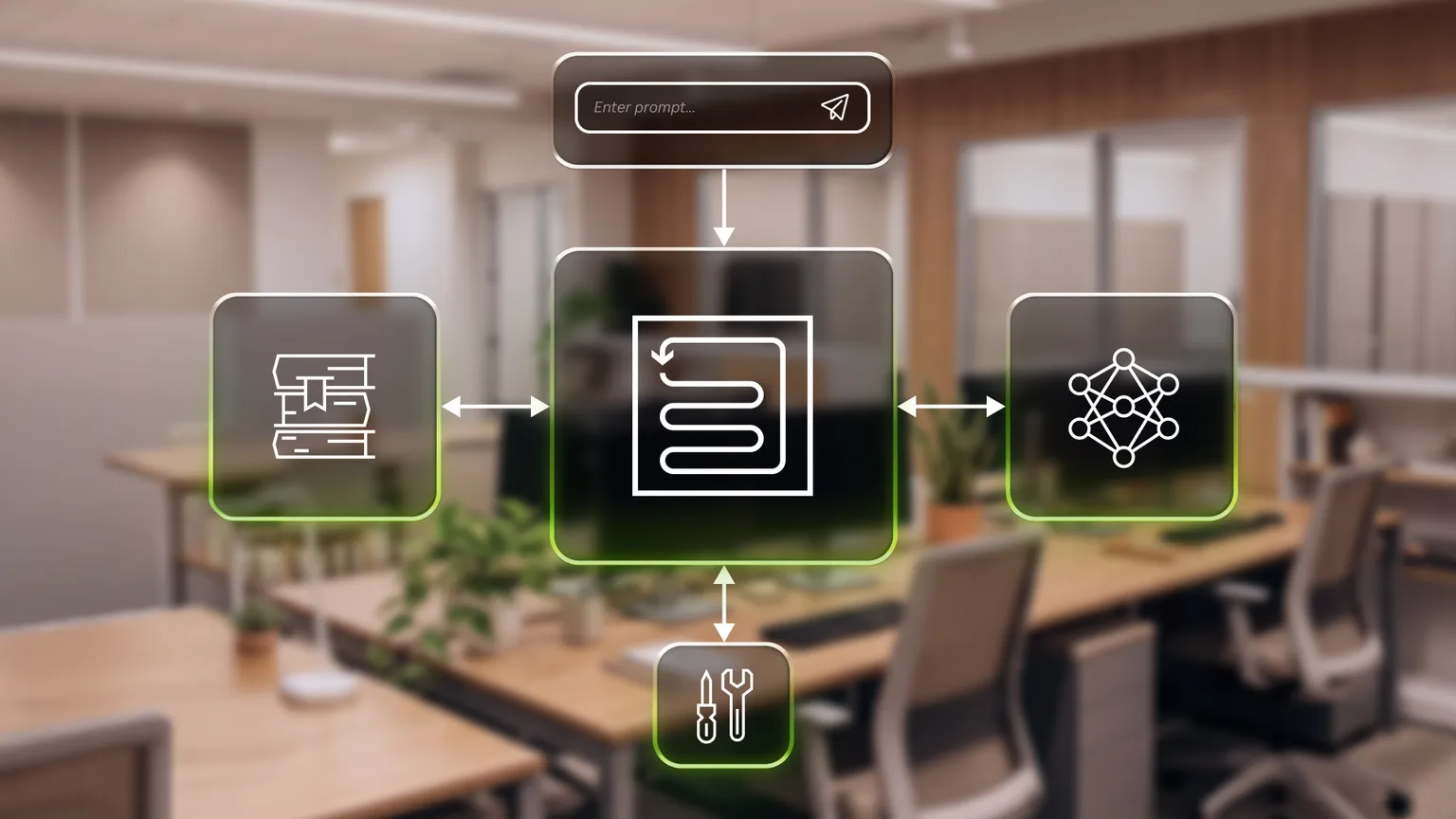
NVIDIA Agent Toolkit addresses models, data sources, the runtime environment and tools together. The package also lists tools and skills such as NeMo Relay and NeMo Compass. However, the announcement does not introduce integrations or ready-made workflows specifically for architecture applications.
Use cases shared by companies
NVIDIA says its own supply chain organization uses Agent Knowledge Foundation through Palantir Foundry, Ontology and AIP. Databricks pairs Kumo Anomaly with Genie Ontology. Snowflake customers can use Kumo Engine and Kumo Relational models in Notebook environments.
In examples involving search and information retrieval, Amazon OpenSearch Service is said to deliver more relevant results in fewer search steps using Nemotron Retriever. According to NVIDIA, SAP’s fine-tuned reranking system ran about three times faster, while ServiceNow improved reranking quality and reduced latency by about a quarter. Zoom also uses Nemotron Retriever models to improve document understanding, search relevance and access to context. These results are presented in the announcement as company use cases.
What this means for architecture and visualization teams
For architecture and interior design firms, as well as visualization teams, the announcement is notable for addressing both the idea of using agents to work with internal project knowledge and the limits on those agents’ operations. However, NVIDIA does not announce ready-made integrations for architectural documentation, BIM or visualization software. As a result, the announcement alone does not establish whether these workflows can use the tools directly.
Teams evaluating the technology should separately examine which data sources can be connected, how access rules are enforced and whether the tools are compatible with their existing software. The announcement does not include pricing, specific licensing terms or hardware requirements; further information should be awaited before making decisions on these points.
Sources
1 sourceSource texts are not republished; short quotes are marked, everything else is our own summary and commentary.
For offices, the practical value of Agent Toolkit lies in bringing access to organizational knowledge and the limits on agents’ operations into the same framework. The approach may interest teams in Turkey considering agent trials with project documentation; however, the announcement does not indicate that ready-made integrations with architecture or visualization software are available.
Rather than putting the tools directly into production, teams should first clarify their use cases, data access and security requirements. Since pricing, licensing terms and hardware requirements have not been disclosed, investment decisions around cost and compatibility should be approached cautiously until further information is available.
Frequently asked questions
What tools does NVIDIA Agent Knowledge Foundation include?
CUDA-X libraries, Auto-Ontology, NVIDIA Nemotron Retriever and Kumo Structured open models are among the components listed in the announcement. The Kumo Structured family includes Tabular, Relational, Time Series and Forecast models.
What is NVIDIA OpenShell used for?
OpenShell is described as a secure runtime environment that lets organizations define which resources agents can access and what actions they can perform while running.
Is NVIDIA Agent Toolkit compatible with architecture software?
The announcement provides no information about integrations specifically for architecture or visualization software. Pricing, specific licensing terms and hardware requirements are also not disclosed.