In brief
- cuDSS accelerates the solving of large sparse systems by leveraging GPUs.
- NVIDIA says the library can scale from a single workstation to large compute clusters.
- Developers can integrate cuDSS into existing software through C, C++, Python and Fortran interfaces.
- Examples shared by NVIDIA report speedups of up to 4x and 10x for specific applications.
NVIDIA announced on 21 October 2026 that its CUDA-X library cuDSS is generally available. The library, which aims to use GPUs to accelerate the large sparse system solves frequently repeated in engineering and scientific simulations, was introduced on the company’s blog. NVIDIA says the goal is to shorten the time it takes to get simulation results while expanding the range of models and design options teams can evaluate.
Which computational task does cuDSS target?
Solving sparse systems is one of the computationally intensive, recurring steps in engineering and scientific simulations. NVIDIA says simulations can take longer as designs become more complex, leaving teams with fewer ideas to test. cuDSS is designed to accelerate this mathematical workload by leveraging GPUs.
According to the company, this approach can help applications produce results faster and increase simulation capacity. Users may then be able to evaluate larger, more realistic models, more accurate representations and a wider design space. cuDSS is not a design or visualization application in its own right; it is offered as a library that developers can integrate into engineering, scientific and optimization software.
Performance examples shared by NVIDIA
The announcement includes results from companies that have added cuDSS to their products, covering different workloads. These figures reflect specific software and simulation examples and do not mean that every application will achieve the same performance.
According to NVIDIA, Applied Materials accelerated sparse system solving by up to 10x in its Ginestra platform compared with CPU-only methods.
ZEISS SMT’s EUV lithography plasma simulation benchmark used COMSOL Multiphysics and NVIDIA-accelerated computing. The reported speedup was 4x, with the simulation completed in six days and 14 hours.
Dassault Systèmes reported an 8x to 10x speedup using cuDSS in the electromagnetic solvers in Abaqus.
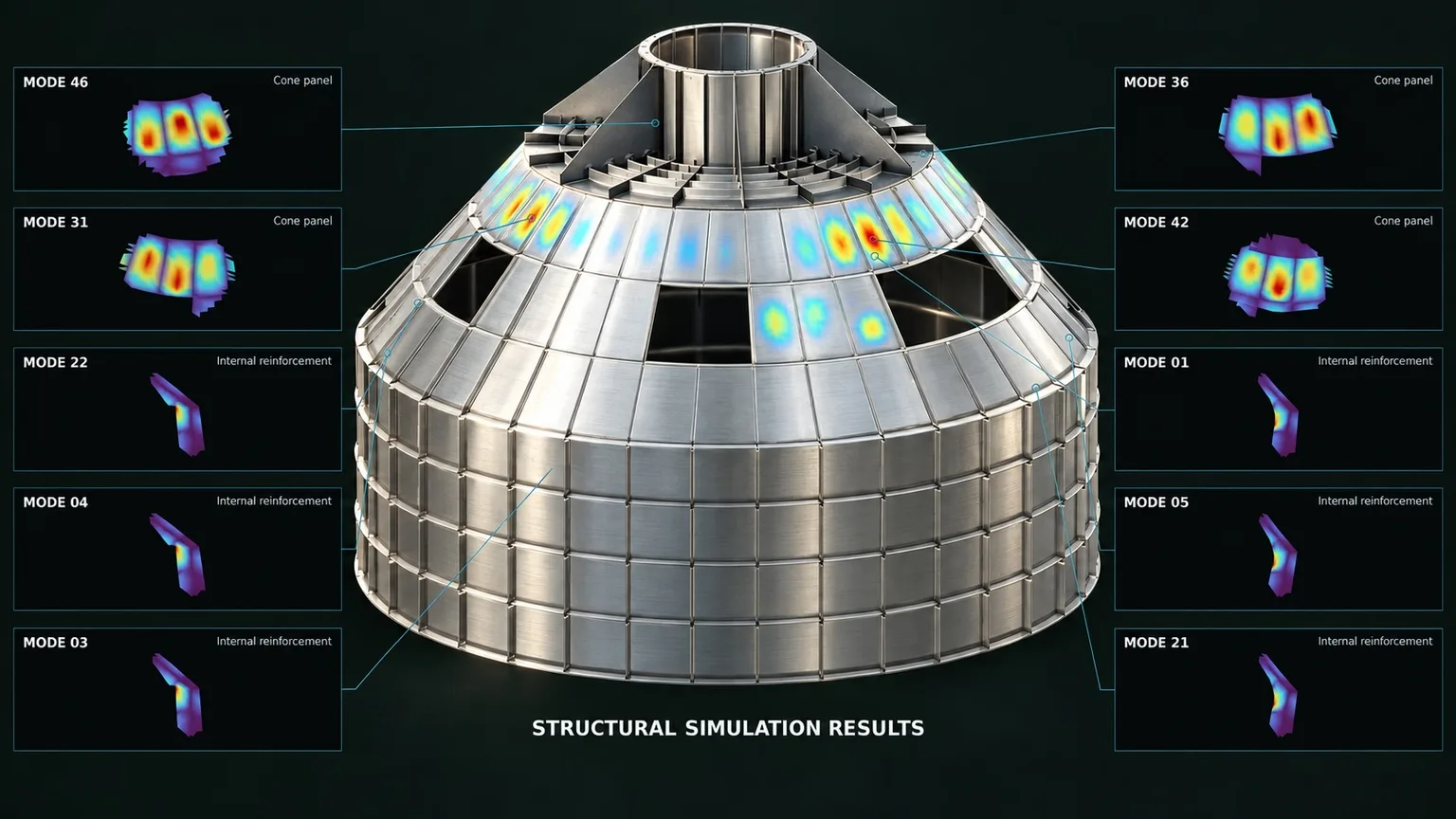
Cadence uses cuDSS in its Celsius software for thermal, structural stress and warpage simulations. Siemens and Synopsys also provided examples of integration into their simulation tools.
These performance figures are company results cited in NVIDIA’s announcement. They do not guarantee similar gains across different hardware, software settings or simulation types.
Integration and scaling options
Developers can use cuDSS through C, C++, Python and Fortran interfaces. NVIDIA says the library can scale from individual workstations to large compute clusters. The aim is to make it possible to add GPU acceleration to existing engineering, scientific and optimization software.
The announcement did not provide information on pricing, licensing terms, or supported hardware and software versions. Teams considering integration should therefore verify compatibility requirements for their own software and systems.
Impact on architecture and visualization workflows
For architecture and interior design firms, the announcement does not mean cuDSS is a modeling or real-time rendering tool. A potential benefit could arise if software used for building physics, material behavior or other engineering calculations integrates the library. NVIDIA’s examples focus on industrial and scientific simulations; no direct results for architectural visualization performance were shared.
Firms should therefore look for cuDSS integration in the simulation software they use, as well as hardware compatibility and licensing terms. For archviz artists, the announcement does not mean existing modeling or rendering software will automatically become faster. Until integration is announced for a given application, cuDSS should not be treated as a tool that can be added directly to an existing workflow.
Sources
1 sourceSource texts are not republished; short quotes are marked, everything else is our own summary and commentary.
For architecture and visualization firms in Turkey, cuDSS is less a tool they can start using immediately to reduce render times and more a development in the computing infrastructure behind engineering simulations. It could give teams that use simulation more options to evaluate, but the reported speedups apply to specific workloads and are based on company statements.
Before making a decision, firms should confirm integration in their software, as well as hardware compatibility and licensing terms. It would be premature to plan an investment or workflow change before this information is available. There are no figures showing a direct improvement in rendering performance for archviz.
Frequently asked questions
What is NVIDIA cuDSS?
cuDSS is a CUDA-X library designed to accelerate the solving of large sparse systems on GPUs for engineering and scientific simulations. Developers can integrate it into their existing software.
Which programming interfaces does cuDSS support?
According to NVIDIA’s announcement, cuDSS can be used through C, C++, Python and Fortran interfaces.
Does cuDSS accelerate architectural rendering software?
The announcement does not include an integration or performance result for architectural rendering software. Any potential impact depends on whether the relevant simulation software integrates cuDSS.