In brief
- Atelier Manferdini designed the facade of an electrical substation for Dominion Energy in Crystal City, Virginia, USA.
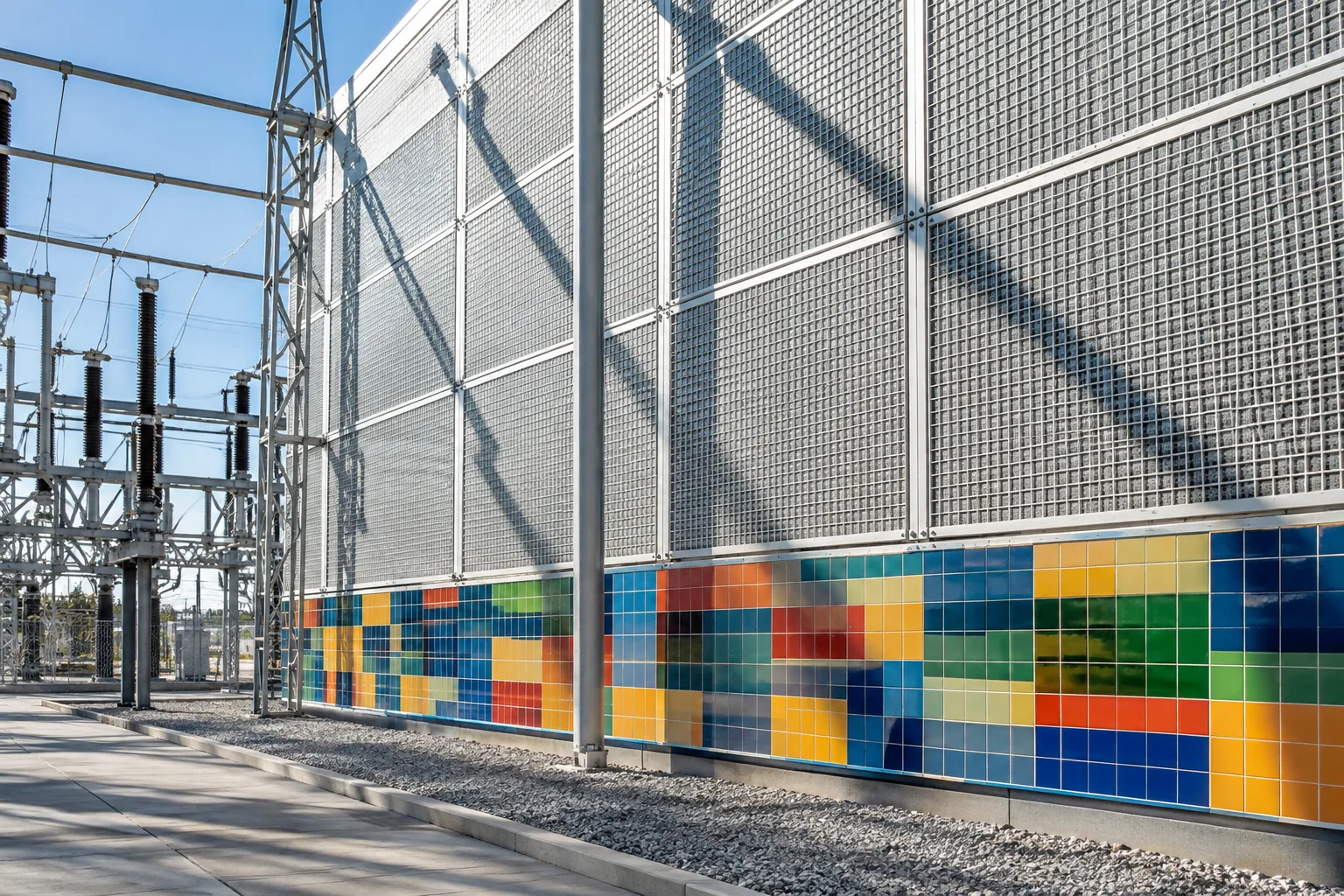
- Named InVisible, the project features a ceramic tile band on the building's lower section designed with Processing software, using 10 colors and three different sizes (5, 10 and 15 centimeters).
- The upper portion of the structure features a massive gridded aluminum panel system that lets sunlight through at varying intensities, illuminated at night with programmable LEDs.
- Studio founder Elena Manferdini states that the design's goal was to bring human scale to a functional structure built for machines.
California-based Atelier Manferdini has redesigned the facade of an electrical substation in Crystal City, Virginia, near Washington DC. Named InVisible, the project was carried out for utility provider Dominion Energy as part of the building's renovation process.
Studio founder Elena Manferdini, who is of Italian origin and teaches at Sci-Arc in Los Angeles, emphasizes that substations are usually designed solely for machines, but that urban infrastructure can also establish a relationship with human scale. The design team aimed to leave the building's functional interior as is while turning the exterior facade into an opportunity to engage in dialogue with the community.
How the algorithmic pattern on the facade was generated
The substation converts and transmits electricity across different voltage levels. To visualize this process, Atelier Manferdini used Processing, a programming environment originating from MIT Media Lab. The ceramic tile band wrapping the lower section of the building features 10 colors and three different sizes (tiles roughly 5, 10 and 15 centimeters wide), with these dimensions referencing different voltage levels. "Glitch" effects deliberately introduced into the program during the design process gave the graphic an irregular, organic rhythm. As noted in the source, this pattern evokes modernist artist Piet Mondrian's Boogie Woogie series, which was based on the rhythm of cities.
Light and shadow play on the upper facade
Above the ceramic band sit massive gridded aluminum panels forming a ventilated facade system. The panels are placed at varying distances from the exterior walls and overlap at their joints, allowing sunlight to pass through the grid at different intensities and creating a lighting effect that changes throughout the day. At night, the panels are backlit with programmable LEDs. According to the studio, the colorful, textured pattern of the lower band and the calm metallic surface of the upper band together form a single architectural composition.
What this means for architecture and archviz practice
The project offers a concrete example for offices and visualization teams in Turkey of how functional infrastructure structures can also carry design value. Demonstrating how visual programming environments like Processing can be used to generate parametric facade patterns, the project is particularly a reference point for:
Public institutions and energy companies looking to invest in facade design for industrial and infrastructure projects,
Archviz and facade design teams interested in algorithmic pattern generation,
Architecture firms wanting to combine material diversity (ceramic tile + aluminum panel) in a single composition
Details of the project such as light transmission and shadow effects once again highlight the importance of daylight simulations during the rendering and visualization stage.
Similar examples
The source also references other examples of similar approaches: a project by Schmidt Hammer Lassen that clads a power plant in China with steel louvers and adds a walking path on top, and a sculptural stormwater facility designed by Canadian studio GH3 in Toronto, both cited as other recent examples of the aesthetic potential of infrastructure structures.
Sources
1 sourceSource texts are not republished; short quotes are marked, everything else is our own summary and commentary.
This project reminds architecture and visualization offices in Turkey that seemingly insignificant infrastructure structures also carry the potential to build brand value and urban identity. For offices working with energy companies and municipalities, it may be worthwhile to consider how algorithmic facade design could be evaluated, both in terms of cost and visual impact, for structures like substations and pump stations.
The use of open-source tools like Processing shows that such projects can be realized without major software investment. However, gridded aluminum panel systems and multi-colored ceramic applications require close coordination with local suppliers during manufacturing and installation, a factor that must be carefully considered in budget and schedule planning.
Frequently asked questions
Where is the InVisible project located and who was it designed for?
The project was designed by Atelier Manferdini for an electrical substation in Crystal City, Virginia, near Washington DC, on behalf of energy provider Dominion Energy.
How was the pattern on the facade created?
The pattern was designed with Processing software originating from MIT Media Lab; ceramic tiles in 10 colors and three different sizes were used, and deliberate "glitch" effects were added to the program.
What is the purpose of the aluminum panels on the upper facade?
The gridded aluminum panels form a ventilated facade system, create light-shadow effects that change throughout the day, and are backlit with programmable LEDs at night.