In brief
- Gemini 4 Argon’s output limit has increased from 64,000 tokens to 1 million tokens.
- The model is initially available to selected cybersecurity experts in the Fairwind program.
- Introductory API pricing is $2 per million input tokens and $10 per million output tokens.
- The model accepts text, image, video and audio inputs, but generates text only.
Google announced its new flagship AI model, Gemini 4 Argon, on 30 September 2026. Focused on reasoning through long, multi-step tasks, the model is initially being made available to selected cybersecurity experts participating in the Fairwind program and to Google’s internal teams. No date has been announced for broader access for developers, businesses or individual users.
A new limit for longer responses
According to Google, Argon can generate up to 1 million tokens in a single response. The previous limit was 64,000 tokens. The context window for inputs is also stated to be 1 million tokens. The model can process text, image, video and audio inputs, but generates text as output.
A new “Long Decode Continuation” feature, designed to prevent long responses from being cut off, is being added to the Gemini API. It aims to reduce the risk of timeouts by continuing long generations through follow-up requests. Google’s approach is intended to let complex tasks run longer within a single workflow.
Access and API pricing
Google will roll out the model in phases. The first group consists of selected cyber defense experts in the Fairwind program; during this phase, early user feedback will be collected to improve the model’s security measures. In the next phase, access is planned to open first to paid API customers and Google AI Ultra subscribers, before expanding further. Google has not given a firm date for general availability.
The announced introductory API price is $2 per million input tokens and $10 per million output tokens. After the introductory period, prices are expected to increase to $4 and $20, respectively. Google says cached inputs will receive a 95% discount. This means developers should track not only the model’s list price but also the number of output tokens consumed by long tasks.
What do the benchmarks say?
In an Artificial Analysis evaluation reported by The Decoder, Argon scored 53 on the Intelligence Index at the highest “High” reasoning level. That puts it on par with GPT-6 Astra and Claude Fable 5.1, and one point ahead of GPT-6.1 Sol. These results come from independent evaluations; real-world performance may vary depending on the task and software used.
In the same evaluation, the model scored 77.5% on the AutomationBench-AA test. Its Terminal Bench 4 result was reported as 57%. Artificial Analysis’ per-task cost estimate puts the cost of a test at $1.99 at introductory prices and $3.98 at standard prices. Argon is also said to use an average of 62,000 output tokens per task, compared with 27,000 for GPT-6 Astra. As a result, a lower per-token price does not necessarily mean a lower total cost for every task.
Architecture and visualization workflows
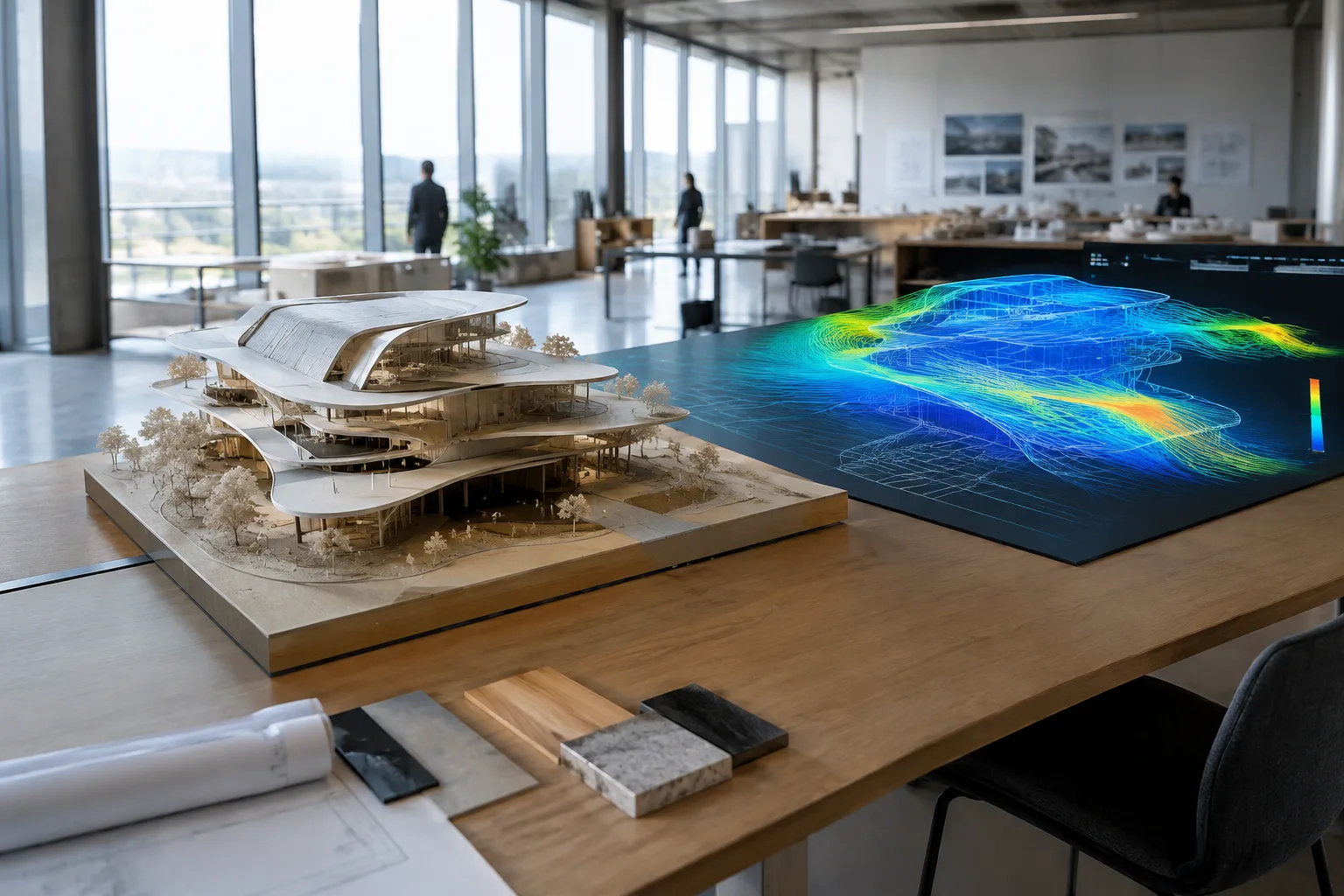
For architecture firms, interior designers and visualization teams, long context and multimodal input support could make it possible to assess material containing many text, images or videos within the same workflow. For example, asking the model to analyze project documents or visual references is one potential text-based use case; however, the available sources do not include any specific tests in architecture workflows.
The key limitation is that Argon does not generate images or 3D content; it produces text only. It should therefore not be expected to replace a rendering or modeling tool directly. Token consumption can affect costs on long tasks, and access is still limited, meaning teams may not be able to incorporate the model into existing production processes right away. No information has been released about hardware requirements either.
Sources
1 sourceSource texts are not republished; short quotes are marked, everything else is our own summary and commentary.
Argon’s long context and multimodal input support could be useful for teams looking to assess project documents alongside visual references. But that does not mean the model has demonstrated verified results in architecture or visualization; and because it cannot generate images, it is not an alternative to rendering and 3D production tools.
For offices in Turkey, the access timeline and real-world usage costs will be decisive. The introductory prices may look attractive, but token consumption per task can change the total cost. Before general access becomes available, it will be important to clarify the API terms, licensing scope and compatibility with existing workflows. And since hardware requirements have not been announced, teams should not assume that local deployment is an option.
Frequently asked questions
When will Gemini 4 Argon become generally available?
Google has not announced a firm date. Access is planned to expand in phases.
How much does Gemini 4 Argon’s API cost?
Introductory pricing is $2 per million input tokens and $10 per million output tokens. Standard prices have been announced as $4 and $20, respectively.
Can Gemini 4 Argon generate images or 3D content?
The model accepts image, video and other specified input types, but generates text only.