In brief
- OpenAI published research on using its models for CAD, manufacturing drawings and simulation tasks.
- Model usage across the company’s hardware teams has increased 23-fold since February, measured by token count.
- An internal model scored an average of 0.875 on the BenchCAD 2.0 test; GPT-6 Astra scored 0.594 at its highest reasoning setting.
- OpenAI is exploring use cases involving real engineering problems with Chip Ganassi Racing and Mazda.
In a research announcement published on 3 November 2026, OpenAI described how AI models could support the design of physical products, simulation and manufacturing processes. The company’s work spans mechanical and electrical design, systems development, CAD models and manufacturing drawings. OpenAI is exploring some of these capabilities within its own teams and others in early experiments with industry partners.
Testing a device design with Astra
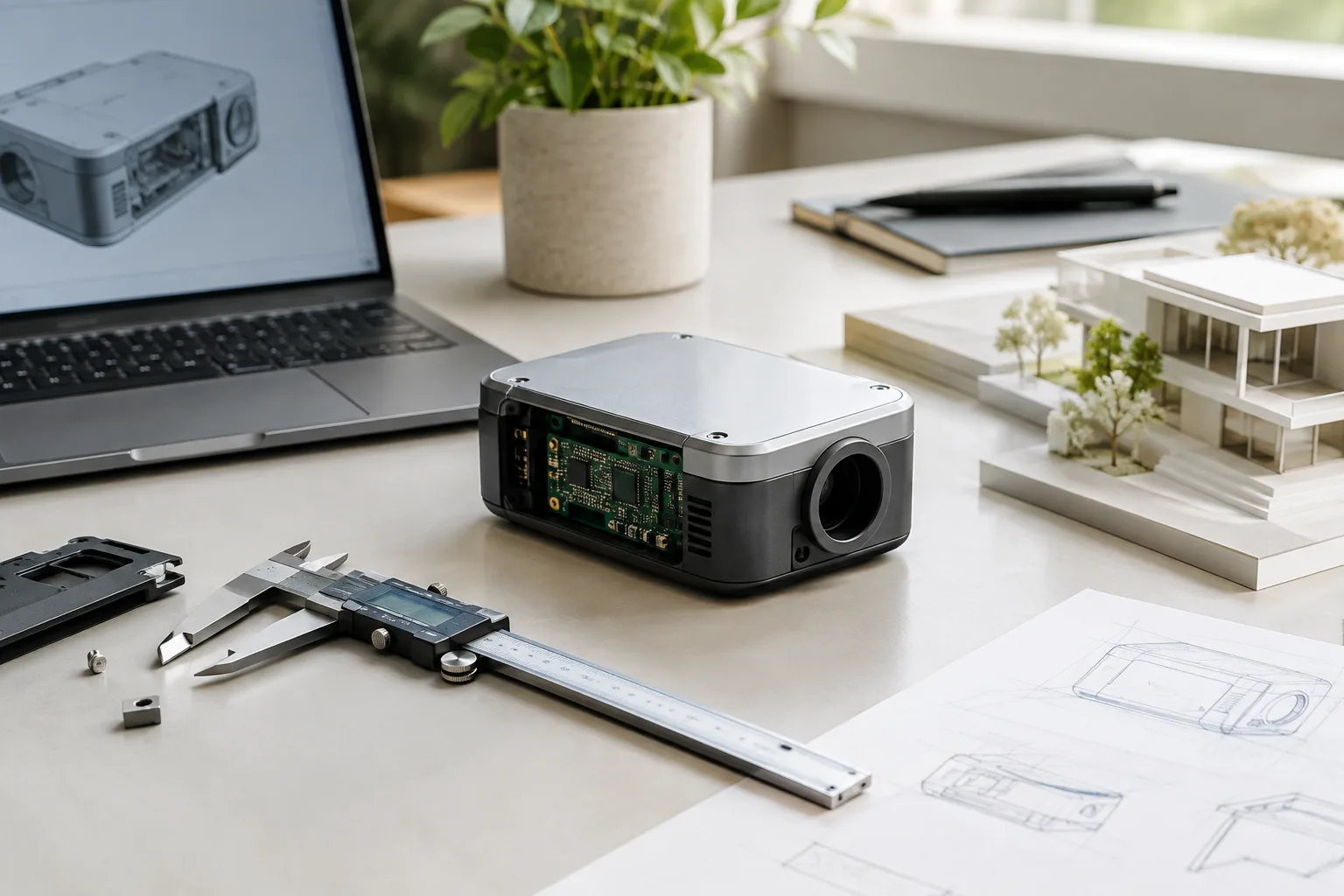
In one example shared by OpenAI, GPT-6 helped develop a device for communicating with Codex. Astra was used for tasks such as defining the device’s functional requirements, designing its outer casing and internal structure, creating its circuit board and preparing software connections. The experiment aimed to test whether a device could be designed without direct human editing.
Two team members designed the project as a side project in less than a week, and a contract manufacturer produced a small number of prototypes in under a month. OpenAI says, however, that preparing the design for manufacturing required multiple rounds of review and revision. The company also notes that Astra did not always correctly account for the manufacturer’s constraints, tolerances and assembly requirements.
CAD, drawings and simulation
OpenAI says its hardware and infrastructure teams use Codex and ChatGPT to create and edit CAD models, prepare manufacturing drawings, set up simulations and review designs. According to the company’s figures, model usage across these teams has risen 23-fold since February, measured by token count.
Progress on engineering tasks is also being measured with BenchCAD 2.0. The test evaluates whether models can reconstruct 3D parts and assemblies and identify connections on circuit boards. A new internal OpenAI model achieved an average score of 0.875, while GPT-6 Astra scored 0.594 at its highest reasoning setting. The company presents these results not as proof of a solution covering the entire engineering lifecycle, but as early indications of potential progress in professional workflows.
Partnerships and architecture workflows
OpenAI is exploring ways to convert 3D scans of existing parts into editable CAD models and 2D manufacturing drawings with the R&D team at Chip Ganassi Racing (CGR). The work focuses in particular on cases where the original design files are unavailable; CGR engineers review the resulting models and drawings for accuracy and manufacturability.
The research collaboration announced with Mazda focuses on aerodynamics and crash safety. OpenAI models are being tested to help evaluate vehicle designs by simulating airflow and structural behavior. OpenAI also says it is exploring the use of Codex for routine modeling, comparing drawings with specification information, and coordinating changes across disciplines in AEC and BIM. The company emphasizes that architects, engineers and BIM specialists must review and verify the results.
For architecture and interior design firms, this work points to a possible direction for automating repetitive modeling and coordination tasks. However, the announcement does not describe a new integration for any specific CAD or BIM software, or a product available to the general public. When assessing how to adapt these capabilities to a workflow, outputs need to be checked by experts, their suitability for manufacturing or construction conditions must be verified, and compatibility with the software in use must be clarified separately. The announcement does not provide pricing, licensing terms or a general availability timeline.
Sources
1 sourceSource texts are not republished; short quotes are marked, everything else is our own summary and commentary.
The announcement’s main significance for architecture and visualization firms is that it connects AI not only with image generation, but also with more operational tasks such as CAD editing, drawing review and cross-disciplinary coordination. Repetitive tasks in particular are worth watching for potential time savings. However, the examples shared are still at an early stage and do not describe an AEC product available to the general public.
For teams in Turkey, it makes more sense for now to monitor output verification processes and compatibility with existing software rather than assume a new license or hardware investment will be needed. The shortcomings around manufacturer constraints, tolerances and assembly details clearly demonstrate the importance of human oversight. It is not possible to draw firm conclusions about commercial benefits before pricing, licensing and access information is published.
Frequently asked questions
What tasks are OpenAI models being used for in CAD and engineering?
OpenAI describes work involving the creation and editing of CAD models, preparation of manufacturing drawings, setup of simulations and design reviews. The company is also researching routine modeling and coordination tasks in AEC and BIM.
What do OpenAI’s BenchCAD 2.0 results show?
A new internal OpenAI model scored an average of 0.875 on the test. GPT-6 Astra scored 0.594 at its highest reasoning setting.
When will these engineering capabilities be available, and at what price?
The announcement did not provide a general availability date, pricing or licensing terms. OpenAI describes the work as early-stage research and experimentation with industry partners.