In brief
- Organic Zombie Web adds organic-looking webs to surfaces in Blender using Geometry Nodes.
- The tool uses mathematical operations instead of simulations.
- Settings such as thickness, width, density, randomness, and sag can be adjusted.
- The web structure can be converted into a regular mesh.
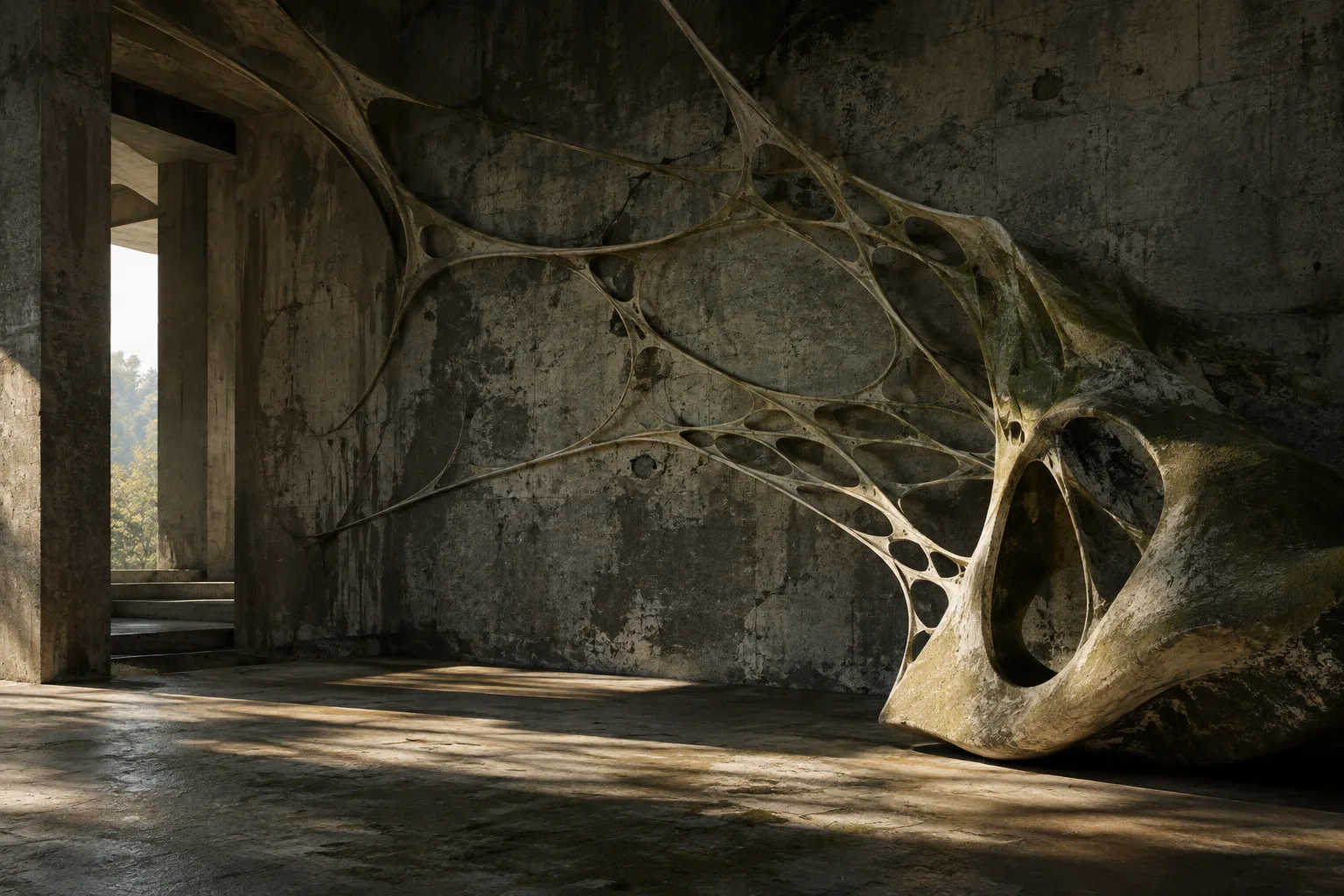
Artist Deepak Kushwaha has made Organic Zombie Web, a tool developed with Blender’s Geometry Nodes system, publicly available. Introduced in 80 Level’s 16 November 2026 article, the tool creates organic-looking webs between surfaces and selected objects. The source does not specify the tool’s price, licensing terms, or compatible Blender versions.
How does the tool create webs?
Organic Zombie Web generates geometry using mathematical operations, without running simulations. The system has three main components called Web, Surface, and Subject. In the first step, connections are made between a surface and a target object. Further layers can add new connections to existing webs, while an additional web layer can be placed over the generated surface to build up detail.
According to Kushwaha, the system uses curves and Geometry Nodes functions to control the web’s shape and distribution. The article also lists Set Position and Sample Nearest Surface among the nodes used. The artist says he designed the tool to be lightweight and work in real time, but no independent measurements are provided to substantiate this performance claim.
How can the look and details be customized?
Users can adjust the web’s thickness, width, density, and randomness. Sag and the amount of noise added to the shape can also be controlled. The tool comes with its own materials, which can be replaced with others.
Vein-like lines can be added to change the web’s appearance, and their color and noise can be adjusted. An instance system also lets users duplicate and distribute selected objects across the web. Users can choose a single object or a collection of different objects, and control how these elements are distributed. The result can be converted into a regular mesh when needed.
Impact on architecture and visualization workflows
The tool can be tested in 3D scenes that call for organic surfaces and dense web details. The source notes that such structures may suit post-apocalyptic or horror-themed environments; in architectural visualization, possible uses could include creating an atmosphere of abandoned or deteriorating spaces. This does not mean the tool was developed specifically for architectural projects.
Working with parameters can make it easier to explore different web looks. However, the source provides no hardware requirements or performance comparisons, so the claim of real-time operation in dense scenes should be tested independently. Before adding the tool to commercial production, users should also verify its license and Blender version compatibility; the article does not include this information.
Availability and terms of use
Although Organic Zombie Web has been made available to download, the source does not specify how to access it, its price, or its license. Public availability alone should therefore not be taken as confirmation that the tool is free or licensed for commercial use.
The option to convert the result to a mesh allows procedurally generated output to be used as regular geometry. When to do this depends on editing needs and the project workflow. Until version support and licensing terms are clarified, testing the tool in a separate project file is the more cautious approach.
Sources
1 sourceSource texts are not republished; short quotes are marked, everything else is our own summary and commentary.
Organic Zombie Web’s practical advantage is that it creates organic web forms without simulations and lets users adjust a range of their properties. Visualization teams working in Blender could try this approach in atmospheric scenes. The real-time performance claim comes from the artist; testing with a small scene first is a sensible approach for projects with dense geometry.
For offices in Turkey, licensing and version compatibility should be confirmed before incorporating the tool into production. The source also provides no information about price or hardware requirements. Testing how the mesh conversion option fits into the editing process in a separate file could be useful before deciding whether to buy or use the tool.
Frequently asked questions
How does Blender Organic Zombie Web work?
The tool uses Geometry Nodes and mathematical operations to create layered webs between surfaces and target objects. The source says it does not use simulations.
Which settings can be adjusted in Organic Zombie Web?
Thickness, width, density, randomness, sag, and noise can be adjusted. The instance system can duplicate and distribute a single object or objects from a collection across the web.
Is Organic Zombie Web free, and which Blender versions is it compatible with?
The tool has been made available to download, but the source does not specify its price, license terms, or supported Blender versions.