In brief
- Nano Banana 2 is listed in the Gemini API with the model ID gemini-3.1-flash-image.
- You can generate a new image from a text prompt or edit an image by providing text and an image together.
- For image generation, clear instructions, explicit constraints, and iterative refinement are recommended.
- The API guide states that generated images contain a SynthID watermark.
What will you learn in this guide?
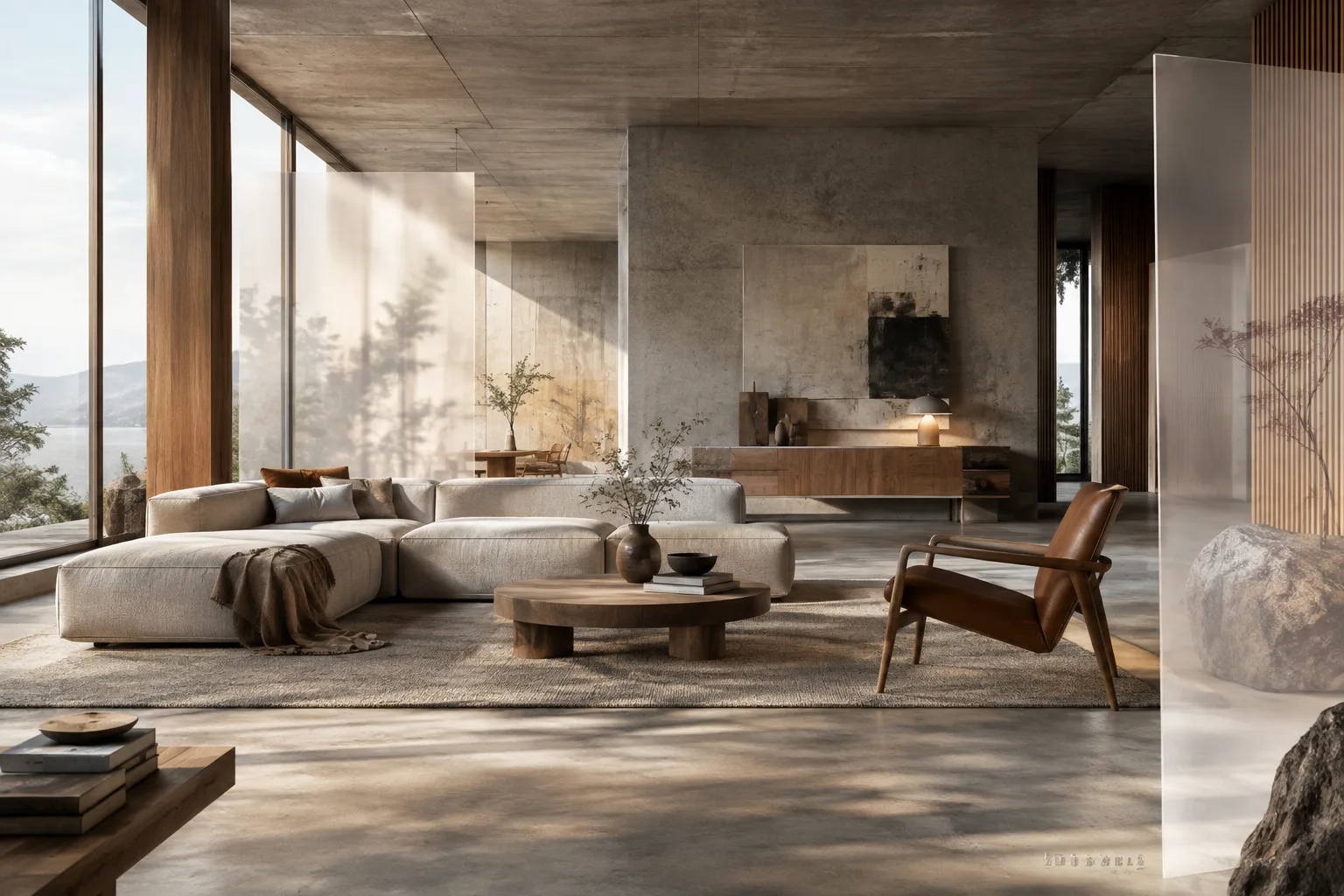
The name Nano Banana is used for native image-generation capabilities in the Gemini API. This guide explains how to structure prompts for architectural concept and interior images, request a new image from text, and modify an existing image using text instructions. The examples focus on describing materials, lighting, framing, and the elements you want preserved or changed in the image separately.
These prompts are starting points for design research, moodboards, and presentation imagery. Generated images should not be assumed to be dimensioned drawings, construction documents, or verified technical outputs. The source guides do not guarantee this kind of architectural accuracy.
Requirements and model selection
The example workflow uses the Gemini API. The API documentation lists gemini-3.1-flash-image as the model ID for Nano Banana 2. The documentation includes examples in Python, JavaScript, Java, Go, and REST. The REST example uses an API key, so before you begin, set up Gemini API access and the authentication credentials required for your client. The guides do not specify requirements for a local graphics card or computer hardware.
You can choose a model based on your use case:
Nano Banana 2 Lite (
gemini-3.1-flash-lite-image) is described as suited to use cases where speed and cost are the priority; it is not optimized for multiple reference images or sequential edits.Nano Banana 2 (
gemini-3.1-flash-image) is positioned for general-purpose use, as well as tasks requiring multiple reference images and consistency.Nano Banana Pro (
gemini-3-pro-image) is offered as a premium option for more complex image tasks.
These guides do not include specific pricing information. Also check the terms of use for image generation and the rights associated with uploaded images. Google reminds users to ensure they have the necessary rights to uploaded images.
Step-by-step prompt writing
1. State the purpose and main subject of the image
In the first sentence, say what you want to create and what design purpose it will serve. Instead of a broad request such as “create an interior image,” describe the type of space, the viewpoint, and whether the image is for a concept presentation or materials research. Rather than combining many conflicting goals in one prompt, make the main objective the priority.
Create a photorealistic concept image of a compact urban apartment living room, viewed from the entrance, for an early-stage interior design presentation. Show the full seating area and the window wall in one clear composition.This example clearly states the type of space, viewing position, and purpose of the image. After the first result, continue experimenting by adding only the features you want to change.
2. Make the materials, lighting, and atmosphere specific
Use descriptions with clear visual meaning rather than abstract adjectives. You can specify wall and floor materials, surface appearance, the direction of daylight, and the desired atmosphere as separate elements. Establish priorities instead of treating every detail as equally important.
Create a photorealistic interior concept for a small reading room. Use pale oak flooring, warm off-white plaster walls, and a dark green fabric armchair as the focal point. Soft daylight enters from the left window; keep the room quiet, restrained, and uncluttered.This prompt separately describes the materials and colors, focal point, and direction of the light. If the color balance or atmosphere does not meet your expectations, change the relevant quality rather than rewriting the whole description from scratch.
3. Describe the framing and elements to exclude
Specify which areas should be visible, the approximate camera position, and how the composition should read. Add brief constraints for unwanted elements, too. Google’s prompt design guide recommends clear, specific instructions and stating generation constraints separately.
Create a calm architectural visualization of a single-storey gallery courtyard, seen from a human eye-level viewpoint at the entrance. Keep the courtyard, covered walkway, and main facade visible together. Use a simple composition with no people, no signage, and no decorative clutter.This example clarifies which parts of the scene should be visible and which elements to avoid. There is no guarantee that the model will compose the framing identically in every attempt; review the output and iterate on the instructions.
4. Edit an existing image
In the Gemini API image-editing workflow, you can send an image along with text. This method can be used to change colors, style, or specific elements in an existing concept image. The source documentation lists adding, removing, or changing elements and adjusting colors among the example use cases for uploaded images. Explicitly state which parts you do not want changed, too.
Using the provided interior image as the starting point, change the wall finish to light textured plaster and shift the overall color grading slightly warmer. Keep the existing room layout, window positions, furniture placement, and camera view unchanged.When using this instruction, include the image with your request; sending text alone will not edit an existing image. Stating which layout and viewpoint you want to preserve makes the scope of the requested changes clear. Still, do not assume every detail in the source image will be preserved exactly; compare and check the result.
5. Refine the result in small steps
Prompt design is an iterative process of testing and revision, not a one-time task. Identify the elements that need work in the first output and add just one group of changes to the next instruction—for example, adjust only the lighting, material tone, or framing. When working with multiple reference images, describing in the prompt what each image represents can also make the instructions clearer.
Revise the previous concept image by reducing the visual contrast between the floor and the walls. Keep the furniture, room layout, camera viewpoint, and daylight direction as they are.This example requests a change to a single quality in the existing result while aiming to preserve the other elements. Compare the new output with the previous image; if unwanted differences appear, explicitly restate which elements should remain unchanged.
Common mistakes
Relying on vague adjectives: Words such as “beautiful,” “modern,” or “stylish” are open to interpretation on their own and do not replace descriptions of materials and composition.
Combining too many goals in one prompt: Asking for the space, style, lighting, camera, and numerous design alternatives at once makes it harder to evaluate the result. Choose the main goal and proceed in stages.
Leaving out constraints: Explicitly state anything that needs to be preserved or any element you want removed.
Treating the first output as proof of technical accuracy: The guides do not describe the images as architectural measurements, details, or construction validations. Review outputs separately before using them to make design decisions.
Ignoring image usage rights: The API documentation reminds users to ensure they have the necessary rights to uploaded images.
Use in architecture and visualization workflows
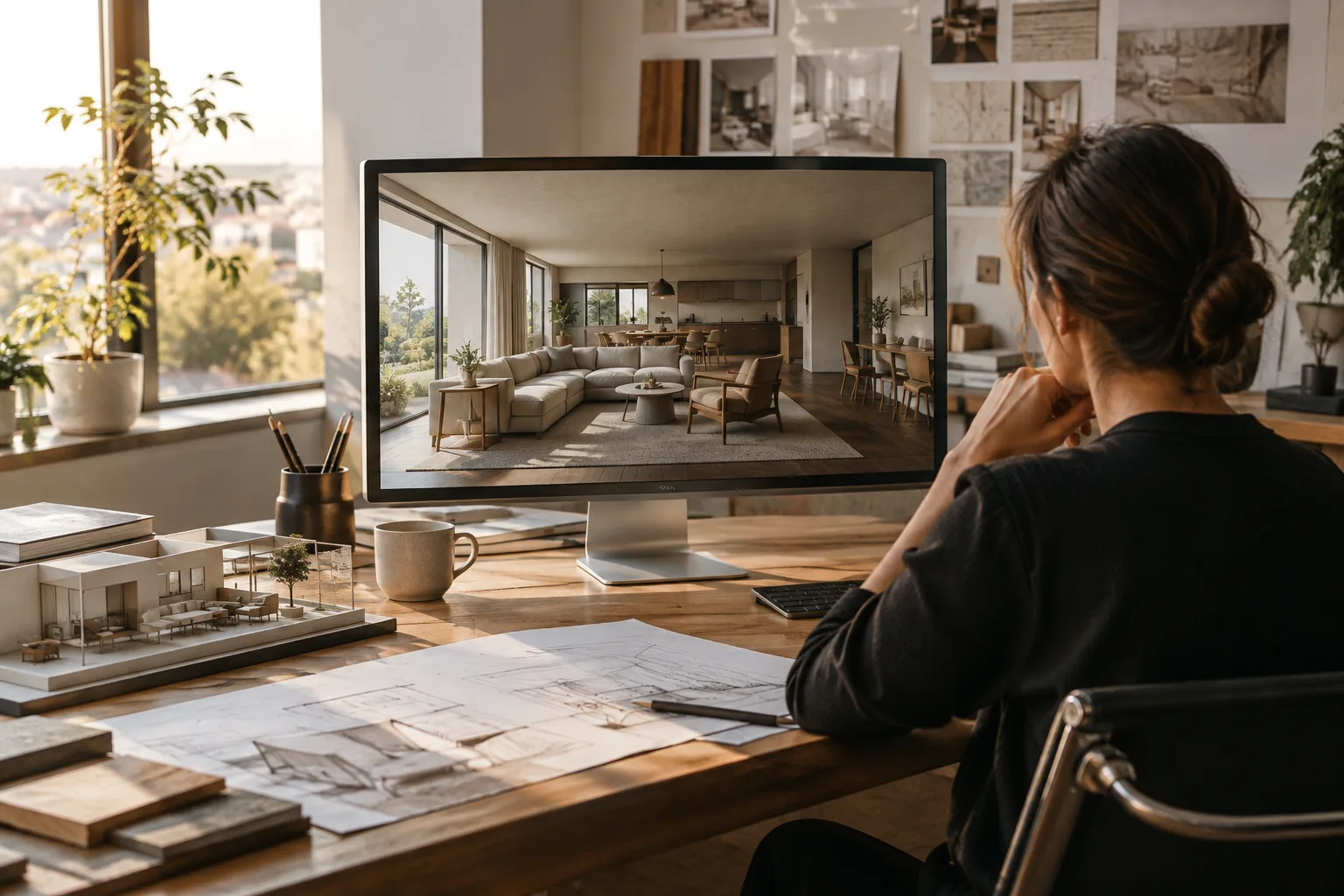
This approach can help architects, interior designers, students, and visualization teams with early ideation, exploring alternative atmospheres, and trying different material or color directions on an existing concept image. Iterating on a prompt with small changes is a practical way to clarify a brief and generate initial image options.
However, the sources do not say that model outputs provide CAD/BIM geometry, dimensions, construction details, or production-ready files. Treat the images as tools for design communication and concept exploration, and base technical decisions on verified project documents. For office use, API access, usage costs, and the visual workflows used by your team should be checked separately; these guides do not provide pricing details. Keep in mind, too, that every generated image includes a SynthID watermark.
Next steps
Start with a baseline prompt for the same space, then try variations in lighting, materials, and framing one at a time. As you compare the results, note which instruction led to which difference. If you are editing with a reference image, check usage rights and distinguish the elements you want changed from the instructions to preserve other features. Before using an image in a presentation or client communication, assess whether it conveys the design intent accurately and whether the necessary technical information has been verified separately.
Sources and licensing
This article is adapted into English from Google AI for Developers’ Gemini API guides titled “Nano Banana image generation” and “Prompt design strategies.” Both sources are available under the CC BY 4.0 license. The example prompts were written specifically for architectural and interior scenarios for this guide.
Sources
2 sourcesSource texts are not republished; short quotes are marked, everything else is our own summary and commentary.
For architecture and interior design offices, the practical value of this approach lies in quickly visualizing and discussing atmosphere and material options at an early stage. Students can also iterate on prompts to compare different directions; however, the images should be treated as concept communication rather than dimensioned drawings or construction details.
For teams in Turkey, it is important to check API access and usage costs before getting started; the sources do not provide pricing information. The guides also do not explain hardware requirements. When using existing images, keep usage rights, the SynthID watermark on outputs, and the need to verify design decisions against technical documents in mind.
Frequently asked questions
What is the Gemini API model ID for Nano Banana 2?
The Gemini API image-generation guide lists Nano Banana 2 with the model ID `gemini-3.1-flash-image`.
Can Nano Banana edit an existing interior image?
The guide describes a workflow that sends text and an image together to add, remove, or change elements in an image and adjust its colors.
Do images generated with Nano Banana include a watermark?
According to Google’s API guide, all generated images include a SynthID watermark.