In brief
- DDR6 is planned to launch at 12.8 GT/s, with a later target of 14.4 GT/s and beyond.
- The proposed bus width increases from 64 bits to 96 bits; JEDEC is working on a 74 mm-wide DIMM design.
- The calculated DIMM bandwidth for DDR6-14400 is 172.8 GB/s, 2.35 times that of DDR5-9200.
- The preview discusses higher chip densities, a pseudo-channel architecture and low-power modes for data centers.
On 18 November 2026, JEDEC shared a preview of the design under development for the DDR6 memory standard. The unfinished proposal aims to combine higher transfer speeds with a wider bus and a more compact DIMM design in next-generation memory modules. The announced figures are not finalized product specifications and may change as the standard develops. JEDEC has not announced when its official standard will be completed or when products will launch.
What are DDR6’s planned speeds and bandwidth?
DDR6 is expected to start at a transfer rate of 12.8 GT/s, with development targets extending to 14.4 GT/s and beyond. For comparison, DDR5’s stated maximum transfer rate is 9.2 GT/s. The proposed changes in the DDR6 draft go beyond speed: the DIMM’s bus width is also set to increase from 64 bits to 96 bits.
Taken together, these two planned changes would give a DDR6-14400 module a calculated bandwidth of 172.8 GB/s. That is 2.35 times the bandwidth of a DDR5-9200 DIMM. These figures are development targets and theoretical comparisons, so they do not by themselves indicate real-world system performance.
How might module design and memory density change?
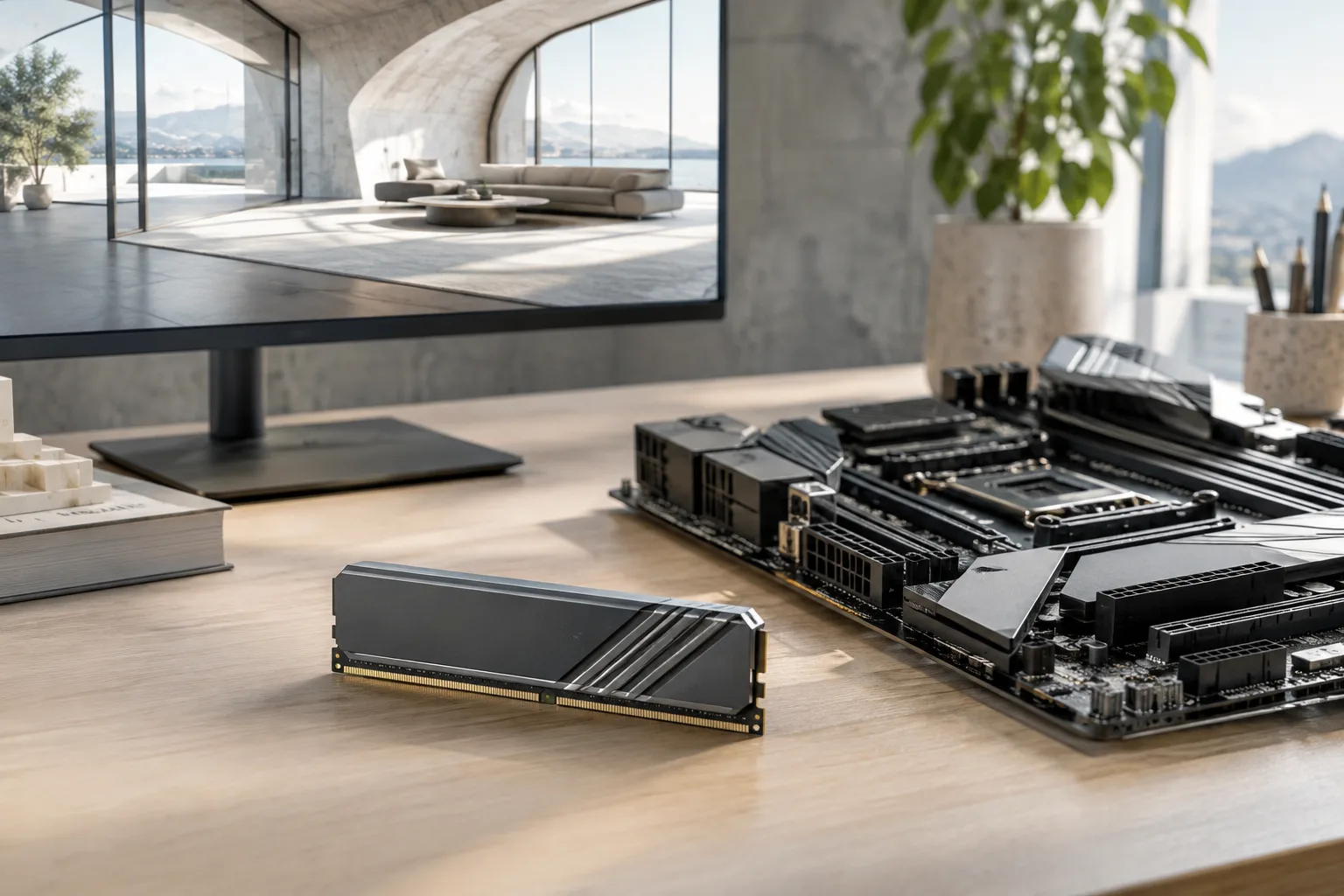
The preview proposes a more compact DIMM form factor, 74 mm wide. Alongside this design, JEDEC is also working on different form factors, including RDIMM, UDIMM and CAMM. This does not mean that a single module format has been selected or that existing formats will definitely be phased out.
The plan is to increase the maximum density per chip from DDR5’s 64 Gbit to 128 Gbit in DDR6. The proposal also discusses changes to die stacking that would support higher-capacity packages. Treating memory channels as pseudo-channels and increasing the number of banks are other design goals intended to support data transfer.
What’s planned for power consumption and error correction?
The DDR6 draft proposes using VSS-terminated I/O for signal termination, instead of the VDDQ approach used in DDR5. It also includes plans for low-power modes for data center use and support for different ECC implementations. JEDEC’s goal is to improve performance per watt compared with DDR5, but the preview provides no measurements or finalized product figures.
These are important design goals, particularly for systems that need high memory capacity and bandwidth. Still, the standard is in development, details may change, and no timeline for physical products has been announced.
Impact on architecture and visualization workflows
For architecture firms, interior designers and visualization teams, DDR6 is not an upgrade they can buy today. The preview highlights the standard’s focus on data center and high-capacity system requirements; it does not establish what benefits it will bring to current workstations or specific 3D software.
There is no confirmed product date to justify waiting for DDR6 when planning a new workstation. When choosing a system in the future, users should also check memory compatibility with the CPU and motherboard, supported module formats, and the system requirements of their licensed software. For now, the key developments to watch are the draft’s transition to a final standard and announcements of compatible products.
Sources
1 sourceSource texts are not republished; short quotes are marked, everything else is our own summary and commentary.
The DDR6 preview shows that memory development is targeting more than just higher speeds: changes to the module’s physical design and bus are also on the table. This is worth following over the long term for visualization teams working with large scenes, but it is not a product announcement that will immediately affect current workflows.
There is no announced product timeline that would justify delaying investment decisions at offices in Turkey based on this preview. Once the standard and compatible hardware are finalized, costs, CPU and motherboard support, and the requirements of the software in use should all be considered together. DDR6’s impact on real workloads will become clear when products and benchmark results are available.
Frequently asked questions
When will DDR6 launch?
JEDEC has not announced when the DDR6 standard will be completed or when products will launch. The information shared is based on a preview of the standard under development.
What will DDR6’s transfer speed and bandwidth be?
The planned starting speed is 12.8 GT/s, with a target of 14.4 GT/s and beyond. The calculated module bandwidth for DDR6-14400 is 172.8 GB/s.
What changes are planned for the DDR6 DIMM design?
The preview outlines a bus that widens from 64 bits to 96 bits and a more compact, 74 mm-wide DIMM design. Different formats, including RDIMM, UDIMM and CAMM, are also part of the work.