In brief
- HyperAccel’s eight-LPU server system will be on display at SC26 in Chicago, November 17–19.
- The company will run a live, remote LLM inference demo on operational servers in Korea.
- In HyperAccel’s in-house tests, LPU cards are listed at 250 W per card, compared with 600 W for the GPUs used in the comparison.
- The company’s product portfolio includes Bertha for data center and enterprise use, and Bertha-Edge for on-device AI.
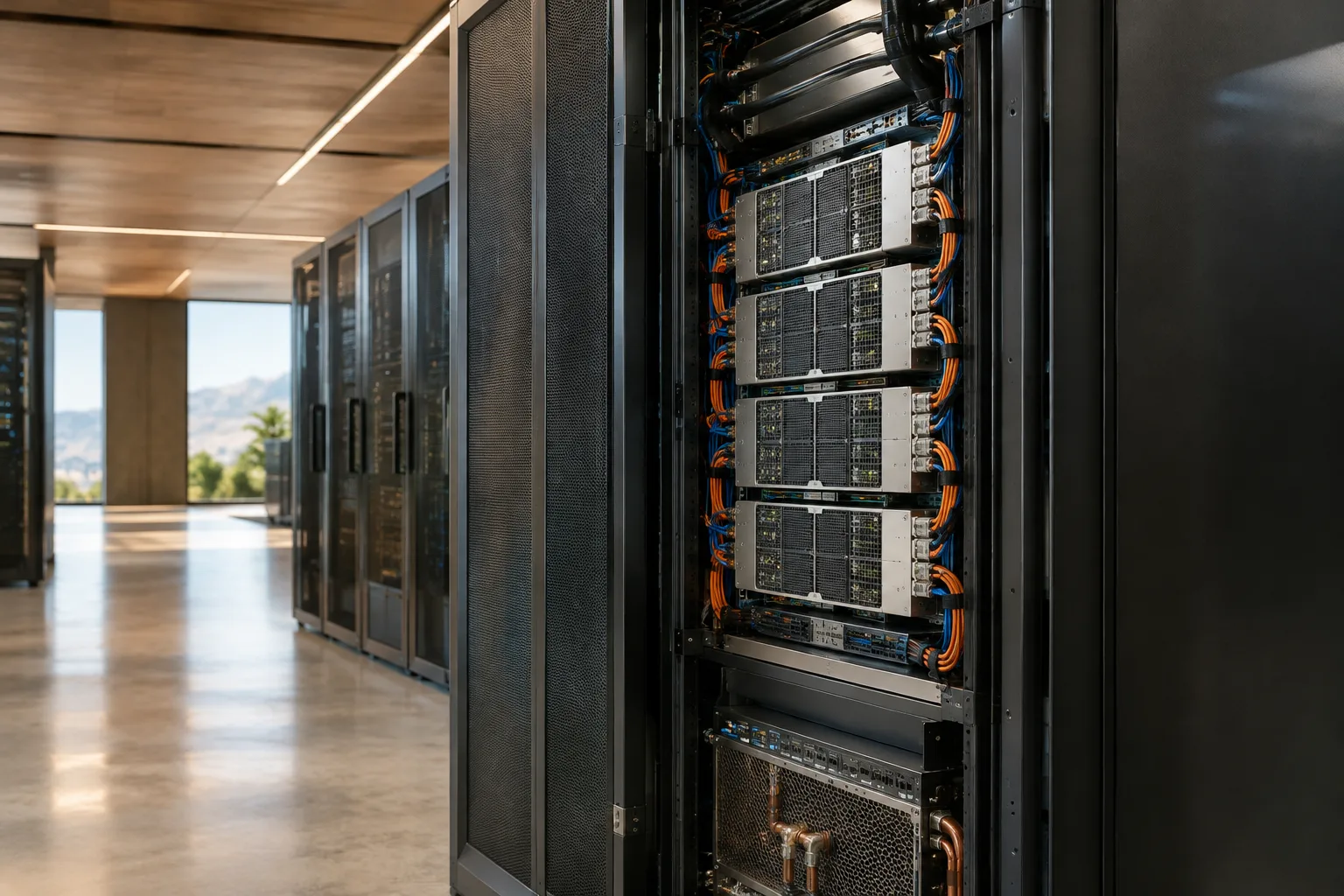
South Korean AI chip company HyperAccel announced on November 13 that it will showcase a server system with eight LPUs at SC26, taking place November 17–19, 2026, at McCormick Place in Chicago. At the event, the company will remotely demonstrate live large language model (LLM) inference running on operational servers in Korea. The showcase aims to present LPU technology not as a standalone chip, but as a server-level infrastructure solution.
What system will be showcased at SC26?
The system HyperAccel will exhibit consists of eight LPUs. Attendees will also be able to watch a live inference demo running on servers installed in Korea. The company aims to illustrate the system’s potential for enterprise and data center environments. HyperAccel’s team will meet visitors at booth 1411 in the AI Semiconductor Korea Pavilion.
HyperAccel CFO Joonyeon Kim will give a presentation titled “Redefining AI Infrastructure Through Token Efficiency” at Lablup Inc.’s booth 4630 on November 18. The announcement lists the presentation time as 14:30–14:45 Central Time. HyperAccel also aims to develop partnerships with server manufacturers, cloud service providers, and AI infrastructure companies during SC26.
Efficiency figures are based on the company’s tests
According to HyperAccel’s in-house comparisons, a server equipped with LPUs drawing 250 W per card delivers more than 3.5 times the tokens per watt and per dollar compared with a similar system using NVIDIA RTX PRO 6000 Blackwell Server Edition GPUs, listed at 600 W per card, on the Qwen3-32B and Llama3-70B models. These results are based on the manufacturer’s own tests; the announcement does not provide independent verification or details of the testing methodology.
The company attributes its efficiency claim to an LPU architecture designed for LLM inference. According to HyperAccel, the system combines LPDDR5X memory with its Streamlined Dataflow architecture. The company says this approach can use approximately 90 percent of memory bandwidth, compared with 50–60 percent for GPUs. HyperAccel also says its LPUs support larger LLMs, including Kimi and GLM.
What does this mean for architecture and visualization workflows?
The announced system does not introduce a new feature directly for modeling, rendering, or architectural visualization software. Its potential relevance is for firms and service providers running LLM-based tools on their own servers or data center infrastructure. For these teams, energy use and cost per inference are factors to consider when evaluating hardware. However, HyperAccel’s performance comparison comes from the company’s own tests.
The SC26 demo will show the system running on operational hardware in Korea. The announcement does not, however, provide information about product pricing, licensing terms, or software compatibility. Architecture and visualization teams will need more details—including support for the models they use, integration with existing infrastructure, and hardware requirements—to assess a potential switch.
HyperAccel says it was founded in 2023 and that its product portfolio includes Bertha for data center and enterprise use, and Bertha-Edge for on-device AI. The company’s server showcase at SC26 is also an example of its effort to position LPUs not as standalone accelerator components, but as part of a broader inference infrastructure.
Sources
1 sourceSource texts are not republished; short quotes are marked, everything else is our own summary and commentary.
For architecture firms and visualization teams, the main takeaway is that energy and cost are becoming important considerations alongside processor performance in LLM inference infrastructure. This approach is worth watching for teams running AI tools on their own servers; however, the reported results of more than 3.5 times are based on the company’s own tests and are not enough, on their own, to justify an investment.
For offices in Turkey, uncertainty around pricing, licensing, and software compatibility is also important. The SC26 demo may show the system running on operational hardware, but it would be premature to change hardware plans before support for the models in use and the terms for integration with existing infrastructure are clear.
Frequently asked questions
When will HyperAccel’s LPU server be unveiled?
The eight-LPU server will be showcased at SC26 in Chicago, November 17–19, 2026.
What is HyperAccel’s LPU performance claim?
The company says its own tests show the LPU system delivering more than 3.5 times the tokens per watt and per dollar of a comparable NVIDIA GPU system on the two specified models.
Have HyperAccel’s LPU server pricing and compatibility been announced?
The announcement does not provide information about pricing, licensing terms, or software compatibility.