In brief
- Staera previously operated as New Silicon Corporation.
- The company is developing Lightwire to carry data between chips using light.
- Openspace Capital led the $4.6 million pre-seed funding round.
- The company has set 2030 as its target for Lightwire’s commercial launch.
Staera Semiconductor emerged from stealth in San Francisco on 13 November 2026, unveiling its on-chip optical interconnect technology, Lightwire, and announcing a $4.6 million pre-seed funding round. Previously known as New Silicon Corporation (NSC), the company aims to move data between processors in AI systems using light instead of electricity. Openspace Capital led the round, with SGInnovate, Black Kite Capital, 28 Holdings, In Group and Decimus Technologies also participating.
What does Lightwire aim to change between chips?
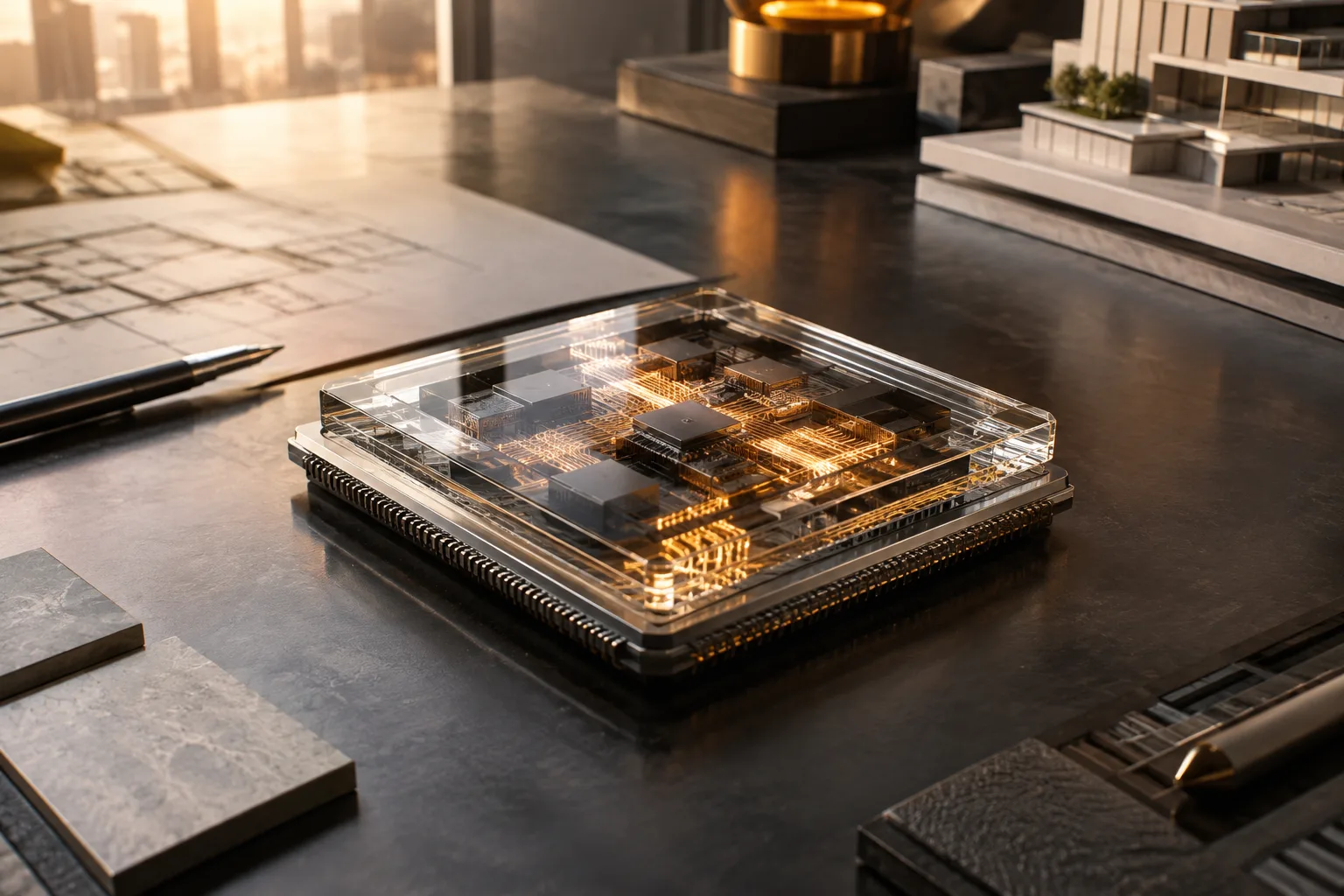
Staera’s approach is to place the light source and other components of the optical interconnect inside the silicon die, rather than adding optical components next to the chip. The company says it combines LEDs and waveguide layers on the same die using silicon CMOS processes. The technology is designed to operate in a bridge or interposer chip that connects processors and memory, with the aim of working with existing packaging arrangements.
According to Staera, as the processing capacity of AI chips grows, the speed of moving data between chips is becoming one of the factors limiting system scalability. The company argues that electrical connections lose performance over distances ranging from millimeters to meters, while conventional optical solutions can add power consumption and complexity. These are the company’s assessments of the technology.
Technical specifications disclosed by the company
Staera says each Lightwire connection is designed to carry 4–8 gigabits of data per second and support more than 600 connections per millimeter of chip edge. The company also cites a target power consumption of less than 0.2 picojoules per bit, comparing it with the 5 picojoules per bit figure it gives for co-packaged optics.
In another example provided by the company, transferring 24 terabytes per second with Lightwire would require less than 50 watts, while the same data rate with co-packaged optics would require nearly a kilowatt. Reaching beyond 50 millimeters and delivering more than 100 times the performance of electrical connections over the millimeter-to-meter range are also among the manufacturer’s stated targets. These figures should be treated as product data shared by Staera, not as independently measured results.
Manufacturing and commercialization timeline
Staera plans to manufacture the technology using standard foundry steps and to combine silicon, gallium nitride (GaN) and waveguide layers on the same die. The company says it has been producing GaN LEDs inside silicon chips at commercial foundries since 2016, achieving yields of 98–99% in those processes. This, too, is based on the company’s account of its manufacturing experience.
The new funding will be used to advance the technology, expand the team and deepen work with customers and across the supply chain. Staera is targeting a commercial launch for Lightwire in 2030. No information has been announced about product pricing, compatibility with specific hardware or the form a system accessible to end users might take.
What it means for architecture and visualization workflows
Lightwire is not a modeling, rendering or design software; it is a technology aimed at data transfer between chips in AI hardware. It should therefore not be considered an accelerator that can be installed in workstations currently used by architecture firms and visualization teams. Any potential impact could come indirectly through the development and scaling of future AI systems using these optical interconnects; the source provides no information about integration with architectural software or workflow tests.
Power consumption and data-transfer capacity are worth watching for visualization and production teams that rely on large-scale AI infrastructure. However, the 2030 commercial launch target, along with the lack of pricing and compatibility details, is not enough to plan a hardware investment. For firms in Turkey, the key things to monitor initially will be the technology’s performance in real systems, packaging compatibility and availability.
Sources
1 sourceSource texts are not republished; short quotes are marked, everything else is our own summary and commentary.
What makes Lightwire interesting is its aim to move optical interconnects inside the chip rather than adding them as a separate component alongside it. Staera’s stated bandwidth and power figures are noteworthy for large AI systems, but they remain company claims and are not yet validated gains in architectural visualization workflows.
For offices in Turkey, there is currently no pricing, compatibility or availability information that would support a purchasing decision. The 2030 target also does not indicate when the technology might reach everyday workstations. It is therefore more appropriate to follow this development as an approach to addressing power and data-transfer challenges in future AI infrastructure, rather than as a direct hardware recommendation.
Frequently asked questions
What is Staera Lightwire?
Lightwire is an LED-based optical interconnect technology built into chips, developed by Staera Semiconductor. The company aims to use light to carry data between chips.
When will Lightwire be available?
Staera has set 2030 as its target for Lightwire’s commercial launch. The product’s price and compatibility with end-user hardware have not yet been disclosed.
Can Lightwire be used in architectural visualization workstations?
The source provides no information about compatibility with specific workstations or integration with architectural software. The technology is not a direct workstation upgrade; it targets data connections between chips in AI hardware.