In brief
- The E1L can be configured with 8, 16, or 22 Arm Neoverse N2 cores.
- The product supports connectivity up to 200 Gbps across four SerDes lanes.
- Xsight Labs lists TDP options of 25 W, 30 W, and 40 W for different configurations.
- Designed as a COM Express Type 7 module, the E1L has no announced price or release date in the source.
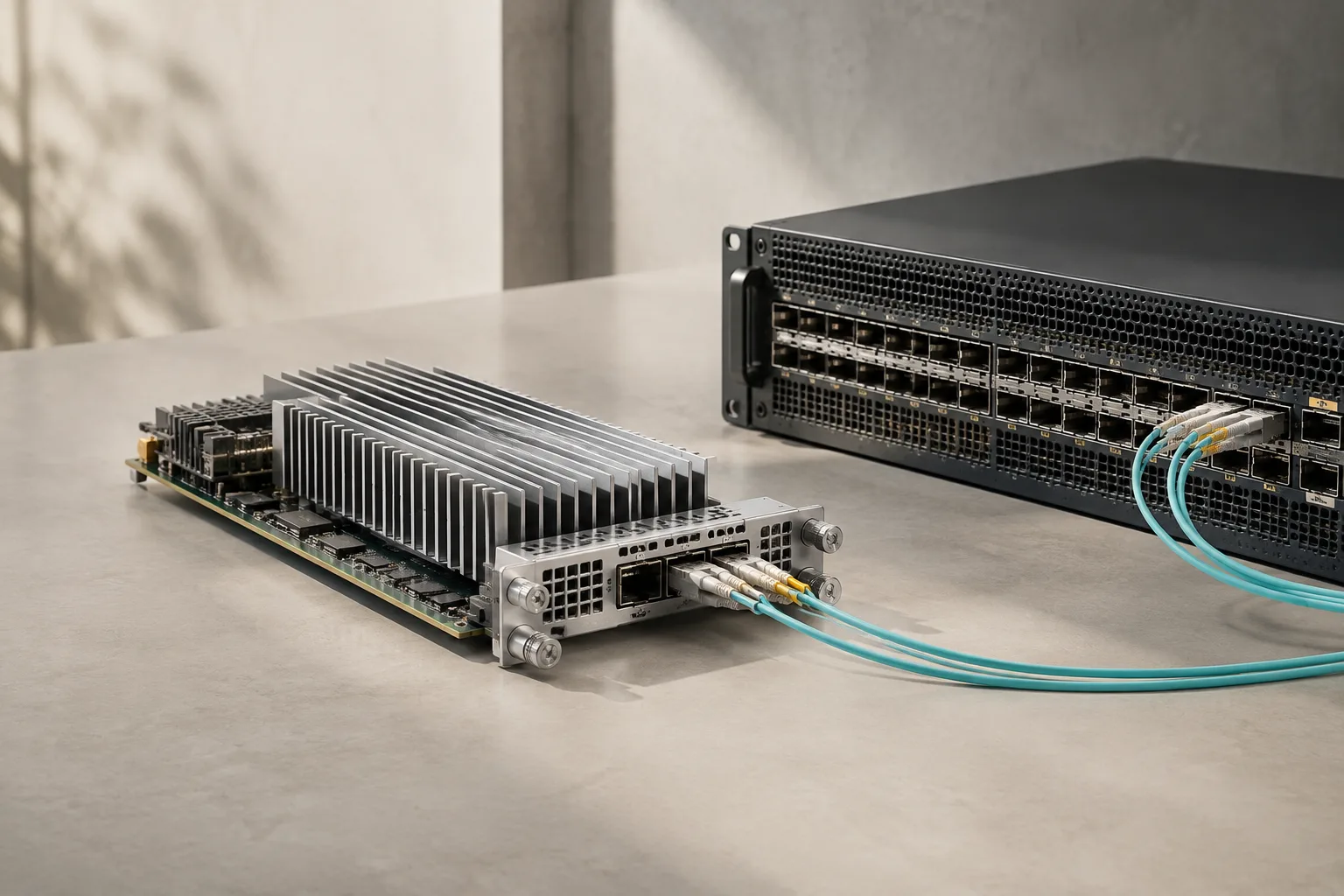
Xsight Labs announced its new E1L DPU on October 9, 2026. According to ServeTheHome, the product is designed for infrastructure where power consumption matters, including network switches, storage servers, and virtualization systems. The E1L is available with 8, 16, or 22 Arm Neoverse N2 cores and provides connectivity of up to 200 Gbps across four SerDes lanes. The source does not include pricing, an availability date, or licensing information.
What are the E1L’s key technical specifications?
On the memory side, the E1L features up to two DDR5-5200 interfaces with inline encryption support. The product also offers line-rate AES-GCM support for IPsec offload and a total of 20 PCIe Gen5 lanes through six dual-mode controllers with SR-IOV support. This indicates that the product is focused not only on connectivity, but also on processing network and storage data.
Power configurations are listed at 25 W, 30 W, and 40 W TDP. ServeTheHome reports typical consumption figures of 15 W, 18 W, and 25 W, respectively. These are product specifications reported by the source; actual consumption may vary depending on the configuration and workload.
The product is designed in the COM Express Type 7 module form factor. ServeTheHome notes that this form factor is used in systems such as network switches and storage servers. The article mentions both NVMe and disk-based server applications as potential storage use cases.
Where does the E1L fit into Xsight Labs’ product strategy?
The article describes the E1L as a lower-core-count, lower-power option compared with the company’s 64-core E1 DPU. Xsight Labs’ approach is based on running network tasks on Arm cores using standard software components such as Linux and DPDK. The company aims to scale its design—which focuses on high core counts and higher network speeds—to lower power envelopes and the 200 Gbps range.
The configurations reported by ServeTheHome comprise 8-, 16-, and 22-core versions. This range may make it possible to adapt the product to systems with different workloads and power limits; however, the source provides no performance comparisons or independent E1L test results. Capacity and power figures should therefore not be treated as equivalent to real-world application performance.
What could the E1L mean for architecture and archviz workflows?
Based on its announced specifications, the E1L is not a render accelerator or visual creation device; it is a processor for networking, storage, and virtualization infrastructure. The source provides no basis for concluding that it would, by itself, improve modeling or rendering performance in architecture firms. Its potential contribution could be in networking and data processing for infrastructure where many users access files, storage systems, or virtual workstations.
Teams considering infrastructure investments should check COM Express Type 7 compatibility, the required PCIe and memory connections, the target power envelope, and the software environment they plan to use. The source does not provide compatibility information for any specific architecture software. Since neither the E1L’s price nor its release schedule has been announced, firms will need to wait for further product and platform details before comparing it with their existing systems.
Sources
1 sourceSource texts are not republished; short quotes are marked, everything else is our own summary and commentary.
The E1L may be relevant to architecture and visualization firms less for direct rendering performance than for shared storage and networking infrastructure. This type of component may be worth considering, especially in environments where multiple users access the same resources; however, the announced specifications alone do not guarantee speed gains or savings compared with existing systems.
For teams in Turkey, it would be premature to make an investment decision before pricing, availability, platform compatibility, and total system cost are clear. The 25–40 W TDP options may help with power budgeting, but further information is needed on compatibility with architecture software and performance under real workloads.
Frequently asked questions
What connectivity speed does the Xsight Labs E1L DPU offer?
The E1L supports connectivity of up to 200 Gbps across four SerDes lanes.
What are the E1L DPU’s power and core options?
The product can be configured with 8, 16, or 22 Arm Neoverse N2 cores. TDP options are 25 W, 30 W, and 40 W; ServeTheHome reports typical consumption figures of 15 W, 18 W, and 25 W, respectively.
Have Xsight Labs announced the E1L’s price and release date?
The source used does not specify the E1L’s price or release date.