In brief
- The planetarium had been largely closed since 2004, after its projection system stopped working.
- Exterior restoration began in 2021, followed by interior work in 2023.
- The team restored Wright’s circular seating layout and original finishes.
- The building has reopened to campus members and the public for tours and screenings.
Florida Southern College has reopened the Frank Lloyd Wright-designed Planetarium on its Florida campus following an extensive restoration. According to a report published on 15 October 2026, it is the only planetarium Wright designed that was actually built. Located at one end of the Polk County Science Building, it had been largely closed since 2004, when its projection system stopped working. The restoration, led by campus architect and MCWB Architects partner Jeff Baker, covered everything from the exterior and interior to the technology systems.
Roof and tiles renewed on the exterior
Exterior work began in 2021. The team renewed the roof and the flashing used at roof junctions, and replaced deteriorated stucco on the upper sections of the facade. More than 280 of the hand-cast “textile” tiles around the building were also renewed.
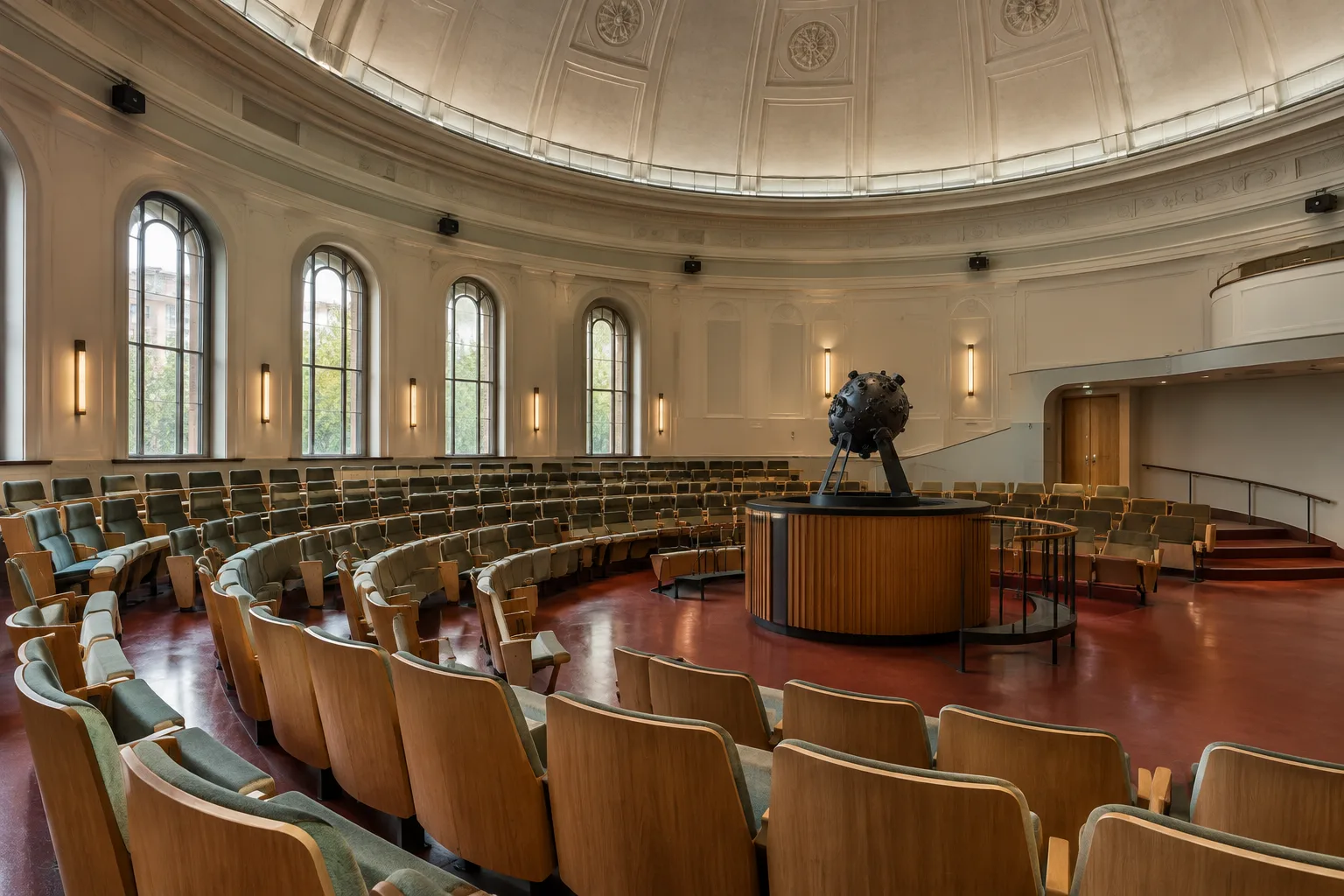
Interior work began in 2023. The restoration team reviewed later additions, noting that interventions made after Wright’s death had altered the auditorium’s original layout. As part of this work, a computer room created in the 1980s was removed. The changes focused on restoring the openness and seating arrangement of the original design.
Circular seating layout brought back
Working with local craftspeople, the team repaired the plywood chairs designed by Wright. The chairs, upholstered in colored vinyl, were repositioned to restore the auditorium’s circular arrangement. Removing the computer room made it possible to reestablish the seating area in its original form.
The paint and plaster treatment on the walls was also addressed, and the floor was restored with a finish known as “Cherokee Red.” The audio and technology systems were updated. The work therefore went beyond renewing visible surfaces to include systems needed to operate the planetarium. The building is now open to campus members and the public for tours and screenings.
Part of restoration work across the campus
The planetarium is one of the buildings Wright designed for Florida Southern College between 1938 and 1958. Since 2007, the university has been restoring buildings on the campus for which Wright prepared the master plan. Previous restoration projects include the Waterdome, the covered walkways known as the Esplanades, and Annie Pfieffer Chapel. The campus was designated a National Historic Landmark in 2012.
The restoration work was completed with grants from institutions including the J Paul Getty Foundation, which also supported the preparation of the campus heritage plan in 2007. The university has used the plan as a reference in its efforts to restore Wright’s campus buildings.
Why it matters to architecture and visualization teams
The project demonstrates the balance between preserving original architecture and meeting the needs of contemporary use. In Wright’s buildings, architectural elements also serve structural functions; as the source notes, the lack of cavities that could be used to conceal modern systems made implementation challenging. The team sought to integrate the new systems in a way that respected the building’s character.
For architects, interior designers and archviz teams, documenting pre-restoration conditions, original materials and later additions stands out as an important step. In this project, removing the computer room and returning the chairs to their original circular arrangement affected both the use and perception of the space. The source does not provide the budget, technical specifications of the updated systems or hardware requirements, so it is not possible to compare the cost or technical scope of similar projects.
Sources
1 sourceSource texts are not republished; short quotes are marked, everything else is our own summary and commentary.
One of the restoration’s strengths is its effort to bring the building back into use while also restoring its original spatial arrangement. For architecture and interior design practices working on historic buildings in Turkey, it offers an important example of considering seating layouts, finishes and later additions together. The sensitive integration of new systems also serves as a reminder that these design decisions need to be addressed early in the restoration process.
However, the source does not disclose the project budget or the technical specifications of the systems. It would therefore be inappropriate to draw conclusions about the project’s cost or hardware requirements. For visualization teams, the practical takeaway is to make detailed documentation of both existing and original conditions an early part of the process.
Frequently asked questions
Where is Frank Lloyd Wright’s planetarium located?
The planetarium is on Florida Southern College’s campus in Florida, at one end of the Polk County Science Building.
Which original features were restored in the planetarium?
Wright’s circular seating layout, the original paint and plaster treatment, and the floor’s Cherokee Red finish were restored. Work was also carried out on the roof, stucco and hand-cast tiles on the exterior.
Is the Florida Southern College planetarium open to visitors?
Yes. The building has reopened to campus members and the public for tours and screenings.