In brief
- The article reports that the GPU and GDDR7 memory components are being removed from GeForce RTX 5090 cards and transferred to different cards.
- The converted cards are reportedly fitted with dual-slot blower-style cooling for use in servers.
- The images are said to show testing and repackaging stages after conversion.
- Tom’s Hardware links the decline in RTX 5090 stock to gray-market conversion activity and supply being redirected.
In an article published on 23 October, Tom’s Hardware shared images that allegedly show GeForce RTX 5090 graphics cards in China being converted for use in AI servers. Videos reportedly posted on social media show new cards being stripped for parts, with their GPU and GDDR7 memory chips transferred to cards fitted with dual-slot blower cooling. The article says the converted products are being prepared for server racks and AI computing clusters.
How are RTX 5090 cards being converted?
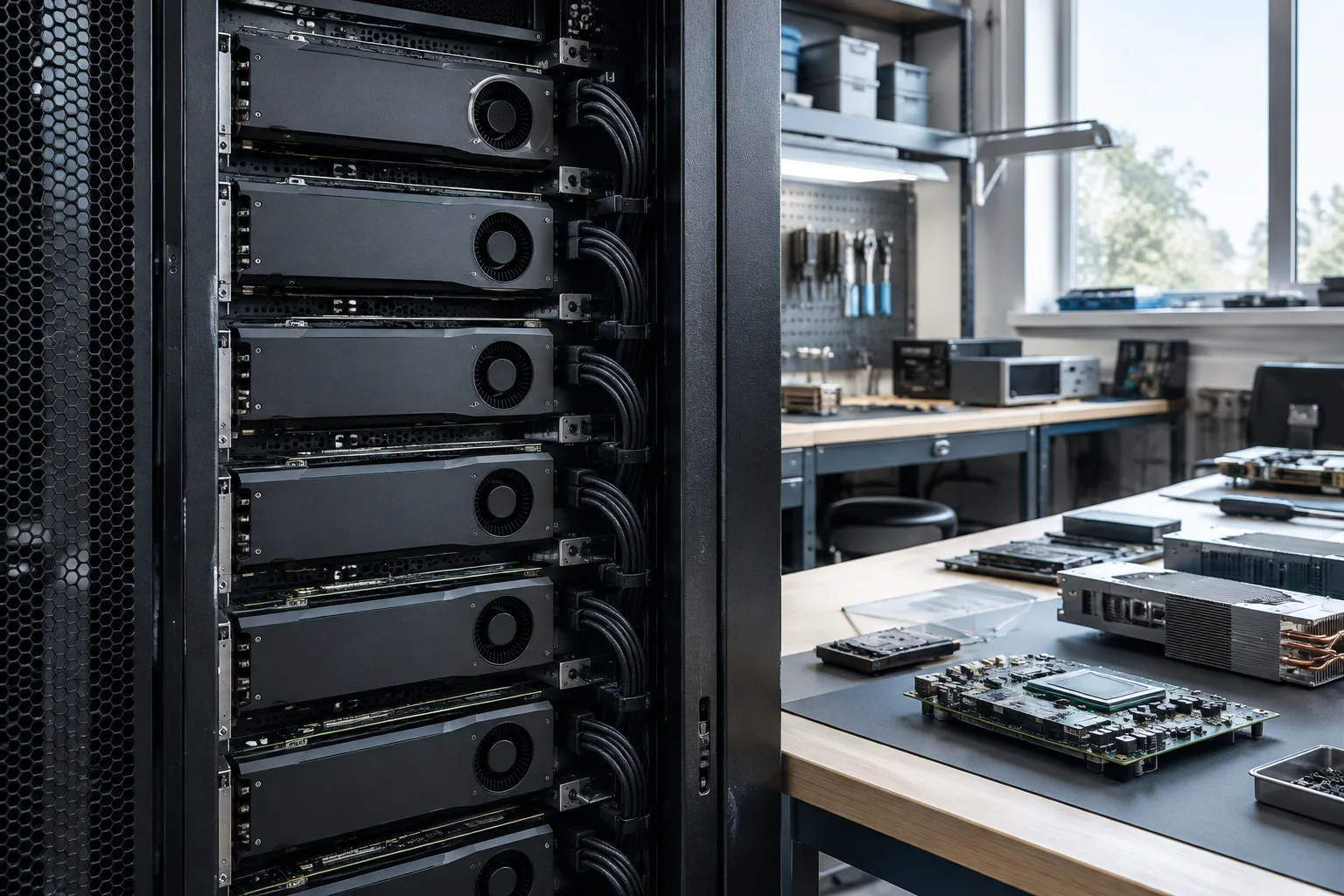
In the process described in the article, technicians remove the GeForce RTX 5090’s graphics processor and GDDR7 memory chips from the original card. The components are transferred to another printed circuit board, while the consumer card’s cooling system is replaced with dual-slot blower cooling designed for server use.
The footage cited by Tom’s Hardware reportedly shows RTX 5090 cards from several manufacturers on the conversion line, including NVIDIA Founders Edition cards. Once the process is complete, the cards are taken to test rigs, and those that pass inspection are repackaged. However, the article provides no detailed data confirming production volumes or the cards’ performance results.
What is the purpose of the server design?
According to the source, the large coolers used on high-end consumer graphics cards can occupy three to four slots. This can make efficient use of space difficult in server systems where many cards are installed side by side. The conversion replaces them with dual-slot blower cooling, intended to direct hot air toward the back of the chassis and allow for denser configurations.
The article says the converted cards are intended for high-density server racks and AI computing clusters. It does not disclose which customers will receive the products or how compatibility with any particular server system has been verified.
What do the stock and pricing claims say?
Tom’s Hardware writes that gray-market supply chains in China are sourcing RTX 5090 cards for conversion, and that this activity may be linked to falling retail stock. The article also includes an estimate that factories could be converting thousands of cards every day; this figure is not presented as verified production data.
The source also reports a claim that NVIDIA has stopped producing the RTX 5090 and is redirecting valuable chips to professional graphics cards; this is not presented as an official statement from NVIDIA. The article makes two separate pricing claims: custom RTX 5090 cards are said to start at $8,500, while social media content embedded in the article claims the price is approaching $10,000. These are different price claims and should not be treated as one definitive market price.
Impact on architecture and visualization workflows
This conversion does not offer architecture firms or visualization artists a new software feature or a workstation solution that is ready to use. However, the redirection of high-end GPUs toward server use, along with reports about retail supply, could affect card availability and budget planning for teams preparing to build new rendering systems.
The cards in the article are being reconfigured for server use. It does not say whether they can be used in standard desktop workstations, whether they are compatible with existing cases, or whether the manufacturer’s warranty remains valid. Architecture and archviz users considering an RTX 5090 should therefore look beyond the model name and also check the card’s physical design, source, system compatibility, and warranty terms.
Sources
1 sourceSource texts are not republished; short quotes are marked, everything else is our own summary and commentary.
Rather than offering architecture firms a new rendering option, this news shows how the supply of high-end GPUs can be constrained by competing uses. Teams planning an RTX 5090-based workstation investment should assess not only the card model but also its physical design and system compatibility.
The source does not explain the price, warranty, or desktop workstation compatibility of the converted cards. These uncertainties matter when purchasing in Turkey; cooling designed for servers may not be suitable for an existing case. Buyers should not rely solely on performance claims without verification from the seller and manufacturer.
Frequently asked questions
What is being done to GeForce RTX 5090 cards in China?
The images cited by Tom’s Hardware reportedly show the cards’ GPU and GDDR7 memory components being removed and transferred to cards with dual-slot blower cooling.
Where will the converted RTX 5090 cards be used?
According to the article, the cards are being prepared for use in high-density server racks and AI computing clusters.
What prices does the article report for RTX 5090 cards?
Tom’s Hardware writes that custom RTX 5090 cards start at $8,500, while social media content embedded in the article claims the price is approaching $10,000. These are separate pricing claims.