In brief
- The film is a new adaptation of Dr. Seuss’s 1957 book.
- Directors Erica Rivinoja and Alessandro Carloni said the production used Maya, Flow Production Tracking and Flow Capture.
- DNEG was selected as the animation studio.
- The production team used Autodesk tools to help coordinate more than 800 people working across different time zones.
The production team behind Warner Bros. Pictures Animation’s adaptation of The Cat in the Hat discussed the production process in an extended episode of Autodesk’s Made to Make series, covered in an 80 Level article published on 6 November 2026. The film used Autodesk Maya, as well as Flow Production Tracking and Flow Capture. The experience shared by directors Erica Rivinoja and Alessandro Carloni and animator Marek Kochout focuses on how the production handled different visual styles and a large team within a single project.
Different visual languages in one film
The Cat in the Hat is an adaptation of Dr. Seuss’s 1957 book. According to the source, some characters in the book are described with limited detail, so the production team developed their personalities and stories for the film. The directors aimed to build their own cinematic interpretation from the book.
Carloni said the film does not follow a single visual style: it moves from a playful section evocative of the world of Seuss to a realistic world, and then to a more fleeting setting that reflects memory and nostalgia. This approach calls for different aesthetic expectations to be managed together in character animation and scene production.
How was Maya used for character animation?
Animator Marek Kochout said he used Maya as his primary tool when working with the characters. Carloni added that the software helped the production adapt to its different cinematic languages. These comments indicate that Maya served not merely as a general modeling tool, but as one of the production tools used to create character animation and visual storytelling.
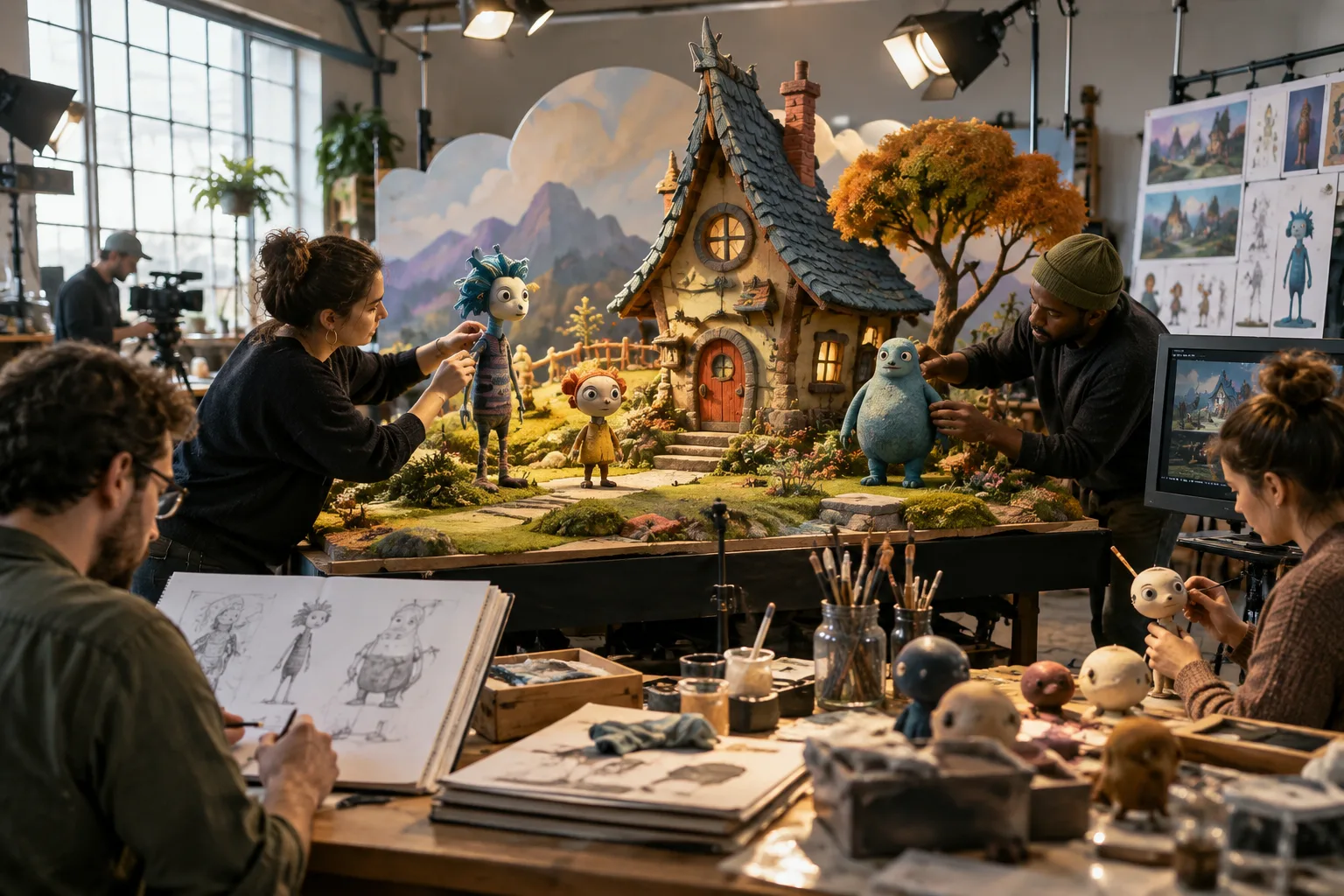
DNEG served as the animation studio on the production. According to Rivinoja, the team was spread around the world, so they needed software to support production coordination. Alongside Maya, they used Flow Production Tracking and Flow Capture.
Coordinating more than 800 people
Carloni described keeping more than 800 people working across different time zones connected and maintaining communication as a significant challenge. According to the production team, Autodesk tools helped keep information in a shared location accessible to team members. The source does not explain the function of each tool separately, so it is not possible to attribute coordination to any one software product alone.
Rivinoja said another challenge was developing a visual style specifically for the film. The process described, then, involved not only choosing animation software but also communicating creative decisions to a large, distributed production team.
What this means for architecture and visualization teams
Film animation and architectural visualization are not the same field of production, but the needs highlighted here may be familiar to teams working on large projects. When a project combines multiple visual approaches, sharing design decisions within the team and keeping project information accessible become important. The article notes that Flow Production Tracking and Flow Capture were part of the coordination effort.
For architecture firms and archviz teams, the article does not prove that any particular software is suitable for projects of every scale. Rather, it offers an example of Maya being used for character animation and distributed teamwork creating a distinct coordination need. The source provides no information about hardware requirements, licensing costs or software compatibility, so current product and licensing terms should be checked separately before making decisions on these points.
Sources
1 sourceSource texts are not republished; short quotes are marked, everything else is our own summary and commentary.
This example is a reminder that software choices for a large animation production are not limited to creating scenes; information flow within the team also needs to be planned. For architecture and visualization firms in Turkey, the main practical takeaway may be less about the names of the tools used and more about how different visual decisions and production information are shared across the team.
However, the source does not provide licensing costs for Flow products, hardware requirements or details about compatibility with other software. Rather than bringing these tools directly into a project, it is more prudent to verify that they fit the team size and existing workflow, and to review current cost and technical requirements.
Frequently asked questions
What software was used to produce The Cat in the Hat?
The production team said it used Autodesk Maya, Flow Production Tracking and Flow Capture. DNEG was selected as the animation studio.
How many people worked on The Cat in the Hat?
Director Alessandro Carloni discussed coordinating a team of more than 800 people working across different time zones.
Why was Maya used in the film?
Carloni said the film moves between different cinematic styles and that Maya adapted to this variety. Animator Marek Kochout also said he used Maya when working with the characters.