In brief
- The WS300 uses a 72-core NVIDIA Grace processor and an NVIDIA Blackwell Ultra accelerator.
- The system has 496 GB of LPDDR5X system memory and 252 GB of HBM3E GPU memory.
- Two ConnectX-8 ports provide network speeds of 400 Gbps each.
- The workstation has a 1,600 W power supply and a closed-loop liquid cooling system.
On 23 October 2026, ServeTheHome reviewed MSI’s XpertStation WS300 workstation, based on the NVIDIA DGX Station platform. The NVIDIA GB300-based tower is designed for AI developers and workstation users who want to run and test models locally. The review highlights how the system brings server-class hardware into a desktop form factor, while its size, power draw and cooling needs set it apart from a typical workstation.
What hardware does the GB300 platform include?
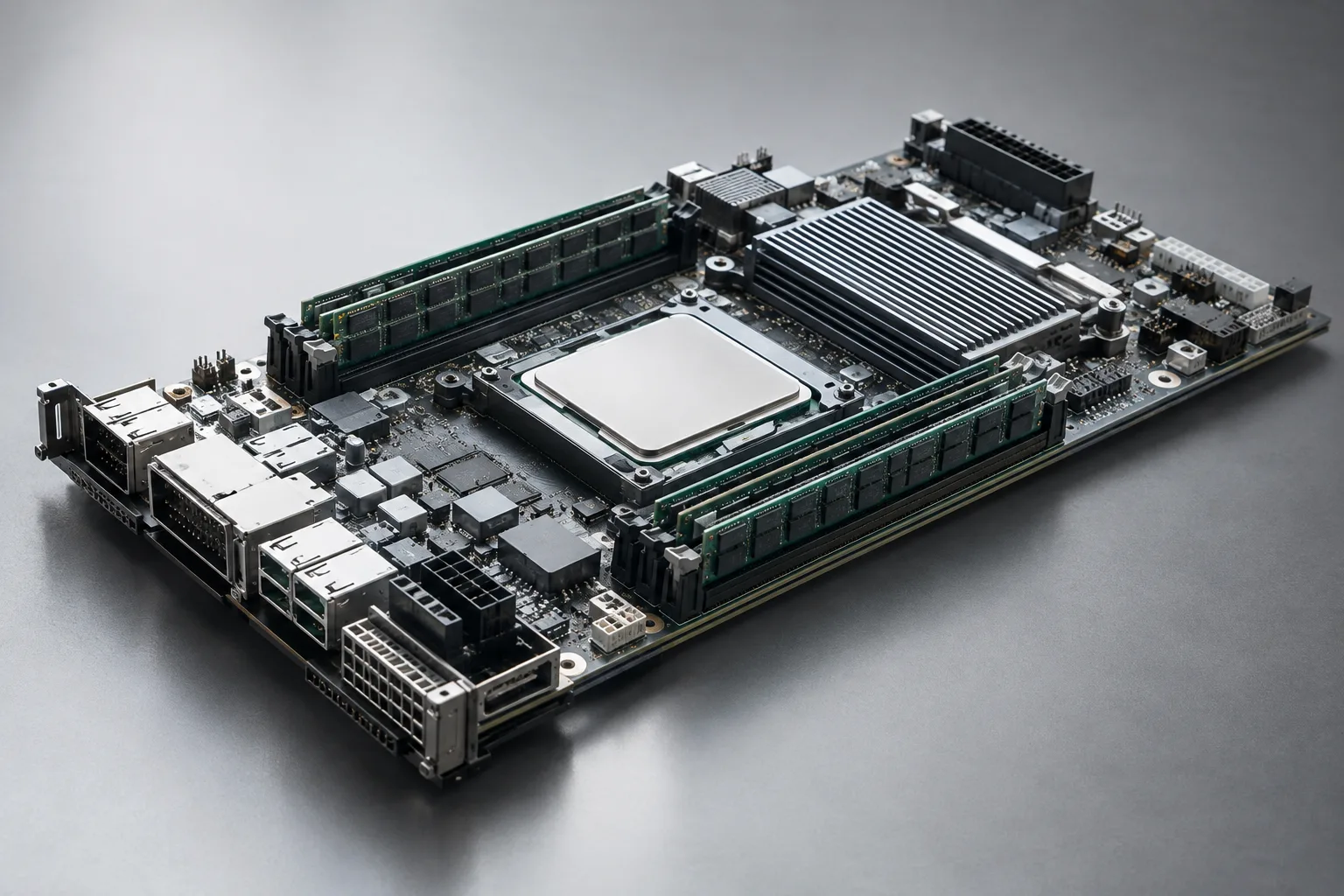
The WS300 pairs a 72-core NVIDIA Grace processor with an NVIDIA Blackwell Ultra accelerator. According to the specifications in the review, it has 496 GB of LPDDR5X system memory and 252 GB of HBM3E GPU memory. Storage is provided by two M.2 2280 slots: one PCIe Gen6 x4 and one PCIe Gen5 x4. The operating system is listed as Ubuntu 24.04 LTS, with NVIDIA AI Developer Tools.
The review notes that the system is not designed to deliver a traditional graphics workstation experience on its own: the GB300 is described as a compute accelerator rather than a GPU with conventional display outputs. The standard configuration has a Mini DisplayPort output connected to the management controller. For more extensive graphics capabilities, a compatible NVIDIA RTX PRO Blackwell 2000, 4000 or 6000 graphics card can be added as an option.
Networking and chassis design
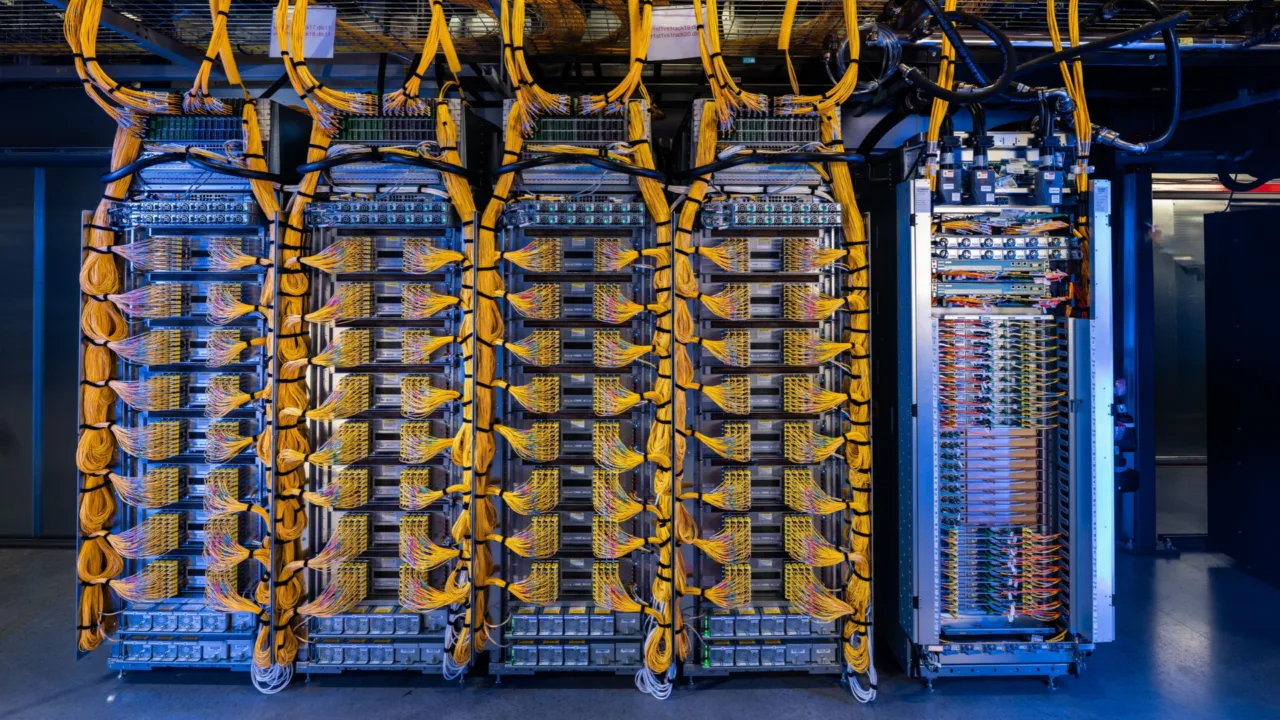
The WS300’s connectivity highlights include two 400 Gbps QSFP112 ports and 10 Gb Ethernet. The two high-speed ports run through an NVIDIA ConnectX-8 SuperNIC. ServeTheHome says it tested an 800 Gbps Blackwell Ultra–Blackwell Ultra RDMA link by connecting two DGX Station systems. This shows that networking is not just a peripheral feature, but an important part of the system’s approach to scaling for larger models and multiple users.
USB connections run at 10 Gbps. According to the review, they do not match the capacity offered by the QSFP112 network connections for high-throughput data transfers. The four rear USB-A ports run through a USB hub, so users should not expect to get 10 Gbps from each port simultaneously.
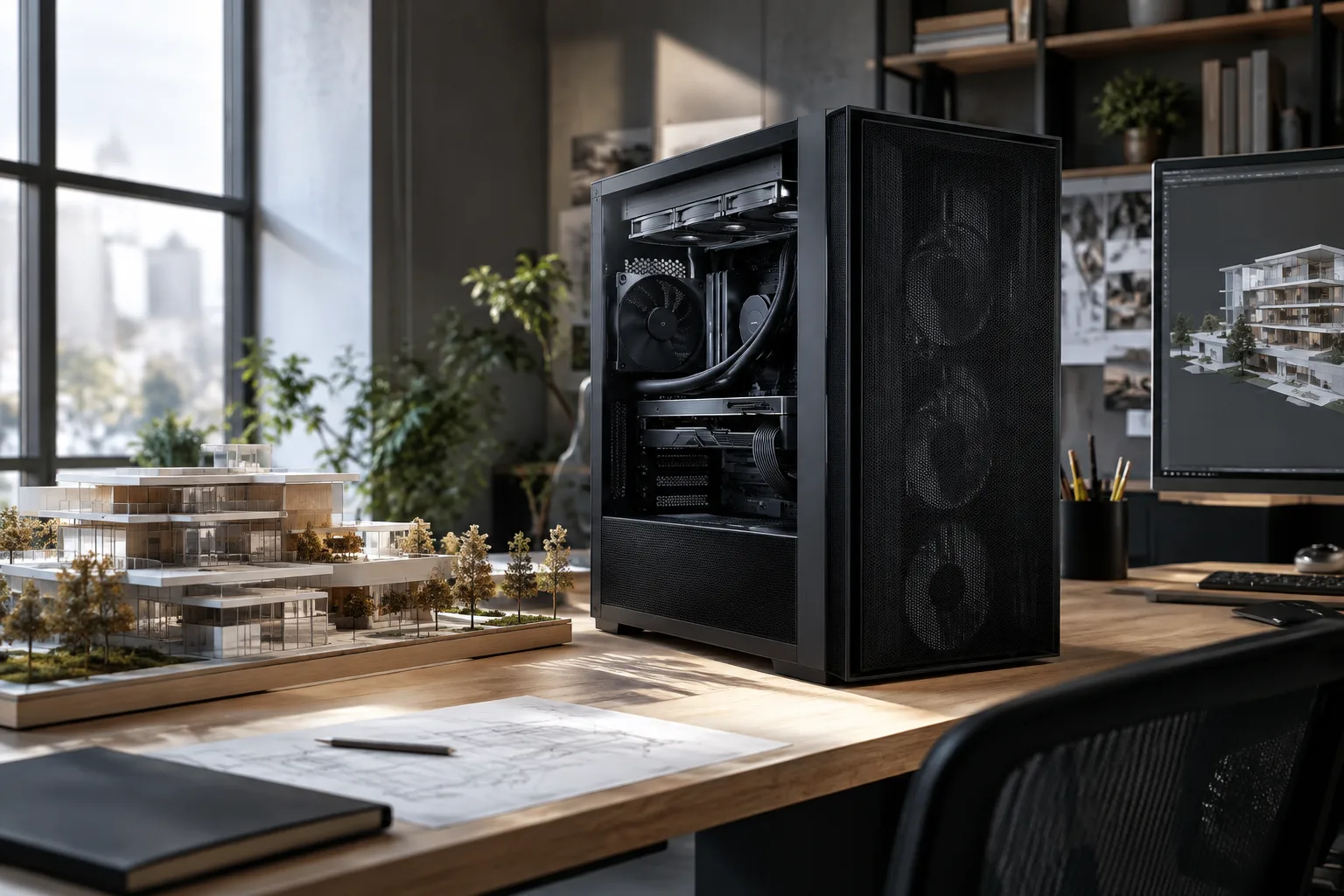
The tower is approximately 53 cm tall and 57 cm deep, and weighs around 30 kg. MSI has left the front of the chassis open to promote airflow and uses a large closed-loop liquid cooling system. The review describes it as a workstation suited to placement on the floor, not a lightweight desktop computer to tuck under a desk.
Power and cooling considerations
The system has a 1,600 W, 80 PLUS Platinum power supply. ServeTheHome highlights the high power consumption of GB300-based DGX Station systems; its review says the WS300 requires a 20-amp circuit in North America and a high-capacity C19 power cable. Buyers planning an installation in Turkey should therefore verify electrical infrastructure and power connection compatibility against local conditions. The review does not give a full retail price, but places the system in the over-$100,000 category.
What it means for architecture and visualization workflows
The WS300 is best considered for local AI models and development workloads, rather than as a direct solution for architectural modeling or traditional GPU rendering. Its high memory capacity and fast networking may appeal to teams working with large datasets, sharing models over a network or experimenting with AI applications on local hardware. Optional RTX PRO cards can expand its graphics capabilities, but the source provides no compatibility or performance results for specific rendering applications.
Before making a decision, architecture firms and visualization teams should consider power, cooling, physical space and software compatibility, as well as the total cost. Buyers in Turkey should not commit until they have confirmed the electrical connection requirements, whether the intended RTX PRO card is included in the configuration, and compatibility with the software used in their workflow.
Sources
1 sourceSource texts are not republished; short quotes are marked, everything else is our own summary and commentary.
The WS300’s practical value for architecture firms may become clear in scenarios where there is a genuine need for powerful local AI infrastructure. Its high memory capacity and fast networking are impressive, but those features alone do not guarantee faster performance in existing modeling or rendering workflows.
For teams in Turkey, the electrical infrastructure, physical placement, liquid cooling requirements and cost of an optional RTX PRO card will all matter, in addition to the price. Since the review does not provide a definitive retail price or application-specific performance results, buyers should clarify the configuration and software compatibility before purchasing.
Frequently asked questions
Which processor and accelerator does the MSI XpertStation WS300 use?
The WS300 uses a 72-core NVIDIA Grace processor and an NVIDIA Blackwell Ultra accelerator.
How much memory does the MSI XpertStation WS300 have?
The review lists 496 GB of LPDDR5X system memory and 252 GB of HBM3E GPU memory.
Does the WS300 include a graphics card?
The system’s basic display output comes from a Mini DisplayPort connected to the management controller. NVIDIA RTX PRO Blackwell 2000, 4000 or 6000 cards are available as optional additions.